
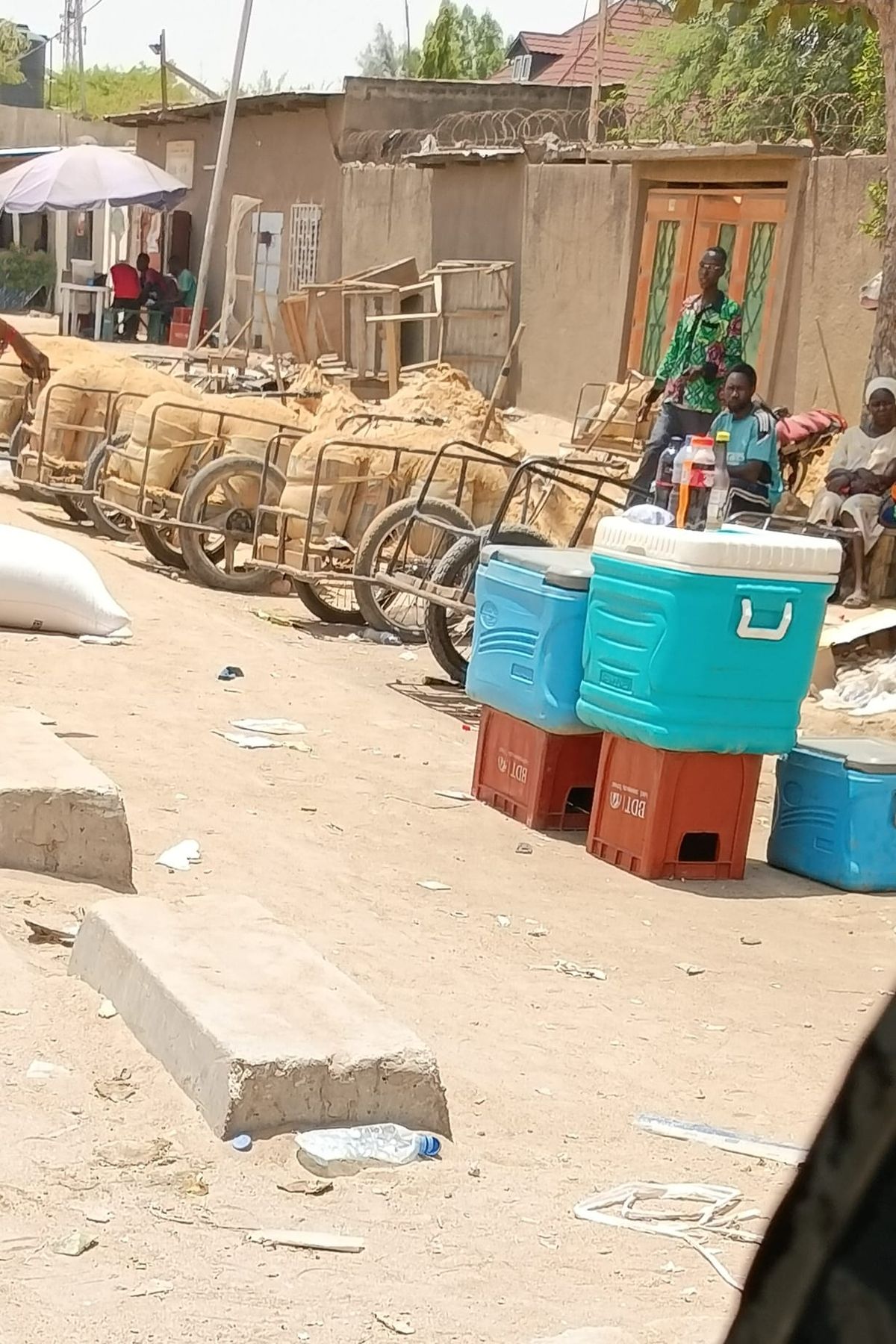
In the heart of N’Djamena, Chad’s bustling capital, a generation of young people is carving out a living from the most unforgiving of trades. The relentless job market has left many with no choice but to embrace grueling manual labor, with sand commerce emerging as a desperate lifeline for survival.
Survival on the streets of N’Djamena
At the Emtoukoui market in the 7th arrondissement, scores of young men have turned the extraction and transportation of sand into their daily grind. Under the scorching sun, they wait along the asphalt road, their bodies weary from the previous day’s exertions. The sight of these young workers—shoulders bent under the weight of 50-kilogram sacks—tells a story of resilience in the face of economic hardship.
The latest macroeconomic projections paint a grim picture of poverty in Chad, with the World Bank estimating that 45.4% of the population, or roughly 9.5 million people, now live in extreme poverty. For the youth of N’Djamena, the numbers are even more stark. Official statistics reveal that 30.3% of young people aged 15 to 24 are unemployed, while the broader age group of 15 to 30 faces a 22% unemployment rate. The situation is particularly dire for educated youth, with over 60% struggling to secure any form of employment.
The grind of daily survival
Sand traders in Emtoukoui operate in an economy that offers little stability. Using improvised wheelbarrows known locally as ‘porte-tout,’ they transport sand across the city, negotiating prices that range from 2,000 to 5,000 West African CFA francs per delivery. The work is backbreaking, the hours long, and the pay meager—yet it remains one of the few viable options for those shut out of formal employment.
One young man, who declined to share his name, described the harsh reality of his situation. ‘We don’t choose this work out of passion, but necessity,’ he admitted, his voice weary. ‘We have to eat, we have to survive. So we endure the pain, the exhaustion—it doesn’t matter.’ Like many others in his position, he holds a basic education but finds himself trapped in a cycle of precarious labor, with no clear path to improvement.
An economy built on sweat and sand
The sand trade in N’Djamena is more than just a stopgap for the unemployed; it reflects the broader struggles of a city and country grappling with economic stagnation. Informal labor has become the backbone of survival for thousands, yet it remains largely invisible to policymakers and the public alike. These young workers, often overlooked and undervalued, are the unseen laborers who keep the city moving—literally and figuratively.
As they trudge through the streets, their wheelbarrows loaded to the brim, these young men embody the silent crisis of youth unemployment in Chad. They ask for nothing more than a fair chance to build a future, yet for now, their daily battle continues. The next customer could be the difference between another night of hunger and a glimmer of hope.