
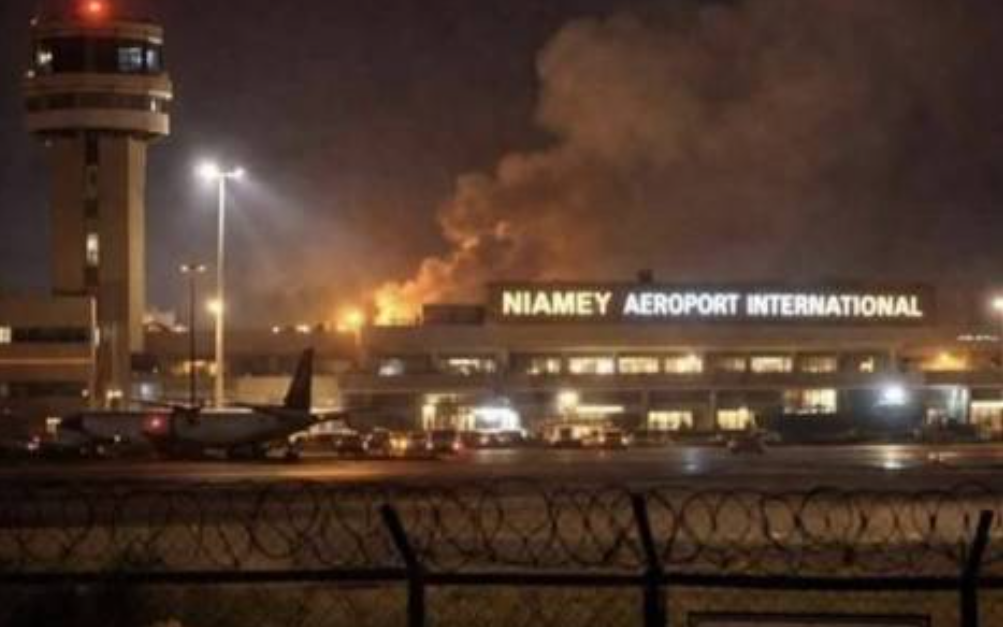
The tranquility of Niamey was shattered early on a recent Thursday when sustained gunfire erupted near the Diori Hamani International Airport, plunging the capital into a state of high alert. For nearly two hours, automatic weapons fire and explosions echoed through the vicinity, leaving residents gripped by fear and uncertainty. Though the immediate threat has subsided, the security situation remains precarious, with authorities conducting extensive clearance operations across the area.
Niamey on edge after prolonged gunfight
Residents awoke to the sound of gunfire at dawn, as armed clashes intensified around the airport’s perimeter. The relentless exchange of fire forced civilians to abandon their vehicles and seek shelter, while security forces scrambled to neutralize the threat. The identity and motives of the attackers remain undisclosed, and no official casualty figures have been released by military officials.
City locked down as security forces mobilize
By mid-morning, the intensity of the fighting had dwindled, but the operation was far from over. Elite troops deployed to the airport zone to conduct thorough sweep operations, securing the runway and surrounding infrastructure while hunting down any remaining assailants. The capital’s access points, particularly those leading to the presidential palace and prime minister’s office, were sealed off with armored vehicles and heavily armed personnel. Street checks and restricted movement signaled the government’s determination to prevent any further threats to state institutions.
A history of urban attacks and persistent threats
This violent incident is not an isolated event but part of a broader pattern of insecurity gripping Niger. Since the 2023 coup, the country has faced repeated attacks, not only along its borders but also within major cities. The failed 2021 coup attempt, which unfolded just days before the inauguration of former President Mohamed Bazoum, serves as a stark reminder of the fragility of the nation’s stability. Recent ambushes by armed factions in Tillabéri and Diffa—regions bordering Burkina Faso and Mali—have resulted in heavy losses, further exposing the vulnerability of critical infrastructure like the Niamey airport, a prime target for insurgents and dissident factions.
Regional security crisis deepens despite regional alliances
The morning assault underscores the mounting challenges faced by Niger’s military leadership. Despite forming the Alliance of Sahel States with Mali and Burkina Faso to combat extremism, tangible progress in restoring security remains elusive. The porous nature of regional borders and the proliferation of armed groups continue to threaten the stability of not just Niger but the entire Sahel zone, where humanitarian crises have already stretched resources to their limits.
The temporary lull in violence near the airport offers a fragile sense of relief to Niamey’s residents, but critical questions linger. Who orchestrated the attack, and what was their intended outcome? As security operations press forward under a tense atmosphere, the nation holds its breath. This episode serves as a stark reminder that, despite official assurances, peace and security in Niger remain dangerously fragile.