
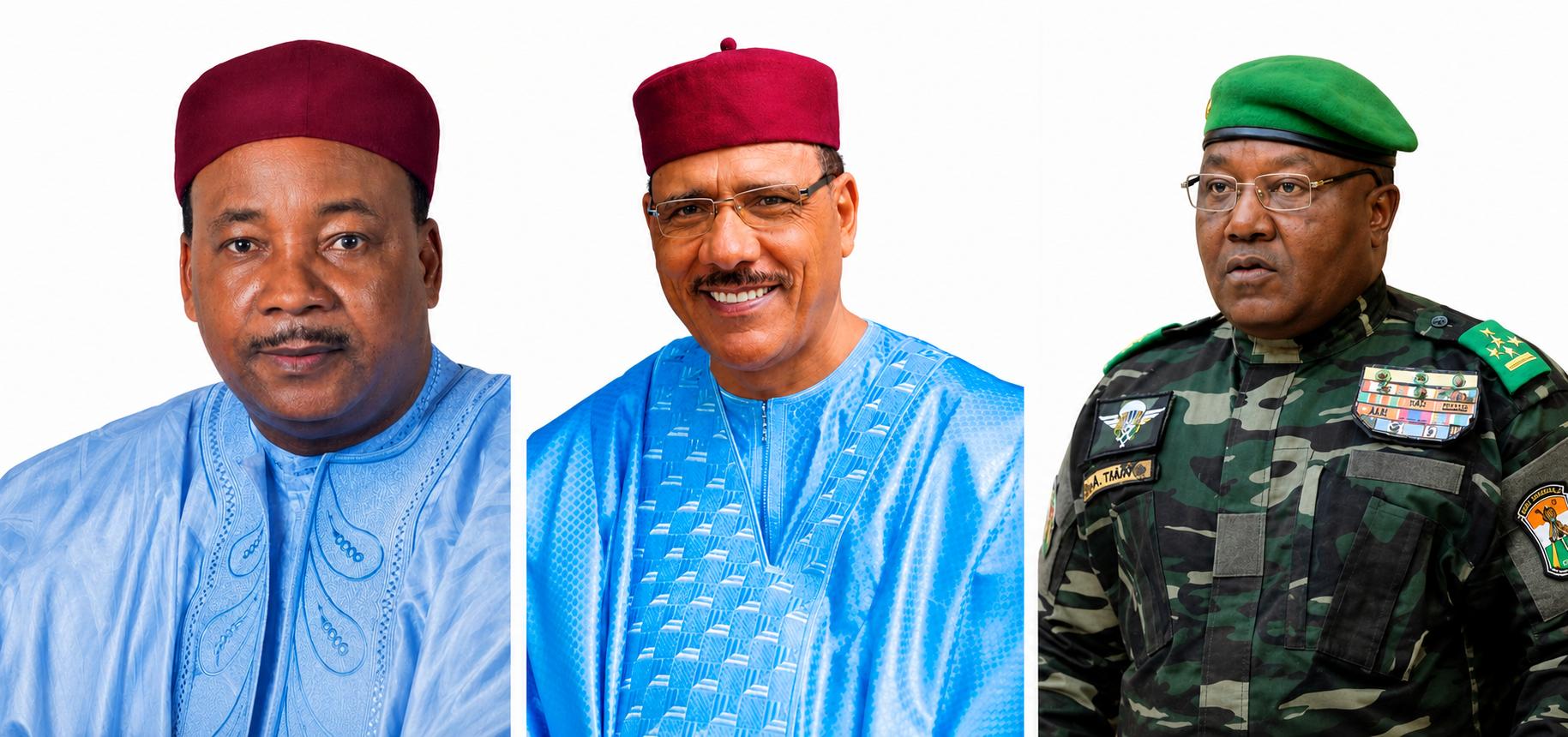
Despite radical shifts in governance and international partnerships, Niamey remains entangled in a grueling war of attrition. From the Western-aligned strategies of Mahamadou Issoufou to the nationalist pivot of Abdourahamane Tiani, the reality on the ground is stark: the threat of terrorism shows no signs of receding.
Through three presidents, two democratic transitions, and a coup d’état, one tragic constant remains: the persistent violence in the “three borders” region and the Lake Chad basin. In Niger, while political regimes change, the insurgent threat posed by the Islamic State in the Greater Sahara (EIGS) and the Group for the Support of Islam and Muslims (GSIM) continues to endure.
While the Conseil national pour la sauvegarde de la patrie (CNSP), which took power in July 2023, promised to restore safety by removing Western partners, the nation is now confronting a difficult reality. It is time to assess a conflict that currently seems to have no clear resolution.
The Issoufou-Bazoum era: The limits of the Western shield
During the presidency of Mahamadou Issoufou (2011-2021), Niger chose to become the primary anchor for Western strategy in the Sahel. As neighboring Mali faced instability, Niamey evolved into a military hub for France and the United States, hosting significant drone and operational bases.
His successor, Mohamed Bazoum, attempted to refine this approach by adding political flexibility:
- He launched “outreach” initiatives to initiate dialogue with former combatants.
- He oversaw massive investments in the training of specialized Nigerien forces.
However, this strategy was a double-edged sword. While it prevented a total collapse of the state, it failed to eliminate the threat. Furthermore, the presence of foreign military units fostered deep frustration among segments of the army and the public, who viewed it as an infringement on sovereignty that yielded insufficient results.
Tiani’s gamble: Sovereignty under fire
By removing Mohamed Bazoum on July 26, 2023, General Abdourahamane Tiani and the CNSP justified their intervention by citing the “continuous deterioration of the security situation.” This led to a dramatic break with Paris and Washington, the formation of the Alliance of Sahel States (AES) alongside Mali and Burkina Faso, and a new strategic alignment with Russia and Turkey.
The communication style has shifted significantly. The military leadership now emphasizes national pride and promises a strictly military response, claiming to be free from the “hidden agendas” of the West.
The harsh reality on the ground
Nevertheless, objective observations indicate that the departure of Western forces has created an immediate void in capabilities, particularly regarding aerial intelligence and technological surveillance. Niger now faces a complex security environment where the Nigerien Defense and Security Forces (FDS) are targeted in sophisticated attacks, leading to heavy losses.
Furthermore, economic pressures in certain regions and diplomatic shifts have complicated the logistical funding of a war that demands millions of dollars daily.
Why does Niger remain stuck in this impasse?
A recurring error across successive administrations, whether civilian or military, is treating a crisis that is fundamentally political and social as a purely military problem. Two distinct visions have struggled to find a solution:
On one hand, the Issoufou-Bazoum doctrine relied heavily on international security frameworks. Its primary weakness was an excessive external dependency that felt disconnected from the population’s aspirations. On the other hand, the Tiani doctrine prioritizes a total geopolitical break and a martial form of sovereignty through the AES. The limitations of this approach are already surfacing: a sudden loss of advanced technical intelligence, financial constraints, and an escalation of violence by armed groups taking advantage of regional reorganization.
In both scenarios, the underlying causes of the conflict remain unaddressed: the absence of the state in remote areas, a lack of economic opportunities for rural youth, and intercommunal disputes—specifically between herders and farmers—which insurgents skillfully exploit for recruitment.
Whether pursued through international cooperation or the banner of AES sovereignty, the war in Niger cannot be won by military force alone. For General Tiani, the challenge is no longer just to critique his predecessors, but to demonstrate that the current military strategy can actually protect the people. Without a massive reintroduction of public services—such as schools, justice systems, and clinics—into insecure zones, Niger faces the long-term risk of this conflict remaining unresolved.