
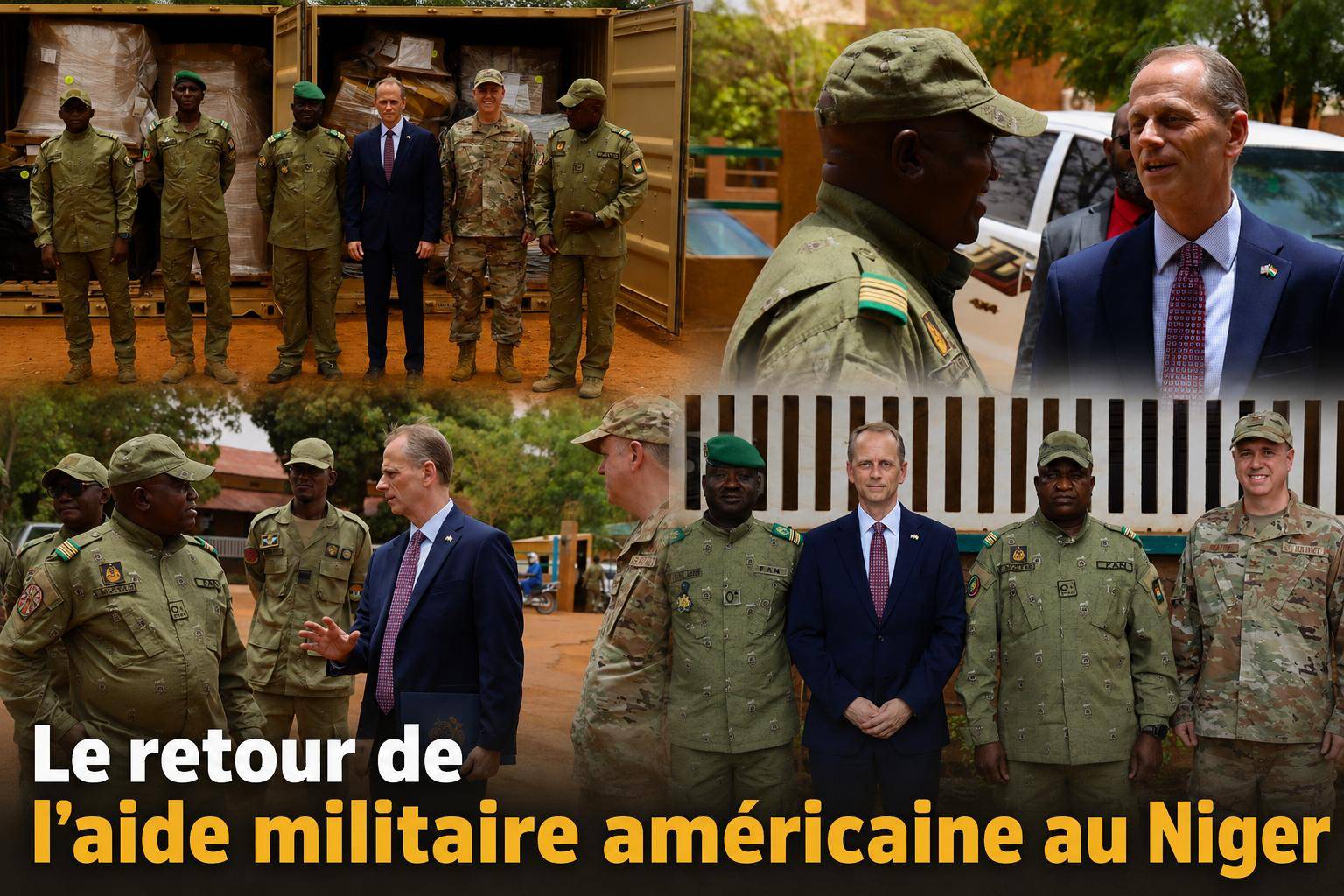
In a significant move signaling a shift in regional security dynamics, the Nigerien Armed Forces (FAN) logistics hub in Niamey received nine military containers from the United States on May 26, 2026. This donation is designed to significantly enhance the operational capacity of Nigerien troops in combating terrorism and transnational crime, marking a pragmatic diplomatic turning point for Niamey.
Strategic military support for Niger’s defense
The Niamey-based FAN logistics center hosted a high-profile ceremony to mark the official handover of advanced military equipment. The shipment, sourced directly from U.S. military reserves, includes critical spare parts, tactical communication systems, personal protective gear, and first-line maintenance tools. Military officials emphasized that these resources are tailored to address the urgent needs of frontline units facing asymmetric threats across the region.
In the words of a logistics officer involved in the operation, “Every second counts on the battlefield, and reliable equipment can make the difference between success and failure.” The focus on rapid repair capabilities and secure communications underscores the immediate tactical advantages this donation provides.
Strengthening security against regional threats
The delivery aligns with the Nigerien government’s stated commitment to bolstering its defense against escalating security challenges. With threats intensifying in the volatile “three-border zone”—shared by Niger, Mali, and Burkina Faso—and across the Lake Chad basin, the new equipment is set to play a crucial role in securing remote areas.
The Nigerien Ministry of Defense confirmed that the matériel will be deployed immediately, supporting counterterrorism operations, disrupting organized crime networks, and reinforcing national border security. For troops stationed in isolated rural outposts, this assistance represents a vital lifeline in their ongoing struggle to protect civilian populations.
From political rupture to pragmatic partnership
This military aid marks a stark contrast to Niger’s earlier stance toward Western partners. Just two years prior, Niamey had demanded the withdrawal of American and French forces, including the closure of the U.S. drone base in Agadez, citing national sovereignty. Yet, the growing intensity of jihadist attacks and the harsh realities of asymmetric warfare have prompted a reevaluation of priorities.
The U.S. donation signals a quiet but significant resumption of cooperation, proving that diplomatic channels remained open despite public declarations. For observers, this shift highlights how security imperatives can override ideological posturing, even when sovereignty narratives take center stage.
Balancing alliances in a shifting geopolitical landscape
Niger’s leadership appears to be adopting a diversified approach to external partnerships, engaging with multiple international actors while avoiding exclusive dependence on any single power. Alongside deepening ties with partners like Russia, Turkey, and Iran, Niamey is cautiously rebuilding its relationship with Washington.
The U.S., for its part, has adopted a measured stance. After temporarily suspending aid following political upheavals in 2023, Washington is now focusing on rebuilding trust through targeted logistical support rather than large-scale troop deployments. This shipment of containers is a clear indication of mutual intent to restore a functional, albeit selective, defense partnership.
A statement from the FAN logistics center succinctly captured the essence of this approach: “In defense, operational effectiveness on the ground is the only rule that matters.”
A pragmatic path forward for Niger
The arrival of these nine containers of U.S. military equipment in Niamey underscores Niger’s return to pragmatic diplomacy. By accepting Washington’s assistance, the country demonstrates that absolute sovereignty can, when national security demands it, coexist with strategic compromises. In the face of shared threats along its borders, diversifying military partnerships has become a cornerstone of Niger’s survival strategy.