
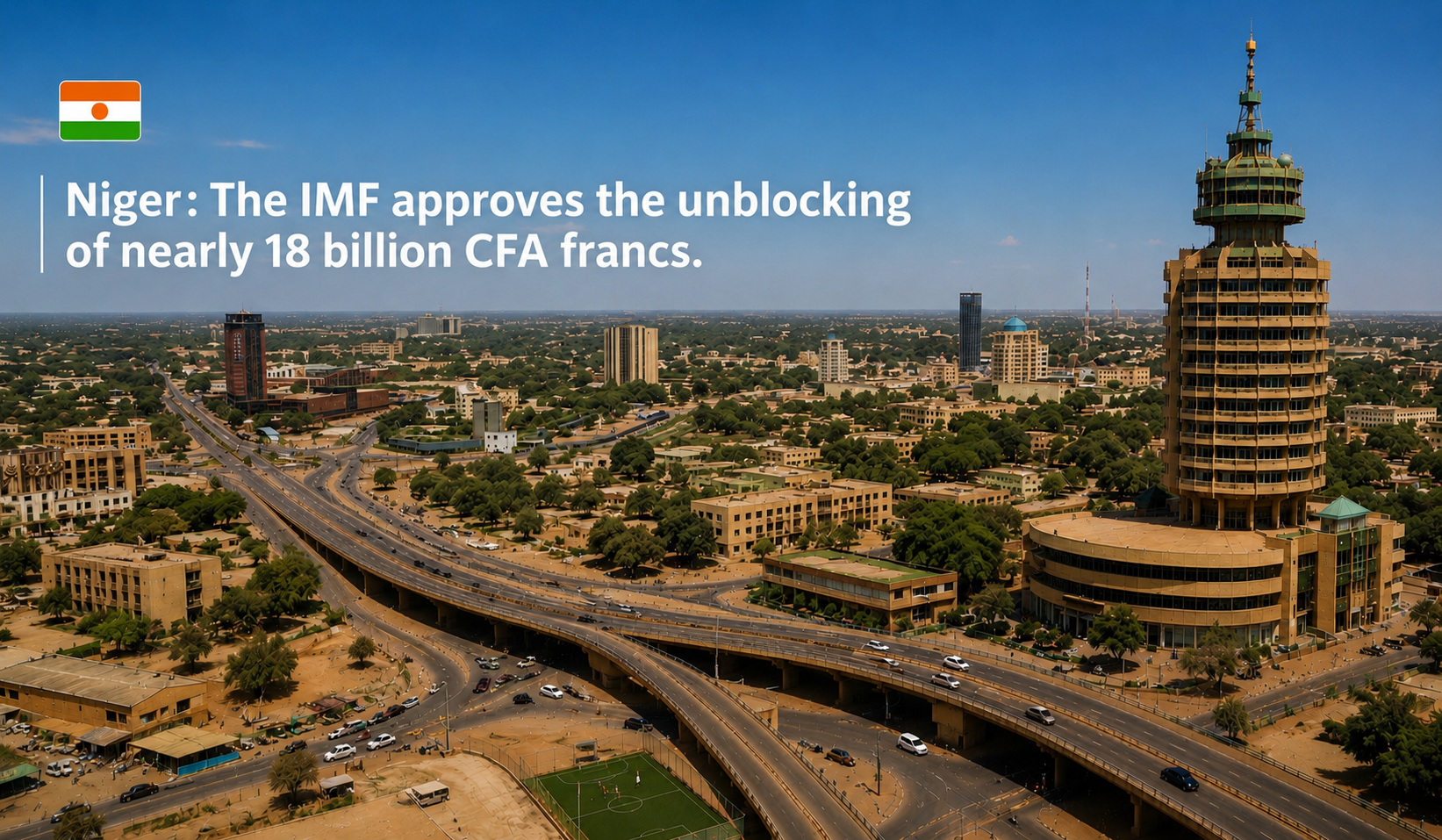
The International Monetary Fund (IMF) has finalized a staff-level agreement with Nigerien authorities, paving the way for a disbursement of approximately 17.8 billion West African CFA francs (26.3 million USD). This funding aims to reinforce the country’s macroeconomic stability and accelerate ongoing structural reforms.
Following intensive negotiations in Niamey, the IMF’s mission and Niger’s transitional government reached a consensus under the Extended Credit Facility (ECF) and the Resilience and Sustainability Facility (RSF). While formal approval from the IMF’s Washington-based Executive Board is still pending, this technical green light signifies a gradual yet decisive resumption of Niger’s international financial engagements.
Targeted economic resilience support
The allocated funds are structured into two critical components:
- Direct budgetary assistance: Designed to strengthen state revenue collection, optimize public expenditure, and ensure the sustainability of sovereign debt obligations.
- Climate resilience initiatives: A portion of the funds will bolster institutional frameworks to mitigate environmental shocks, as Niger remains one of the Sahel’s most climate-vulnerable nations.
« This agreement underscores the progress made by Nigerien authorities in public finance management, even amid a challenging regional and security landscape, » noted a financial analyst based in Dakar.
Economic growth prospects driven by petroleum
The IMF’s support coincides with a pivotal moment for Niger’s economy. Having weathered the repercussions of regional economic sanctions in 2023 and 2024, the country now anticipates accelerated growth, primarily fueled by increased crude oil exports via the Agadem oilfield pipeline to the port of Sèmè-Kpodji.
However, the Bretton Woods institution has emphasized the need for heightened transparency in extractive resource management and robust anti-corruption measures. These prerequisites are essential to ensure that oil revenues translate into tangible improvements in human development and poverty reduction.
Niamey’s strategic priorities ahead
To fully capitalize on this positive signal to investors, the Nigerien government must expedite key initiatives:
- Expanding the tax base: Reducing reliance on foreign aid by enhancing domestic tax collection efficiency.
- Safeguarding social expenditures: Ensuring that fiscal adjustments do not compromise allocations for education and healthcare.
- Enhancing the business environment: Engaging both local and international private sectors to diversify an economy still heavily dependent on subsistence agriculture and informal trade.
This upcoming disbursement of 17.8 billion West African CFA francs represents a pivotal milestone in Niger’s financial normalization on the global stage, providing authorities with much-needed fiscal flexibility to conclude the current budgetary cycle.