
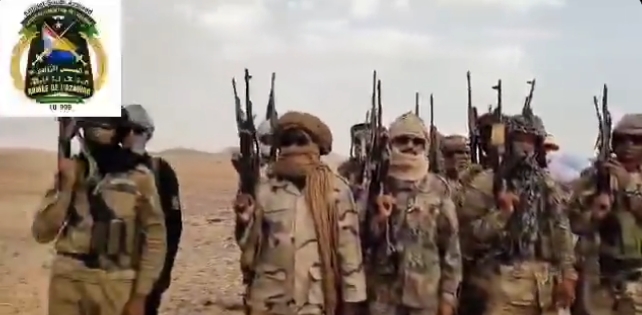
Northern Mali now stands at a critical juncture as the Front de Libération de l’Azawad (FLA) has significantly heightened its mobilization efforts. Since late May, when its defense chief first issued calls for general mobilization, the separatist movement has intensified its rhetoric, urging every able-bodied resident of the Azawad region to join its fighting ranks in preparation for a large-scale offensive against government forces and their allies.
a united front against Bamako and its foreign backers
The FLA’s military command has issued a firm directive, commanding « all sons of Azawad » to immediately report to the front lines. This declaration follows the enactment of a sweeping mobilization decree at the end of May and signals a deliberate escalation in the group’s military strategy.
In official statements, the movement has framed this mobilization as a precursor to what it describes as the « second phase of liberating Azawad’s cities. » The FLA’s stated objective is to reclaim key urban centers currently under the control of the Malian Armed Forces (FAMA) and detachments of the Russian paramilitary Africa Corps—formerly associated with Wagner Group—which continue to provide direct support to Mali’s central government.
shifting tactics in a fragile security landscape
The announcement of a « second phase » suggests a strategic shift from sporadic guerrilla attacks and harassment operations to larger, more coordinated military campaigns aimed at reasserting territorial control over strategic localities. Regional analysts interpret this development as a clear indication that the conflict, previously characterized by low-intensity skirmishes, is poised to escalate into direct confrontations.
The security environment in northern Mali has grown increasingly volatile, particularly since the collapse of the Algiers Accord and the military’s recapture of major urban centers in late 2023. The FLA’s intensified campaign, coupled with ongoing counterterrorism operations and Bamako’s security initiatives, has trapped the Azawad region in a precarious standoff. Civilian populations remain the most vulnerable, caught in the crossfire between autonomist factions and state-backed forces.