
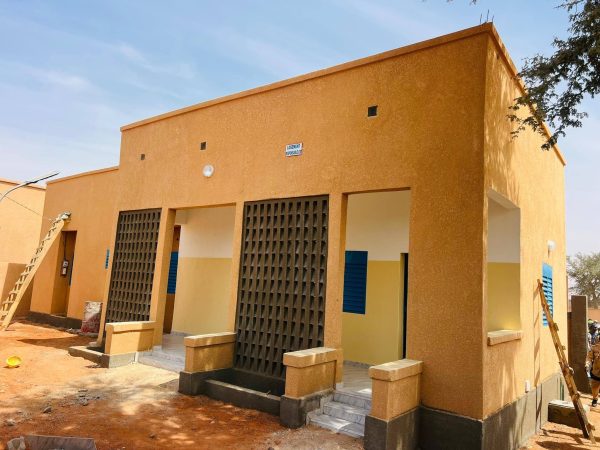
Niger’s Maradi region is expanding its healthcare reach through the PIDUREM initiative, with three new Integrated Health Centers (CSI) of type II now operational in Maradi and Tessaoua. These facilities mark a significant leap forward in bringing essential medical services closer to urban and peri-urban communities.
Modern healthcare infrastructure for better accessibility
The heart of Maradi, Niger’s bustling economic hub, is undergoing a transformative healthcare upgrade. Under the PIDUREM (Integrated Urban Development and Multisectoral Resilience Project), the region is rolling out a strategic initiative to construct and equip type II Integrated Health Centers (CSI). This bold move aims to ease the burden on regional hospitals while ensuring residents have access to advanced medical equipment without traveling long distances.
Two of these state-of-the-art facilities are already up and running—the first in Maradi’s ADS neighborhood (3rd arrondissement) and the second in Tessaoua’s Toudou district. Following provisional commissioning between March and October 2025, these centers are now fully operational, equipped with cutting-edge medical devices to serve the public.
Impactful words from health officials:
“Bringing healthcare directly to neighborhoods is no longer just a pledge—it’s a tangible reality.”
Beyond the buildings, the project includes a comprehensive delivery of specialized medical equipment for type II CSIs. The handover ceremony in Tessaoua was a collaborative effort, attended by the Regional Secretary-General, the City’s Delegated Administrator, the Regional Director of Public Health, and community representatives—highlighting the government’s strong commitment to this initiative. A third site in Tessaoua’s Tsamia Koura district is nearing completion, with equipment installation scheduled immediately upon project finalization to maintain rigorous technical oversight.
Niger’s healthcare transformation: a model for sustainable development
For Niger, a nation racing to meet Sustainable Development Goals (SDGs) in health, the PIDUREM model stands out as a benchmark. By synchronizing infrastructure construction with the simultaneous delivery of equipment, the project avoids the pitfalls of underutilized facilities—a common criticism of past development initiatives. In Maradi, the revitalization of local healthcare is breathing new life into community well-being.
The success of this initiative underscores how targeted investments in healthcare infrastructure can bridge gaps in service delivery, particularly in densely populated urban and peri-urban areas. With these new CSIs, Niger is taking bold strides toward a healthier, more resilient future for its people.