
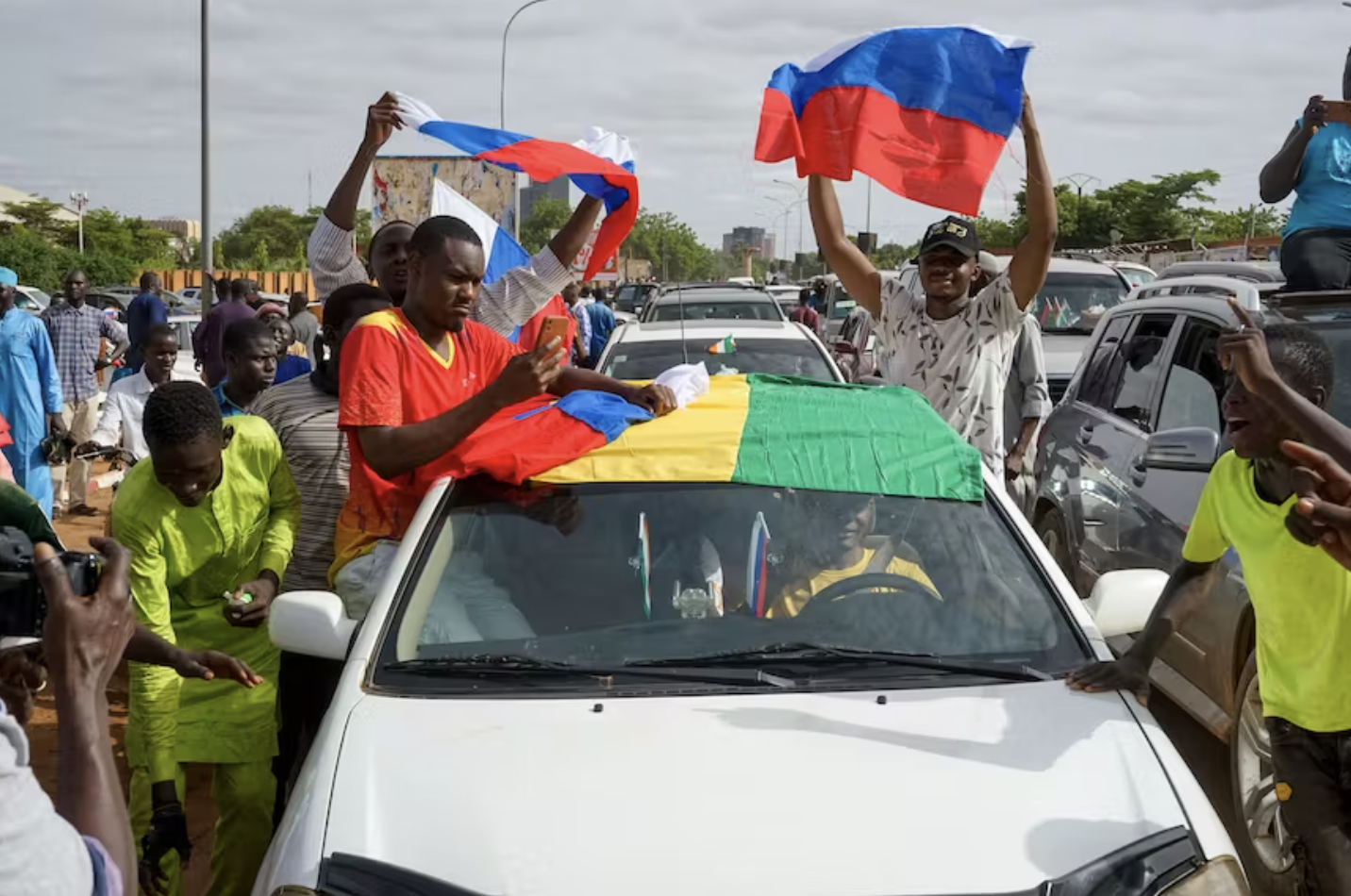
The military takeover in Niger on July 26, orchestrated by General Tiani against President Mohamed Bazoum, marks the seventh such incident in the volatile Sahel region since 2020. However, this particular **Niger coup** has triggered a remarkably intense and fragmented array of responses from both regional and global actors, setting it apart from previous events. The stakes are considerably higher, generating profound international anxieties and potentially greater perils. Indeed, this moment could prove to be a watershed for **security dynamics**, **governance models**, multilateral frameworks, and broader **international relations** across Africa. We will explore three key reasons why this **political upheaval** transcends prior **Sahelian coups** and holds exceptional significance.
1. A complex tapestry: no singular rationale for the takeover
The precise motivations behind the **coup against President Bazoum** in Niamey on July 26 remain a subject of intense debate among analysts, observers, and even those within Niger’s power circles.
While **coup dynamics** are inherently intricate, previous **military takeovers** in neighboring Mali and Burkina Faso since 2020 could be linked to more discernible factors. In August 2020, Malian colonels capitalized on widespread public dissatisfaction with President Ibrahim Boubacar Keita’s perceived corruption, presenting themselves as saviors of public order. Similarly, the coups in Burkina Faso in January and September 2022 stemmed from escalating tensions within the military and between security forces and civilian authorities, exacerbated by fierce challenges from **jihadist insurgents**.
In stark contrast, the ousting of President Bazoum was not preceded by mass street protests in Niamey, nor by devastating battlefield losses against **jihadist movements**. Although Bazoum’s 2021 election faced minor allegations of fraud, these did not coalesce into a significant political threat. Furthermore, unlike his predecessor Mamadou Issoufou’s administration, Bazoum’s term was not widely associated with corruption scandals. Critically, the **security situation** in Niger had shown objective signs of improvement since his election.
To date, a comprehensive explanation for the **Niger coup** is elusive. It appears to be the outcome of uncontrolled, cascading events. Initially sparked by General Tiani, commander of the Presidential Guard responsible for Bazoum’s security, who was closely linked to former President Issoufou, the event may have begun as a dispute over elite-level arrangements inherited from the Issoufou era. This internal friction potentially created an opening for other officers, historically opposed to Issoufou and Bazoum’s political party, to join forces and depose the incumbent president. These actions then led to broader military discussions, culminating in the formation of the National Council for the Safeguard of the Homeland (CNSP) with Tiani at its head. This foundational, yet fragile, military consensus was rapidly followed by calls for popular support and strategic administrative appointments to solidify the fait accompli. As of now, President Bazoum, his wife, and son remain under house arrest by Tiani’s forces. The power structure within the military appears fluid, with various interest groups now vying for influence around the new leadership, whose long-term plans for the country remain ambiguous.
2. The specter of conflict: an unprecedented regional response
In an extraordinary move, the **West African** regional bloc, **ECOWAS**, issued a one-week ultimatum demanding a return to constitutional rule, explicitly supported by the threat of military force against the putschists. This assertive stance sharply contrasted with **ECOWAS’s** more traditional approach to previous **coups** in Mali and Burkina Faso, which typically involved sanctions and negotiated transitions.
Several factors likely drove **ECOWAS’s** shift in strategy. Firstly, Nigerian President Tinubu, newly appointed head of **ECOWAS**, campaigned on a platform of ‘stopping the coups’. The rising tide of **autocratization** in the **Sahel** directly challenges and undermines **ECOWAS’s** core principles of civilian democratic rule. Thus, both Tinubu’s personal credibility and that of **ECOWAS** in upholding constitutional order were on the line.
Secondly, the initial tentative nature of the **Niger coup**, suggesting both poor planning and internal divisions within Nigerien security forces, likely prompted **ECOWAS** to react swiftly and decisively, aiming to contain the crisis before it evolved into another protracted transition scenario, as seen in neighboring states.
However, the ultimatum largely backfired. The Nigerien junta not only refused to engage with **ECOWAS** envoys during the critical week but also successfully mobilized domestic support against ‘external aggression’ and garnered regional backing from **coup** leaders in Mali, Burkina Faso, and Guinea, raising the potential for a wider **regional conflict**. While **ECOWAS’s** ultimatum undeniably highlighted regional intolerance for **coups**, it also inadvertently solidified the junta’s position, fueled by a powerful nationalist sovereignty narrative. The period leading up to the ultimatum’s expiration was marked by an intense, almost feverish atmosphere, amplified by the junta’s social media channels, centered on the purported imminent aggression by **ECOWAS**, allegedly orchestrated by **France**.
The prospect of military intervention has deepened divisions among **ECOWAS** member states, placing the bloc in a precarious dilemma. Such an intervention faces opposition not only from Nigeriens but also from significant segments of public opinion in potential troop-contributing nations, especially in Nigeria. A war would almost certainly exacerbate the already fragile humanitarian, **security**, and political landscape, potentially empowering **jihadist insurgents** who have already launched multiple deadly attacks since the **coup**. Yet, **ECOWAS** is now bound by its own declarations, risking a loss of face if it fails to act as negotiations falter. Time appears to be on the putschists’ side, as a ‘transition’ offers them the power they sought without significant international obligations, a model successfully demonstrated by their Malian and Burkinabè counterparts.
3. Global repercussions: elevated international stakes
At the regional level, **ECOWAS’s** threat of force has not only raised the specter of regional conflict but also risked the very dissolution of the organization itself. Beyond its immediate impact on **ECOWAS** member states, the potential for war has sparked strong and divergent international responses. The initial diplomatic unity, with **ECOWAS** taking the lead and **France** as the primary external actor, has fractured. On a continental scale, a divided African Union took over a week to issue a joint statement, merely supporting **ECOWAS’s** efforts and ‘taking note’ of standby force deployment.
Globally, **France** and the **United States**, two pivotal actors in the **Sahel**, have adopted distinctly different strategies to address the crisis. **France** immediately took a firm stance, condemning the **coup**, evacuating its citizens, and openly backing an **ECOWAS military intervention** while advocating for President Bazoum’s liberation and reinstatement. This position quickly led the junta to suspend all military cooperation with **France**.
Conversely, the **United States** has engaged in unprecedented diplomatic efforts, sending high-level officials to negotiate directly with the junta and explicitly rejecting military force. While demanding President Bazoum’s release, the **US** has notably avoided labeling the event a ‘coup’, a designation that would legally necessitate an end to **military collaboration**. The **US** has been vocal about its desire to maintain its military presence and partnerships, particularly given its significant drone base in Agadez. This has opened up the once unthinkable possibility of **US troops** remaining in **Niger** (potentially alongside other European forces), even as **French troops** are compelled to depart. Such a scenario could severely strain bilateral relations between **France** and the **US**. For **France**, already facing challenges in its partnerships, this could signify a humiliating conclusion to a decade-long military engagement in the **Sahel** and a serious blow to its international ambitions, as **Niger** was envisioned as the proving ground for a revitalized **security partnership** informed by lessons from its contentious withdrawal from Mali.
Conclusion
As Rahmane Idrissa noted, ‘In Niger, a coup is not a surprise, but a statistical probability,’ highlighting the country’s history of **military interventions** and underlying civil-military imbalance. Yet, this particular **Niger coup** diverges significantly from previous instances, including those once seen as ‘corrective’ or pro-democratic, and from recent **Sahelian coups**, due to its ambiguous and multifaceted justifications. The fragmented and often contradictory responses from various actors have mirrored this confusion, with each prioritizing national interests over established norms or partner agreements. This divided approach, combined with tactical lessons learned from neighboring countries, has enabled the junta to largely disregard negotiation attempts and consolidate its power, exploiting internal, regional, and international divisions. Consequently, this ‘coup too many’ appears to have deeply undermined hopes for a return to **constitutional order** and **democracy** in the **Sahel region**, simultaneously eroding what little regional and continental cohesion remained.
Yvan Guichaoua (@YGuichaoua) is a Senior Lecturer in International Conflict Analysis at the Brussels School of International Studies. He’s been studying security and politics in the Sahel since 2007.
Nina Wilén (@WilenNina) is Director of the Africa Program at the Egmont Institute & Associate Professor of Political Science at Lund University and does research on military interventions in Africa with a focus on the Sahel and the Great Lakes.