
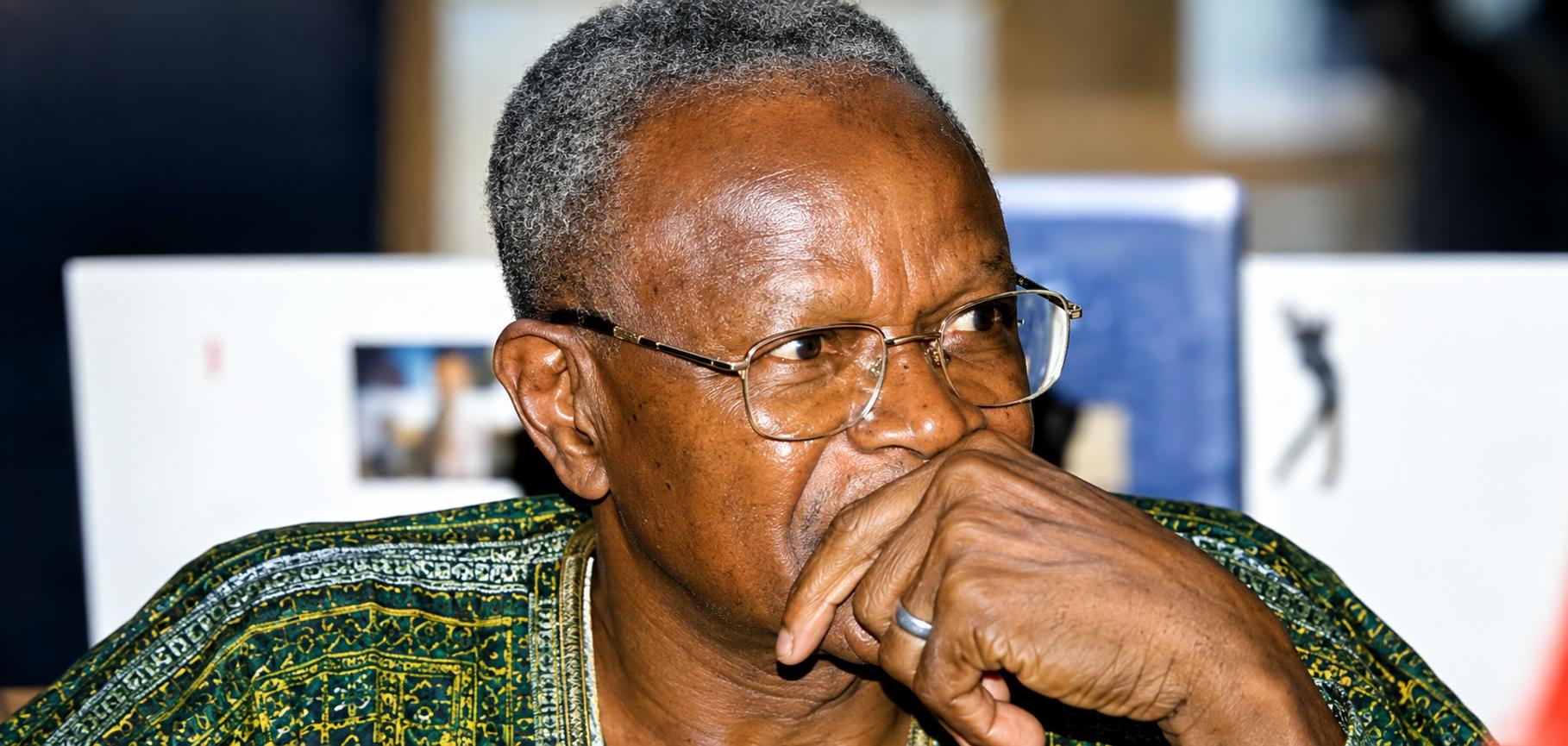
The centenarian writer whose literary revolution changed Benin forever
One hundred years after his birth in Ouidah’s sacred soil, Olympe Bhêly-Quenum stands as a towering figure whose words have redefined African literature. Born on September 20, 1926, in the heart of Gléxwé—a village steeped in Vodoun traditions and Dahomey royal history—Bhêly-Quenum has not only witnessed a century of change but has actively shaped it through his pen. His life’s work marks a decisive turning point in Beninese literary culture, bridging ancestral wisdom with modern storytelling.
A childhood steeped in myth and royalty
Raised in a family of noble lineage and guided by a mother who served as a High Priestess of Vodoun, Bhêly-Quenum’s early years were infused with the sacred rituals and oral traditions of the Fon and Yoruba peoples. This spiritual upbringing would later infuse his fiction with a rare depth, blending realism, mysticism, and social critique in ways that had never been seen before in Francophone African literature. The rhythms of the Dahomey kingdom still echoed in his prose decades later.
From student to literary pioneer: a career forged in two continents
After completing his studies in Benin and France, Bhêly-Quenum emerged as a voice of his generation. His debut novel, Un piège sans fin (1960), became an instant classic—a haunting exploration of human fate that continues to be taught in schools across Africa. But it was Le Chant du lac (1965) that cemented his legacy, winning the prestigious Grand Prix Littéraire d’Afrique Noire the following year. The novel’s meditation on progress, tradition, and the sacred waters of Lake Nokoué remains a landmark in postcolonial literature.
In his later years, Bhêly-Quenum deepened his exploration of myth and identity with La Naissance d’Abikou (1998), a lyrical tribute to the Yoruba and Fon cosmology through the figure of the Abikou—a spirit-child central to West African spiritual traditions.
The journalist who built bridges between Africa and the world
Bhêly-Quenum’s impact extended far beyond fiction. As the driving force behind La Vie Africaine and founder of L’Afrique Actuelle, he became a vital conduit for African intellectual thought, amplifying voices from the continent while challenging Western misrepresentations of African culture. His editorial leadership helped nurture a generation of writers and thinkers who saw literature not just as art, but as a tool for cultural reclamation.
The enduring legacy of a centenarian storyteller
Today, as Benin celebrates Olympe Bhêly-Quenum’s centennial, his work stands as a testament to the power of literature to transcend time. His writings—rooted in history yet forward-looking in vision—have inspired countless authors to explore the intersections of tradition and modernity. From classrooms to literary festivals, his stories continue to challenge, enchant, and provoke reflection on identity, heritage, and the human condition in a rapidly changing world.
At 100, Bhêly-Quenum’s legacy is not just in the books he left behind, but in the momentum he set in motion—a literary revolution that refuses to fade with time.