
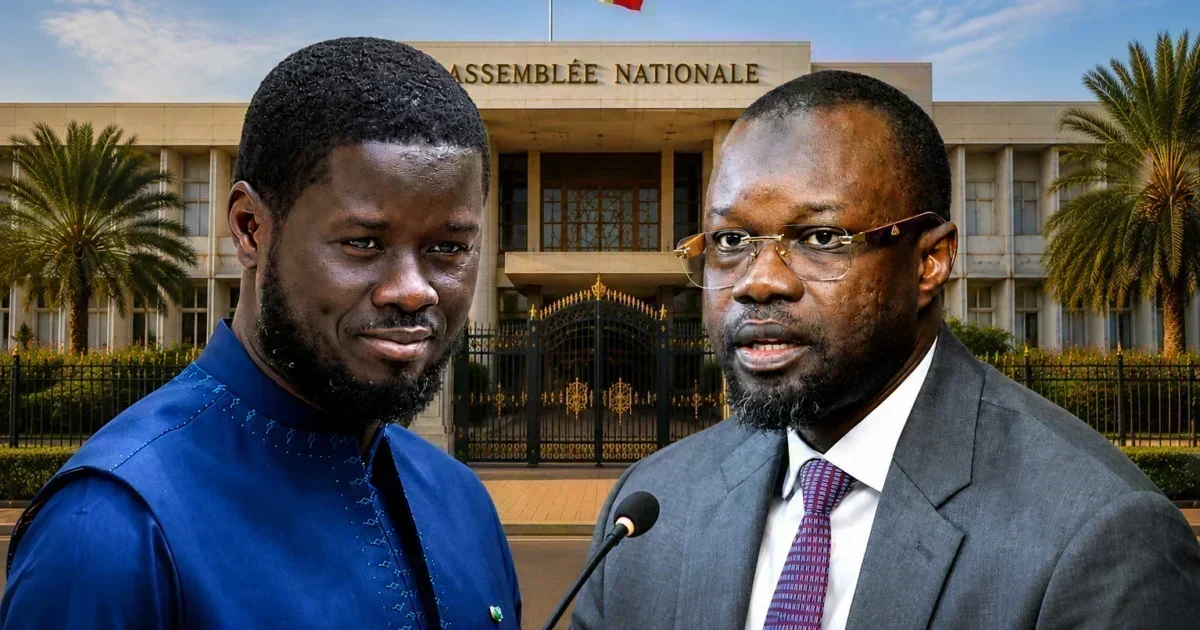
Ousmane Sonko blocks all amendments proposed by Bassirou Diomaye Faye on special credits
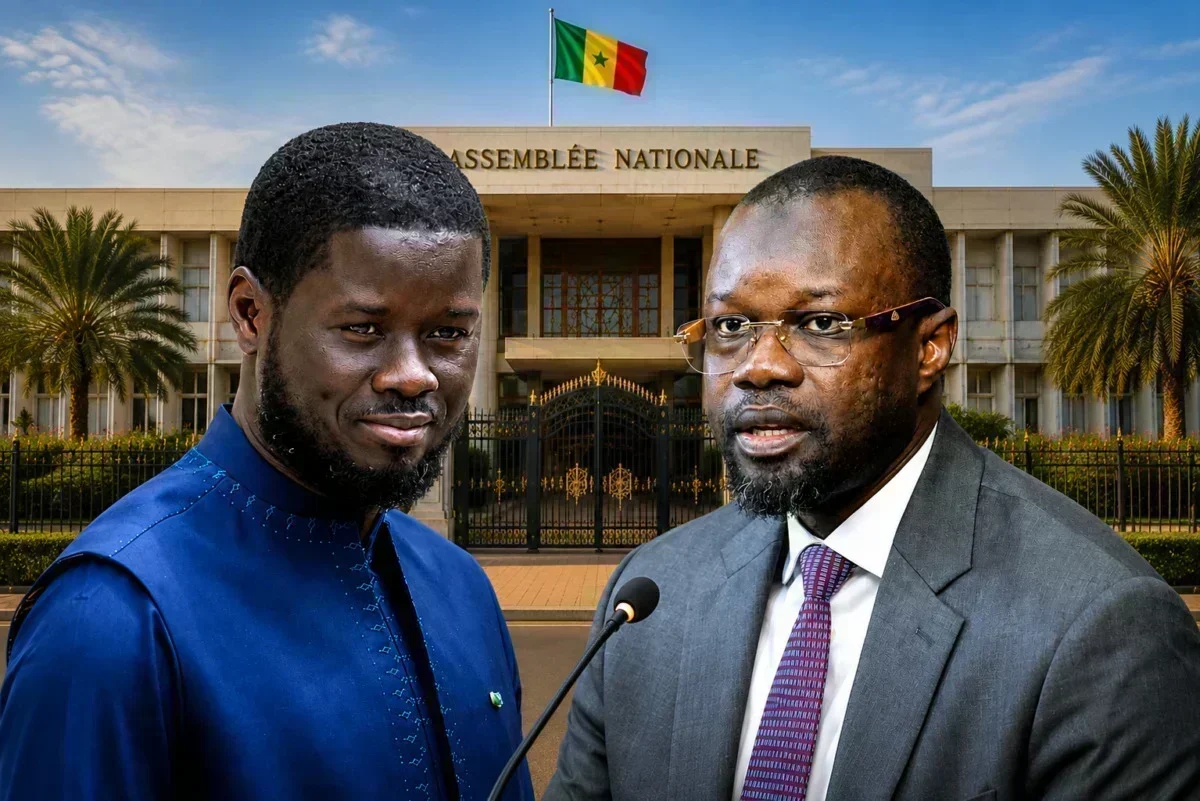
Tensions escalate between Senegal’s executive and legislative branches as the National Assembly rejects every amendment tabled on the draft law governing special credits.
Political tensions have reached new heights at Senegal’s National Assembly. After weeks of debate over asset declarations, yesterday’s clash between the executive and legislative branches focused on a technical commission’s examination of the draft law regulating special credits. The first sign of intent emerged when President Bassirou Diomaye Faye bypassed Economy Minister Cheikh Diba, instead dispatching Justice Minister Moussa Sarr to defend the amendments. The minister, tasked with upholding the government’s position, introduced six amendments—all of which were swiftly rejected by ruling party (Pastef) deputies.
Could the government resort to Article 82 next week during the plenary session? The possibility looms large as the standoff intensifies.
Yesterday’s session, chaired by Finance and Budget Control Commission President Cherif Ahmed Dicko, began around 3 PM. Minister Moussa Sarr immediately raised concerns about the draft’s wording, citing “numerous ambiguities.” He then tabled six amendments, prompting Pastef deputies to demand a recess. After prolonged discussions, the commission reconvened, only for the deputies to reject every single amendment proposed by the Justice Minister.
Minister Moussa Sarr’s amendments fall flat
The government’s strategy backfired when Pastef deputies, who had previously accepted one of Moussa Sarr’s amendments, this time rejected all six. Only one amendment survived—the one introduced by Alphonse Mané Sambou. His proposal, Article 8, initially stated: *“Special credits are subject to parliamentary oversight under conditions defined by the Organic Law governing the National Assembly’s Rules of Procedure.”* Sambou revised it to specify that oversight must be conducted by the Finance and Budget Control Commission, with managers required to maintain detailed accounting records for verification.
The executive’s six amendments were all struck down. The first, Article 1, sought to expand the scope of special credits to include allowances for the National Assembly President and Prime Minister, in addition to the President of the Republic. The amendment was rejected outright.
Article 5 of the draft law aims to exclude social spending, political activities, and routine institutional expenses from special credits while banning their use for other purposes. However, the government’s definition of special credits remains a point of contention. While the deputies’ proposal limits these funds to national defense, internal and external security, and intelligence activities, the executive broadened the scope to include preserving social order, African values of solidarity, mutual aid, social cohesion, humanitarian emergencies, social distress, and safeguarding national stability and fundamental interests.
Constitutional showdown looms
Another key disagreement revolves around oversight. The government argued that oversight should follow existing laws and regulations, whereas the National Assembly insisted it should be handled by the Finance and Budget Control Commission—before Sambou’s amendment clarified the parliamentary body’s role.
The draft law, as amended by Pastef deputies, passed the technical commission. Next week’s plenary session will be decisive, as the government is expected to reintroduce its rejected amendments. If history repeats itself, Moussa Sarr may invoke Article 82, triggering a blocked vote. However, National Assembly President Ousmane Sonko has vowed to oppose such a move unless it pertains to a government bill. This could once again push the matter to Senegal’s Constitutional Council, prolonging the institutional gridlock.