
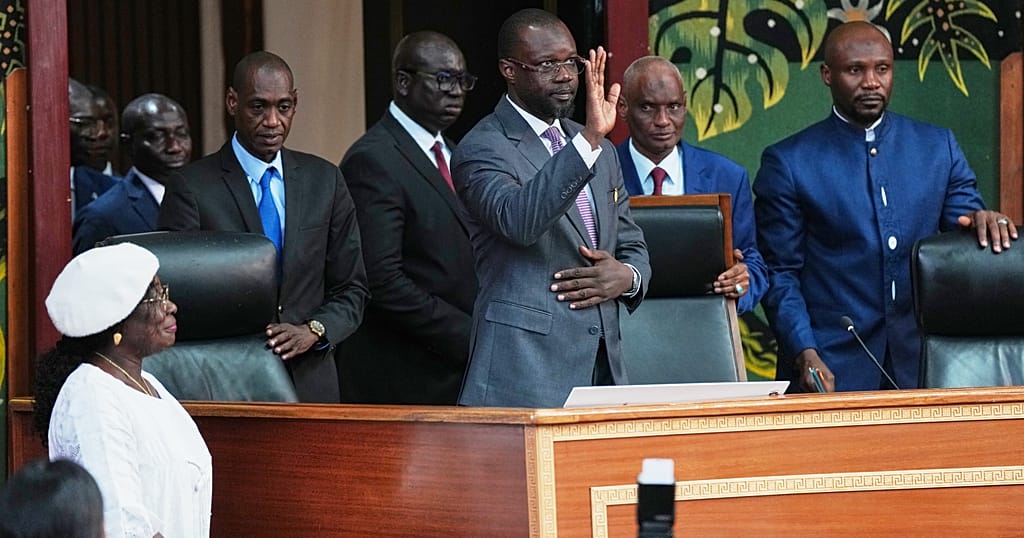
In a significant political development, Ousmane Sonko, the current head of the National Assembly and former Prime Minister, has secured a decisive re-election as the leader of Pastef. This political victory, occurring during a period of transition in Sénégal, was immediately followed by a firm warning directed at his political adversaries.
The party’s inaugural congress was held in Diamniadio, located near Dakar, bringing together delegates from national branches and the diaspora. Ousmane Sonko, who has been at the helm of Pastef since its founding in 2014, will now lead the party for a new six-year mandate.
A vision for the movement’s survival
Addressing the crowd after his election, Sonko highlighted the weight of his responsibilities, noting that Pastef is not a typical party within the Sénégal political sphere. He warned that political transformations are vulnerable to being diverted or stripped of their meaning if they are not supported by a clear doctrine and an organization capable of maintaining momentum over time.
He described the congress as a historic milestone, occurring two years after the movement attained significant influence. It is worth noting that President Bassirou Diomaye Faye won the 2024 election with the full support of Pastef after Ousmane Sonko was prevented from running.
Power dynamics between the Assembly and the Presidency
The political landscape has seen shifts recently, as Bassirou Diomaye Faye dismissed Ousmane Sonko from his role as Prime Minister on May 22. Just days later, Sonko transitioned to his current role as President of the National Assembly. During the party gathering, he spoke out against attempts to undermine the party’s political project.
Sonko declared that no effort to sabotage the movement would succeed, stating that the public stands firmly with Pastef to ensure the country’s progress. This stance comes as the party’s leadership officially boycotted the new government formed by Bassirou Diomaye Faye, even though some Pastef members were included in the cabinet list.
Currently, Pastef holds a dominant position in the legislature with 130 of the 165 seats, providing them with the authority to file a motion of censure to topple the government. Meanwhile, President Bassirou Diomaye Faye has the power to reform his cabinet following a censure and will gain the constitutional right to dissolve the National Assembly starting in November 2026.