
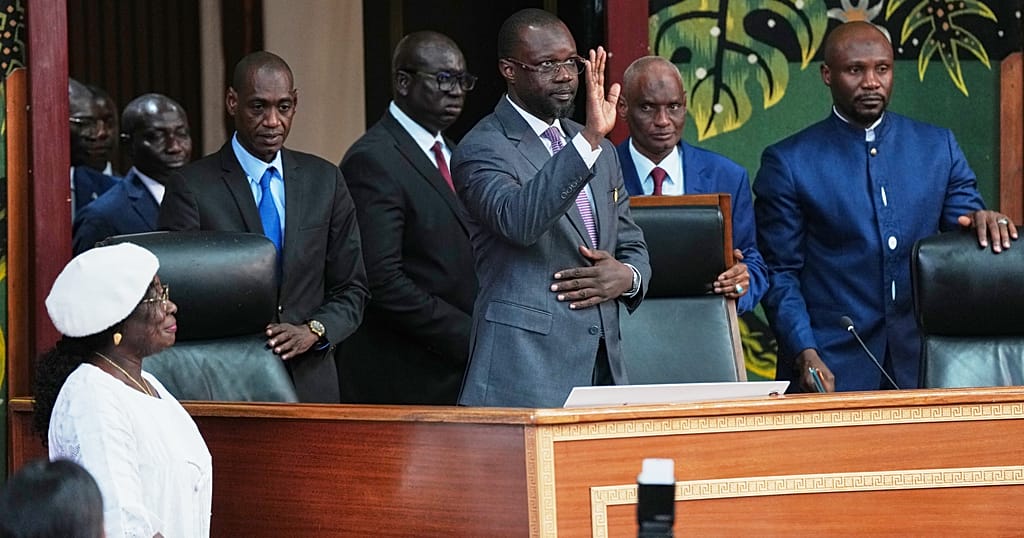
Political triumph for Ousmane Sonko in Sénégal
Ousmane Sonko, the current head of the National Assembly and former Prime Minister of Sénégal, secured a decisive victory this Saturday by being re-elected as the leader of his party, Pastef. This political triumph served as a platform for him to issue a firm message to his detractors during a period of significant political friction in the country.
The first-ever party congress took place in Diamniadio, located on the outskirts of Dakar, drawing delegates from across the nation and the diaspora to consolidate the party’s future direction.
Having guided Pastef since its inception in 2014, Sonko has now been entrusted with another six-year term at the helm of the organization. “I understand the magnitude of this duty because Pastef is not just any party in the Senegalese landscape,” he remarked during his speech at the podium following the vote.
A call for structural resilience
During his address, Sonko emphasized the importance of maintaining a clear vision. “Revolutions can be diverted, absorbed, or emptied of their substance when they lack a clear doctrine or an organization capable of sustaining change over time. This is why this congress is landmark, occurring two years after we reached the highest levels of responsibility,” he stated.
President Bassirou Diomaye Faye secured the presidency in 2024 with the backing of Pastef, following Sonko‘s exclusion from the presidential race. However, after months of internal friction, Bassirou Diomaye Faye removed Sonko from his role as Prime Minister on May 22. Sonko was subsequently elected as the President of the National Assembly just a few days later.
Warnings of political sabotage
Addressing the assembled delegates, Sonko cautioned against any attempts to disrupt the party’s political vision. “No project to sabotage this revolution will succeed because the people, standing firmly with Pastef, will provide the necessary guarantees to finally liberate our country,” he warned.
The leadership of Pastef has notably distanced itself from the cabinet recently appointed by Bassirou Diomaye Faye, despite the inclusion of some party members in the new ministerial list. This move highlights a growing rift within the executive branch.
With a dominant majority of 130 out of 165 seats in the National Assembly, Pastef holds the legislative power to initiate a motion of censure to topple the government at any time. Conversely, Bassirou Diomaye Faye retains the authority to appoint a new cabinet following a censure and will have the constitutional power to dissolve the National Assembly starting in November 2026.