
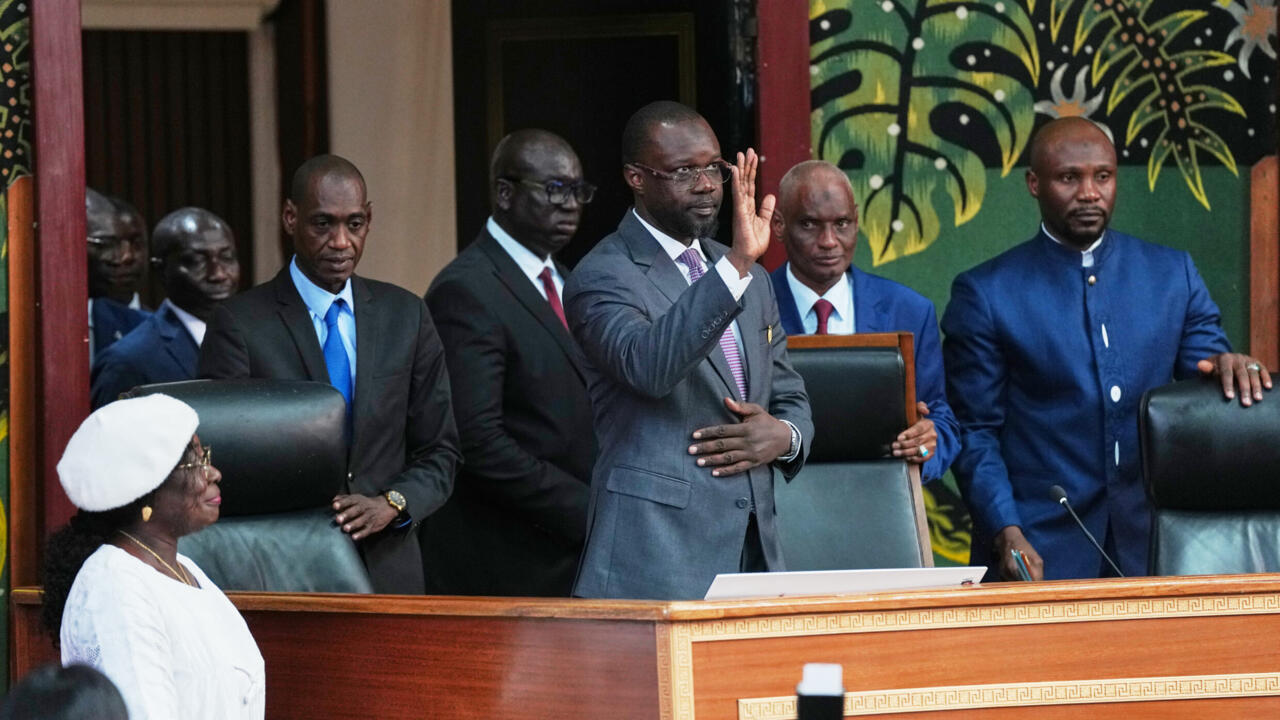
In Senegal, the political landscape shifts dramatically with the unexpected election of Ousmane Sonko as President of the National Assembly. This move raises critical questions about how President Diomaye Faye will navigate governance amid opposing legislative forces. Sonko, a prominent opposition figure, struck a conciliatory tone during his acceptance speech, emphasizing that while cohabitation may present challenges, it can also foster peaceful collaboration between branches of government.
a new balance of power in Senegal’s assembly
Ousmane Sonko’s rise to the helm of the National Assembly marks a pivotal moment in Senegalese politics. Elected on a Tuesday morning, his victory signals a shift away from the traditional dominance of ruling party structures. Sonko, who has long been a vocal critic of the administration, now holds significant influence over legislative processes, raising speculation about potential power struggles and the possibility of early legislative elections.
During his address following the vote, Sonko made clear that the Assembly would not merely rubber-stamp government initiatives. He asserted that legislators would actively shape policy, ensuring robust oversight and fostering constructive debate. This stance suggests a period of heightened political negotiation ahead, with both the executive and legislative branches potentially clashing over key reforms.
expert insights on Senegal’s evolving governance
Mamadou Lamine Sarr, a political science lecturer at the Université Numérique Cheikh Hamidou Kane in Dakar, offers valuable perspective on this unfolding scenario. He highlights the complexities of cohabitation—a system where the president and assembly leadership come from opposing political camps. While such arrangements can lead to gridlock, they also present opportunities for compromise and balanced policymaking.
Sarr notes that Senegal’s democracy has matured significantly in recent years, allowing institutions to adapt to shifting political realities. However, the success of this cohabitation will depend on mutual respect, strategic negotiation, and a willingness to prioritize national interests over partisan gains.
what lies ahead for Senegal’s political future
The coming months will be decisive for Senegal’s governance framework. Observers are closely monitoring whether President Faye will dissolve the Assembly, triggering early legislative elections in an attempt to secure a more supportive parliamentary majority. Alternatively, both sides may opt for dialogue, seeking common ground on pressing issues such as economic development, security, and institutional reforms.
Sonko’s leadership signals a new era of assertive opposition, one that could redefine the dynamics of Senegalese politics. His commitment to avoiding institutional crises suggests a preference for collaboration over confrontation, though the path forward remains uncertain.