
Analyses / Africa
Senegal’s political split: Faye and Sonko’s alliance crumbles

Caroline Roussy
Research Director at IRIS, Head of the Africa Program
On May 22, Ousmane Sonko was dismissed as Prime Minister, potentially sparking a political crisis. For months, he had described their relationship as a “soft cohabitation”—a paradoxical term given the inherent tensions of such an arrangement. Both men emerged from the same political circle and maintained a close bond in 2024, despite their contrasting public roles.
A seemingly unbreakable friendship
The political partnership between Bassirou Diomaye Faye and Ousmane Sonko began as a close friendship. Their paths converged as students before reuniting at the National School of Administration (ENA). Both pursued careers as tax inspectors, and in 2014, they co-founded the PASTEF party, uniting under a shared vision for Senegal. By 2022, Faye had risen to become the party’s secretary-general, while Sonko set his sights on the presidency.
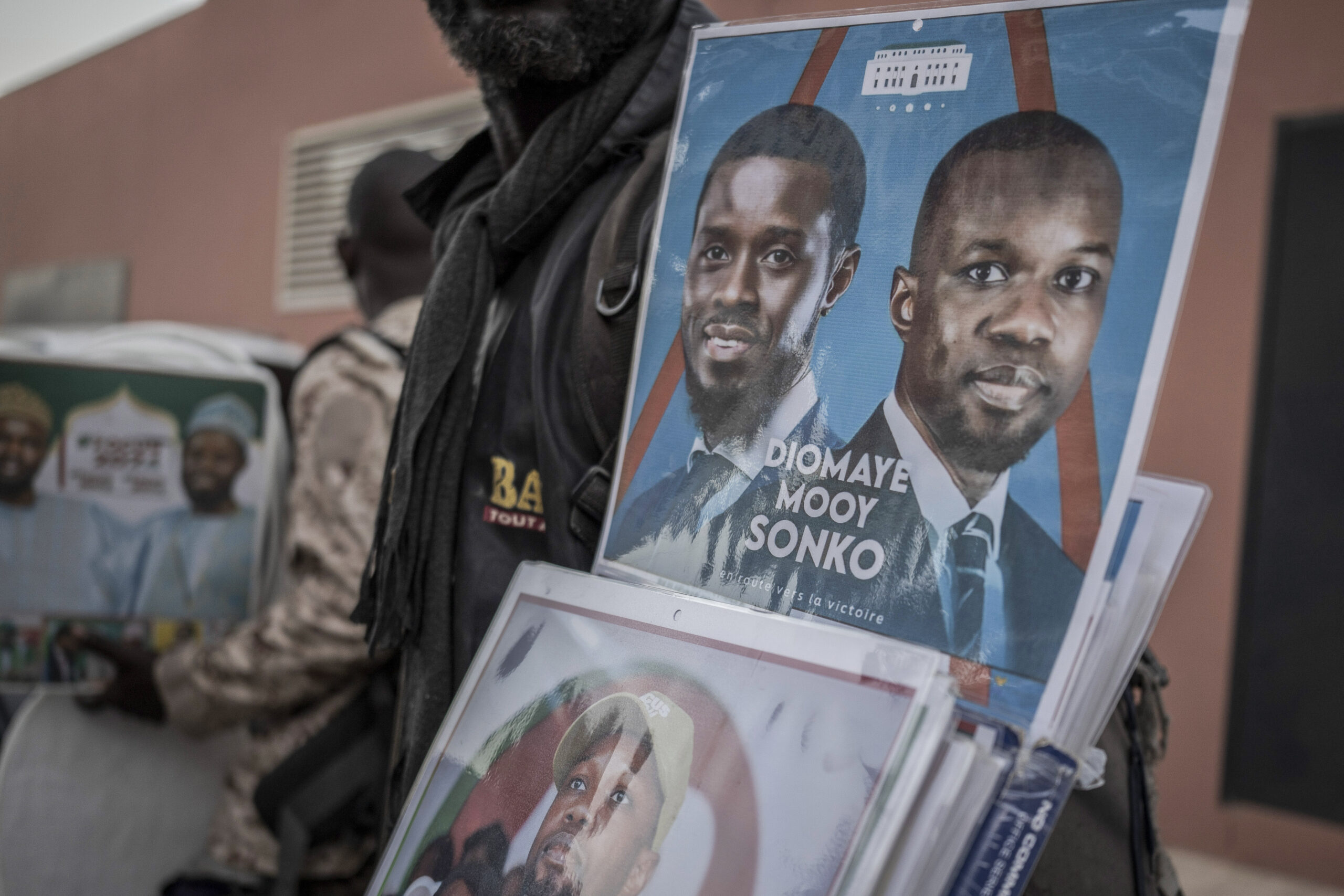
Their triumphant victory on March 24, 2024, marked a turning point. Against all odds, they overcame formidable obstacles, including imprisonment under Macky Sall’s administration. Their campaign slogan, “Diomaye mooy Sonko, Sonko mooy Diomaye,” underscored their unity. With Sonko ineligible for the presidential race, Faye emerged as his surrogate, securing a landslide win.
Faye’s rise to power was largely fueled by Sonko’s political capital. Sonko, a charismatic figure with a strong youth following, had long been a symbol of resistance against the establishment. His popularity stemmed from his narrative of change and defiance, particularly among Senegal’s younger generation.
Do Senegalese political tandems ever last?
Historical precedents suggest such alliances rarely endure. The partnership between Léopold Sédar Senghor and Mamadou Dia, once seen as unshakable, collapsed in 1962 after political and economic disagreements led to Dia’s imprisonment. Similarly, the alliance between Abdou Diouf and Moustapha Niasse dissolved quickly, while Abdoulaye Wade’s relationship with Idrissa Seck ended in Seck’s dismissal and imprisonment in 2005.
While Faye and Sonko’s split aligns with these patterns, their dynamic was unique. Sonko, not Faye, held the deeper political legitimacy, making their separation particularly consequential.
The growing rift
Tensions had been simmering for years. Disputes over the pace of reforms, the treatment of figures from the previous regime, and judicial restructuring exposed fundamental differences. Sonko publicly criticized the government’s approach, particularly on economic strategy, debt management, and relations with the IMF.
The breaking point came on November 8, 2025, during the “Tera Meeting” organized by Sonko at Dakar’s Léopold Sédar Senghor Stadium. The event, a massive display of political mobilization, underscored Sonko’s enduring influence, with buses and marches converging from across the country. The government responded by strengthening the coalition “Diomaye Président” and elevating Aminata Touré to a key role—a move widely interpreted as Faye’s attempt to assert independence from Sonko.
Sonko’s camp had long argued they were the driving force behind Faye’s victory, a claim reinforced by the sheer scale of their support. The dismissal of Sonko as Prime Minister further strained relations, leaving Faye without his most influential ally.
What’s next for Senegal?
Sonko’s dismissal sparked immediate backlash. By May 26, he had already taken over as president of the National Assembly, a position previously held by El Malick Ndiaye, who resigned in protest. With Sonko now leading the majority party, Faye faces an unprecedented challenge: governing without his former ally while confronting a legislature dominated by his adversary.
The political standoff overshadows pressing national issues: healthcare, economic stability, and youth unemployment. Two years after the political transition, many promised reforms remain stalled, fueling public frustration. The crisis between Faye and Sonko risks diverting attention from the very challenges that brought them to power in the first place.