
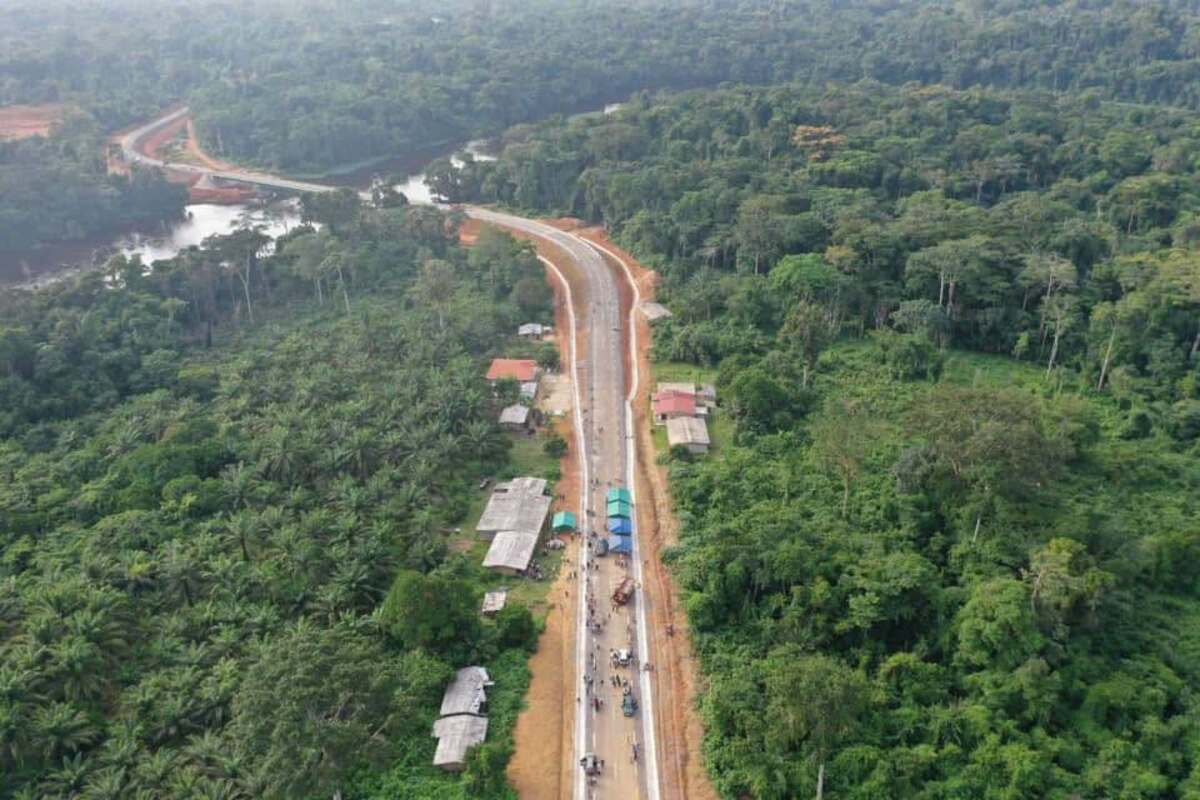
As of June 29, 2026, the final phases of construction for the access routes leading to the Nyong river bridge in Malombo are well underway. Following the completion of the main roadway, teams from CFHEC have transitioned into the signage and drainage installation stages.
The infrastructure project in the Nyong-et-Kellé division is reaching its final milestones. The access roads, spanning 960 meters across both riverbanks, are nearly ready for traffic. These routes feature a 1×2 lane configuration, with each lane measuring 3.5 meters in width, flanked by 1.5-meter shoulders on both sides.
The technical composition of the roadway is designed for durability, featuring a 25 cm foundation layer of lateritic gravel. This is topped with a 20 cm base layer of 0/31.5 crushed gravel and finished with a 5 cm wearing course of bituminous concrete. Simultaneously, the main bridge structure spanning the Nyong river is also receiving its finishing touches.
Advanced delivery for the Malombo infrastructure
Current projections indicate that the bridge over the Nyong at Malombo will be completed significantly ahead of its original contractual deadline. Specifically, the project is on track to be handed over approximately eight months earlier than anticipated. By mid-June, the 160-meter-long steel-concrete composite bridge was already standing firm, with only final signaling required on its deck. The completed spans now provide a clear path for local residents to cross the river safely.
The contractor, CFHEC, is currently focusing on the final details to prepare for the official handover. This progress has been closely monitored by the INTEGC/GENERAL ENGINEERING control group, ensuring that the high standards set by the Ministry of Public Works are met throughout the construction process.
Resilience against project challenges
The path to completing this vital link was far from smooth. The project faced numerous hurdles, ranging from logistical disputes over the location of the base camp to the difficult acclimatization of the workforce. On-site security was also a concern, with reports of fuel theft and equipment being stolen from the company’s headquarters. Furthermore, the construction teams had to contend with hostile local reactions, payment delays, and the unpredictable forces of nature, including torrential rains and rising river levels.
Despite these significant setbacks, the commitment to deliver the infrastructure ahead of schedule remained firm. The successful navigation of these challenges ensures that the Nyong-et-Kellé region will soon benefit from this modern crossing, improving connectivity and local trade.