
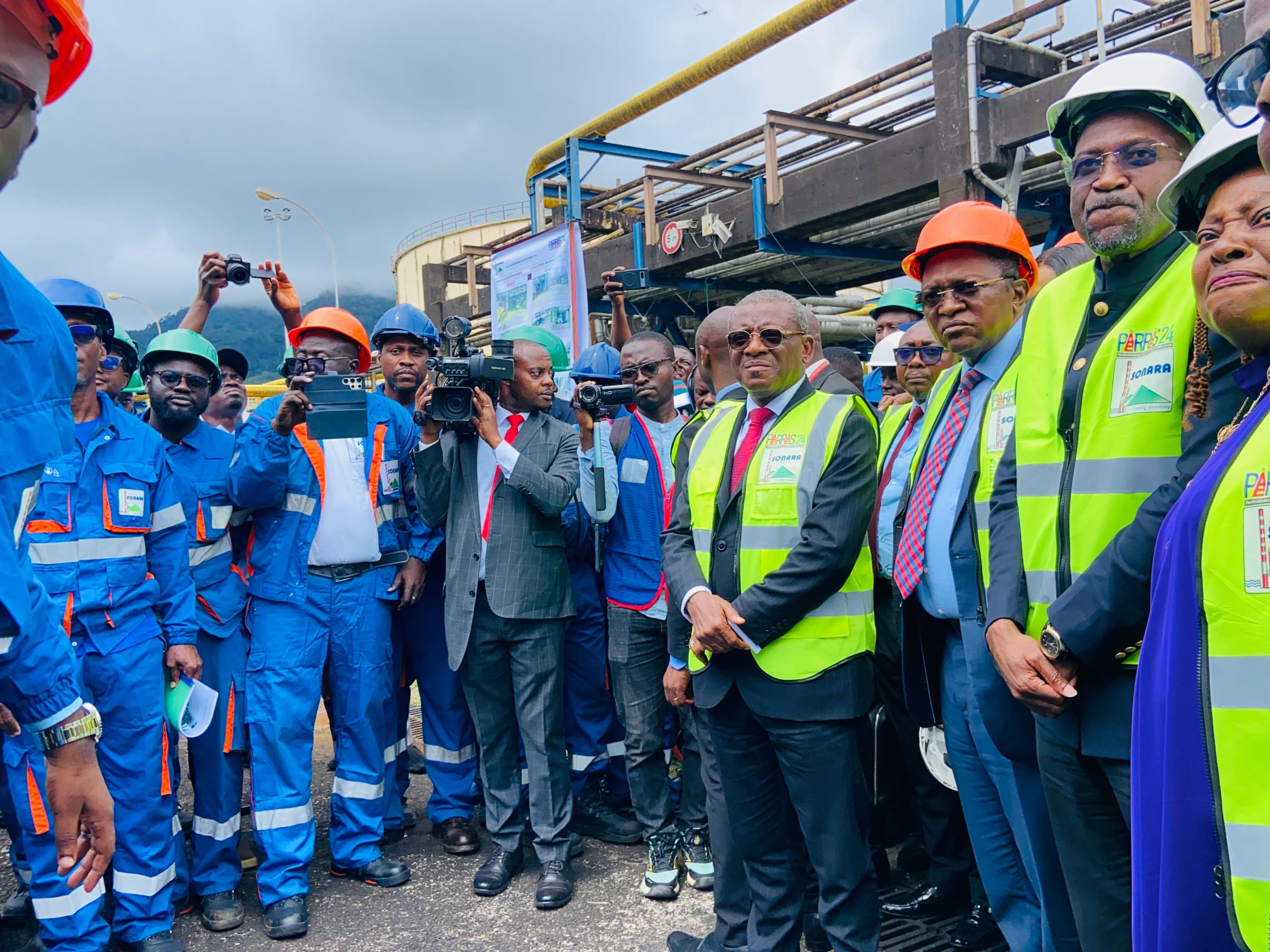
Seven years after the catastrophic fire that crippled Sonara, the company’s management has publicly proclaimed a total rebirth as of Monday, June 29, 2026. However, beneath the grand declarations lies a reality that looks more like a administrative meeting than a concrete industrial relaunch. Instead of announcing a signed partnership or a firm financial commitment, the recent high-level gathering merely focused on estimating reconstruction costs and discussing potential funding models.
The government has settled on the Design-Build-Finance-Maintain (DBFM) model for the project. This framework is intended to cover everything from the initial engineering to long-term upkeep. Yet, the timing raises serious questions. If it has taken seven years just to reach the stage of choosing a financing model, one must wonder how much longer it will take to actually secure a partner who won’t simply use the agreement to go hunting for bank loans—a pattern frequently seen in other local sectors.
The shadow of SNH and the Kribi project
This sudden surge in communication from Sonara follows closely on the heels of praise from the business community for the SNH and its new refinery project in Kribi. That project, managed by Nathalie Moudiki, has been hailed as a success in international circles. The contrast between the two initiatives is striking, leading many to believe that the recent Sonara announcement is a calculated move to distract from the progress being made elsewhere.
Political maneuvers and strategic bluffs
In reality, the recent messaging appears to be a strategic bluff aimed at President Paul Biya. As the Head of State evaluates the performance of his appointees from Suisse, the Sonara leadership seems desperate to show progress. They have highlighted the inclusion of an hydrocracker unit designed to refine local crude—a project that was already on the table before the fire and is already being integrated into the Kribi refinery plans.
Attempts to undermine the Kribi refinery
Simultaneously, a wave of coordinated attacks has surfaced against the SNH refinery project. Critics have been flooding public discourse with unfounded claims targeting Nathalie Moudiki. It is curious that these attempts to discredit the Kribi initiative coincide perfectly with Sonara’s attempt at a public comeback. While SNH officials have remained professional regarding Sonara, the same cannot be said for the detractors of the Kribi project.
History shows that opportunities for genuine reconstruction have been missed. In 2020, the Russian giant Lukoil proposed a modern rehabilitation plan for Sonara in Yaoundé, but the government never followed through. Instead, those benefiting from fuel imports continue to cite “sovereignty” as a reason to block foreign partners. This stands in sharp contrast to Nigeria, where the Dangote refinery—a private entity—handles over 60% of the nation’s oil. Similar successful models are being seen in Angola, Zambia, Uganda, and Congo, where foreign expertise from China and Russia is being utilized to build energy independence.
For Cameroun, the path forward remains clouded by political theater while the actual work of refining oil continues to stall.