
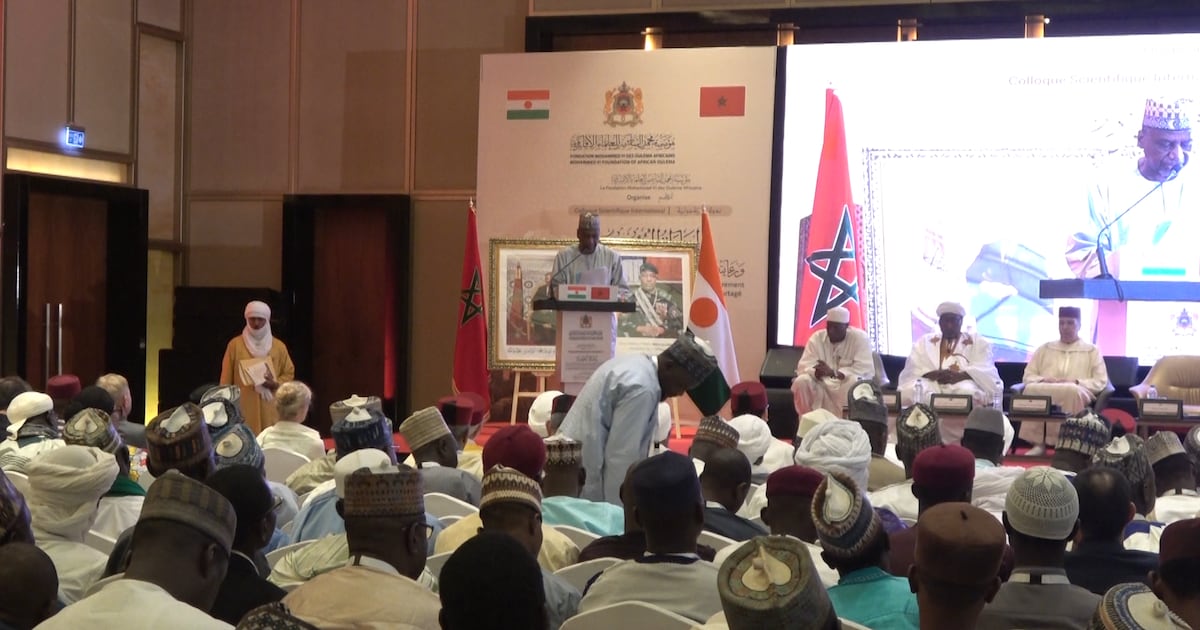
The city of Niamey recently served as the focal point for a significant international colloquium organized by the Mohammed VI Foundation of African Oulema on June 6 and 7. The gathering, centered on the theme of “The Commandery of the Faithful and its role in framing the African religious field and shared human heritage,” concluded with a series of scientific recommendations aimed at upholding the values of tolerance, peace, and communal living.
Fostering coexistence through moderate Islam
According to Ibrahim Hamgar, the secretary general of the Niger section of the Mohammed VI Foundation of African Oulema, the event took place against a backdrop of complex global and continental challenges. He noted that the discussions were designed to illuminate the principles of moderate Islam. The objective is to ensure that social cohesion and peaceful coexistence remain priorities among Muslim communities, even when faced with differing perspectives.
A strategic partnership between Niger and Morocco
Beyond the academic and religious exchanges, the meeting highlighted the robust cooperation between Niger and Morocco. Mohamed Iboumraten, the Moroccan ambassador in Niamey, described the partnership as an exemplary model across various strategic sectors. A key component of this collaboration is the training program for religious leaders. Between 2019 and 2025, this initiative has enabled 200 imams and preachers to benefit from annual scholarships and two-year training sessions at the Mohammed VI Institute in Rabat.
Religion as a pillar of stability in the Sahel
The importance of faith as a stabilizing force was echoed by Souleymane Issakou, the secretary general of the Ministry of Foreign Affairs, Cooperation, and Nigeriens Abroad. He emphasized that the analyses and debates during the colloquium demonstrated how religious frameworks contribute to social unity and intercultural dialogue. This role is particularly vital in the Sahel region, where societies are currently navigating significant security, social, and ideological hurdles.
For two days, Niamey became a hub for collective reflection on the spiritual and human challenges facing the continent. The participants shared a firm conviction that lasting peace is constructed through the pillars of knowledge, open dialogue, and mutual comprehension. The event wrapped up with the presentation of a general report, the adoption of a final communiqué, and the formalization of strategic recommendations.