
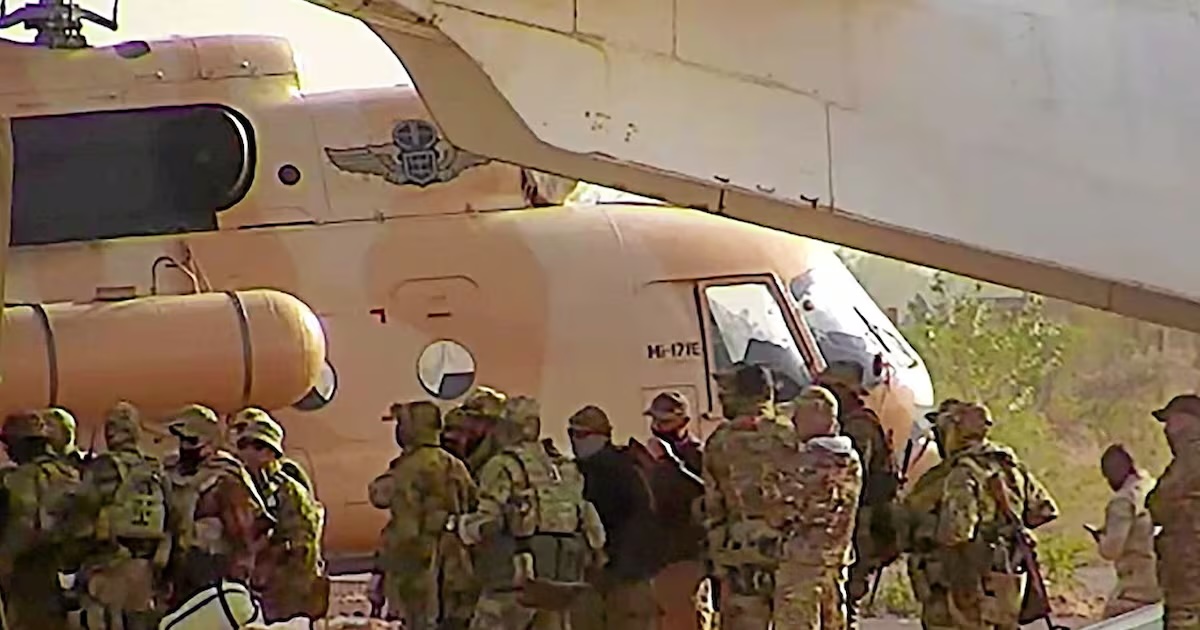
Russian mercenaries from Africa Corps partially withdraw from Mali following Kidal takeover
Key developments in Mali’s security landscape have prompted a strategic shift from Russian-backed forces. Recent territorial gains by militant coalitions have led to a partial withdrawal of Africa Corps personnel from the conflict zone.

escalation in northern Mali triggers strategic repositioning
Since April 25, 2026, coordinated offensives by the Azawad Liberation Front and Jamaat Nusrat al Islam wal Muslimin—an al-Qaeda affiliate—have seized Kidal and other northern Malian strongholds. These militant groups, merging separatist Tuareg factions with jihadist elements, executed simultaneous attacks across multiple fronts, briefly capturing military installations before tactical retreats.
The offensive extended beyond Kidal, targeting strategic locations like Aguelhok, Tessalit, Bamako, and the garrison town of Kati. In Kati, a suicide bomber detonated a vehicle-borne improvised explosive device near a high-security compound, while other military sites in Gao, Sévaré, and Kidal experienced brief occupations and sustained gunfire exchanges.
security vacuum prompts Africa Corps adjustments
Analysts suggest the partial withdrawal reflects Africa Corps’ response to the evolving threat landscape. The militant coalition’s ability to conduct large-scale operations has created an unpredictable security environment, compelling foreign forces to reassess their operational footprint in the region.
While the exact number of departing personnel remains undisclosed, regional observers note a gradual scaling down of support activities in northern Mali. This shift coincides with increased scrutiny over the Africa Corps’ long-term strategy in West Africa.
regional implications and future outlook
The withdrawal underscores the fragility of Mali’s security situation despite international intervention efforts. The militant coalition’s gains highlight vulnerabilities in the Malian Armed Forces’ defensive capabilities, exacerbated by internal divisions and logistical challenges.
As Africa Corps recalibrates its presence, questions persist about the sustainability of counterinsurgency operations in the Sahel. The withdrawal may signal a broader trend of foreign military forces reducing commitments in high-risk zones, potentially altering the balance of power in Mali’s ongoing conflict.
This analysis is based on verified reports from security sources and open-source intelligence. For further insights, explore our Mali conflict coverage.