
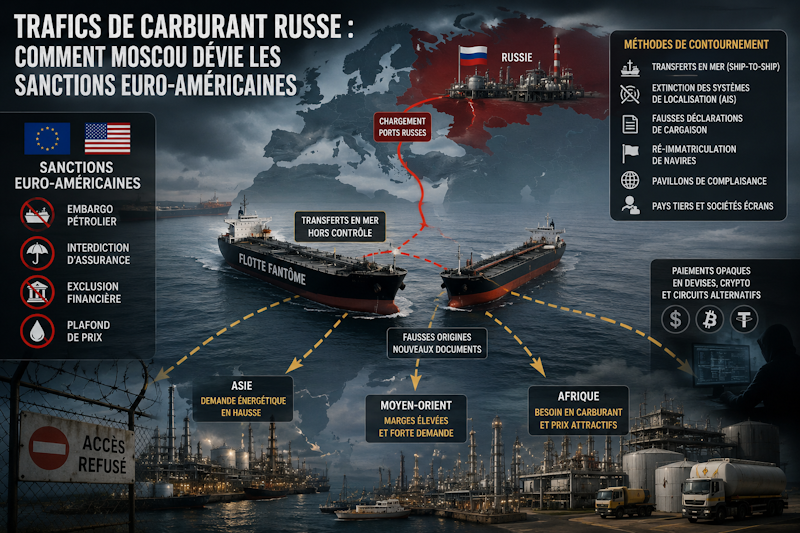
Recent investigations reveal a growing concern: Moroccan ports are emerging as pivotal transit points for Russian petroleum products, skirting international sanctions imposed after the Ukraine conflict. The North African nation has quietly positioned itself as a major importer of Russian fuel, leveraging its strategic location and trade networks.
a geneva-based trader at the heart of the operation
In 2025, the Moroccan market became the top destination for Russian fuel in North Africa, largely due to the discreet operations of a Geneva-based trading firm, Alvari SA. Through this intermediary, multiple shipments—including those from vessels like Tranquil Sea, Duke II, and Eldia—have delivered Russian oil derivatives to Moroccan ports such as Jorf Lasfar and Mohammedia, totaling tens of millions of dollars in trade.
The Tranquil Sea case highlights the elaborate tactics used to obscure the origins of these shipments. By October 2025, the vessel had already been blacklisted by the United Kingdom for its role in transporting sanctioned Russian fuel to Morocco. Shortly after, sanctions from the European Union and Switzerland followed. Ukrainian defense authorities further allege that the ship was previously involved in espionage activities targeting NATO military movements, including an incident where Finnish authorities detained it for allegedly damaging an undersea cable. Alvari SA, when approached for comment, denied any direct or indirect involvement in chartering or operating these vessels.
documents falsify origin as turkmenistan
To mask the true source of the fuel, shipping records indicate that the Cyprus Chamber of Commerce issued falsified certificates declaring Turkmen origins. These documents were generated despite the diesel actually originating from Russian ports in the Baltic Sea. Transshipments occurred offshore near Gibraltar under the guise of routine Off Port Limits (OPL) operations—typically reserved for minor logistical tasks but exploited here to bypass restrictions on fuel transfers.
Financially, transactions were conducted in U.S. dollars between Moroccan financial institutions. Attijariwafa Bank, controlled by the royal group Al Mada, acted as the buyer’s representative, while the Tangier-based offshore branch of the Banque Centrale Populaire handled payments to suppliers. The arrangement reportedly saved Moroccan distributors around $7 per metric ton compared to European benchmark prices. Meanwhile, non-Russian fuels traded at a premium of $15 above this benchmark, meaning Moroccan buyers secured an effective discount of $22 per ton—savings not passed on to consumers at the pump.
Diplomatic timing added another layer of intrigue. As the Tranquil Sea neared Moroccan waters, Morocco’s Foreign Minister Nasser Bourita was in Moscow meeting with Russian counterpart Sergey Lavrov. This high-level engagement preceded a critical United Nations Security Council vote on Western Sahara, where Russia ultimately abstained—a outcome favorable to Rabat.
spain detects suspicious fuel flows from Morocco
Across the Strait of Gibraltar, Spanish authorities have raised alarms over a sharp rise in diesel imports from Morocco. Industry analysts suspect a covert rerouting mechanism: Russian oil, relabeled during transit, may be entering the European Union through Moroccan ports—despite Morocco lacking domestic refining capacity.
Official data underscores the trend. In 2025, Morocco imported 645,000 tons of Russian diesel, followed by an additional 489,000 tons in early 2026—amounting to 45% of the country’s total fuel imports. Spanish customs records show virtually no diesel exports from Morocco to Spain prior to 2022, when EU sanctions against Russia took effect.
The timing is telling. After the escalation of Middle East tensions in early 2026, particularly following U.S.-Israel strikes on Iran and the subsequent closure of the Strait of Hormuz, Spanish ports such as Tarragona, Barcelona, and Bilbao received 76,000 tons of Moroccan-sourced diesel between March and June—volumes nearly unseen for over a year. Spanish refiners, represented by the Spanish Association of Fuel Industries (AICE), have expressed concern over potential unfair competition from fuels of questionable origin infiltrating the EU market.
investigations converge on a shadow trade route
When cross-referenced, the findings from both investigations paint a consistent picture: Russian fuel, rebranded en route, passes through Morocco before potentially continuing onward into the European Union. While neither report provides definitive proof of every single shipment following this path, they rely on robust circumstantial evidence: maritime tracking data (via Kpler), customs documentation, and sector insider testimonies. Both acknowledge the inherent difficulty in tracing refined products once blended into global supply chains, where origin can be obscured through mixing and relabeling.