
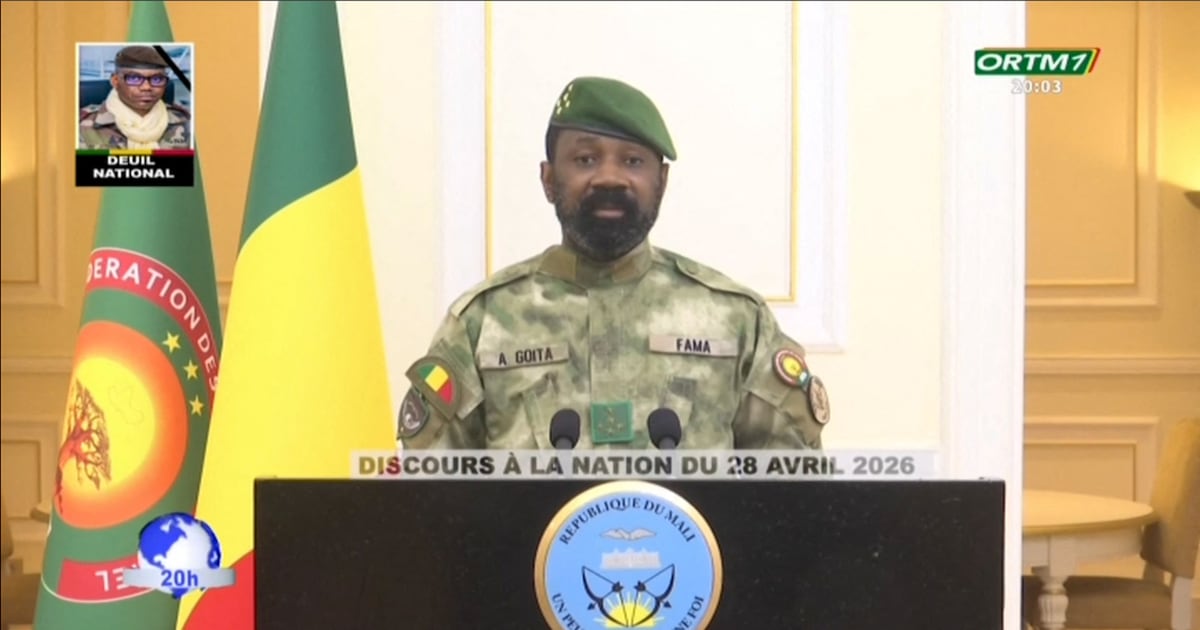
While Mali faces profound instability, its regional partners appear to be looking away. Neither the Alliance of Sahel States (AES) — established to forge a collective security response among Mali, Burkina Faso, and Niger — nor ECOWAS, which Bamako recently exited, seem to wield significant influence. Amidst strategic silences, perfunctory condemnations, and intricate political calculations, West Africa projects an image of a strategic void. Bakary Sambe, president of the Timbuktu Institute and a research professor at Gaston-Berger University in Saint-Louis, offers his analysis on this evolving situation that is redefining security balances across West Africa.
Le Point Afrique: Following the attacks on April 25, what is the true state of affairs in Mali today?
Bakary Sambe: The coordinated assault was particularly devastating, especially in Kati, where Defense Minister Sadio Camara tragically lost his life. He has since been replaced by General Assimi Goïta himself. However, at this juncture, it’s premature to speculate about a potential regime change or the fall of Bamako. Life, though challenging, persists, and Malians, long accustomed to crises, continue to demonstrate remarkable resilience. This holds true despite the ongoing exchange of communiqués between military authorities, the Azawad Liberation Front (FLA), and the JNIM.
What concrete actions are Burkina Faso and Niger, Mali’s allies in the AES, taking?
Captain Ibrahim Traoré of Burkina Faso officially condemned the events as a “monstrous plot.” While some might view this reaction as understated, Ouagadougou’s stance is rooted in realism. Burkina Faso remains deeply preoccupied with its own internal security challenges, which explains its relative withdrawal. Just last week, numerous soldiers were killed in fresh attacks on Burkinabè soil. During the fuel blockade in Mali at the end of 2025, Burkina Faso did offer logistical support until the situation on its own front became too complex to manage.
From a legal standpoint, Articles 5 and 6 of the Liptako-Gourma Charter, which forms the basis of this Sahelian alliance, are often likened to NATO’s principle of mutual assistance. While the framework is clear, internal security threats in both Burkina Faso and Niger restrict their full implementation. On paper, the AES functions as a confederation that has yet to achieve strategic maturity, particularly regarding its capacity to pool forces. This week, Nigerien authorities even declared a national day of