
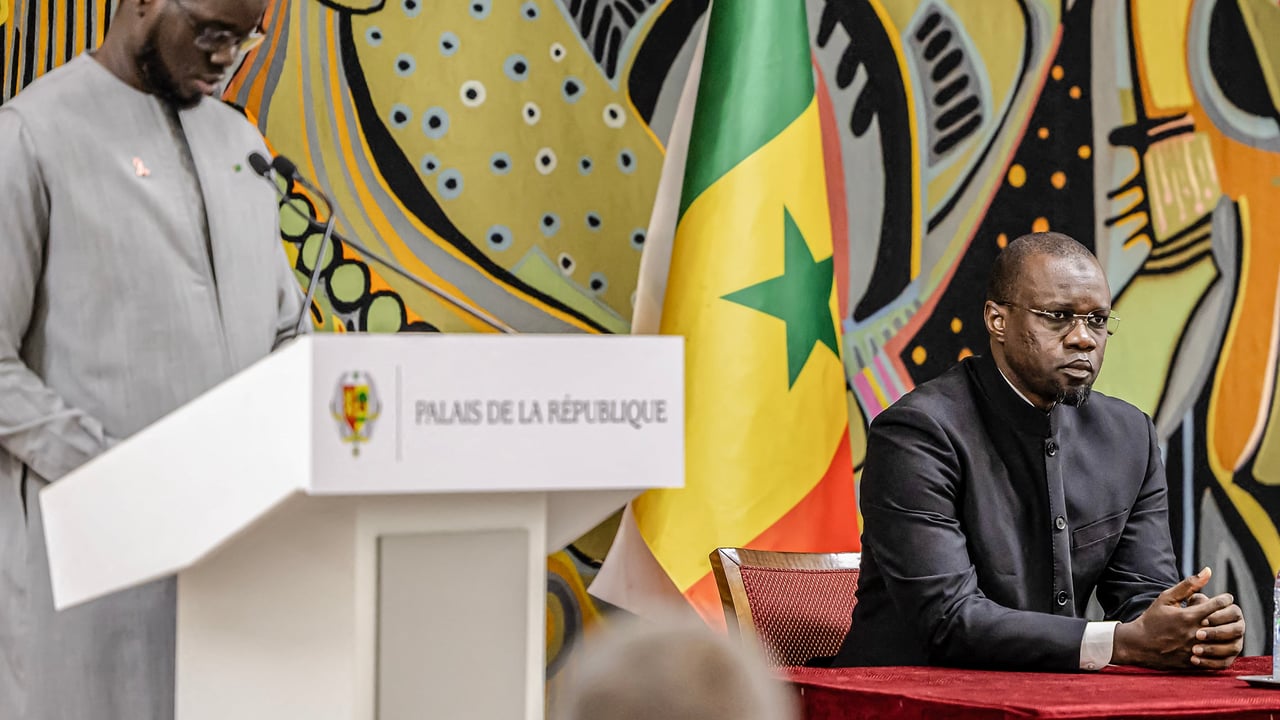

« I want strong managing directors, strong ministers, and a super-strong Prime Minister. I don’t want to be the kind of president who holds all the power. » On April 4, 2025, during a press briefing marking National Day, President Bassirou Diomaye Faye made his intentions clear: he is considering a major overhaul of the powers between the head of state and government institutions in Senegal.
The proposed constitutional reform has sparked intense debate across the country. While the president emphasizes a desire for shared governance, political analysts warn that the changes could disproportionately benefit one figure: opposition leader Ousmane Sonko. His political movement, PASTEF, has seen a meteoric rise in influence, positioning him as a key player in Senegal’s evolving political landscape.
Why Ousmane Sonko could emerge as the biggest beneficiary
The reforms under discussion aim to redistribute executive authority, potentially reducing the president’s centralized control. This shift, if implemented, could create a more decentralized system where prime ministers and cabinet ministers gain significant autonomy. For Ousmane Sonko, this could mean greater influence over government decisions, especially if his party strengthens its position in future elections.
The president’s public statements reflect a deliberate move toward institutional balance. However, the proposed changes also align with Sonko’s long-standing criticism of concentrated executive power. His supporters argue that the reforms would curb presidential overreach—a central tenet of his political platform.
Potential political implications
The timing of these reforms is critical. With Senegal’s political dynamics in flux, the constitutional amendments could reshape the balance of power before the next election cycle. Analysts suggest that Sonko’s party, PASTEF, is well-positioned to capitalize on a more fragmented executive structure, potentially securing key ministerial roles or even influencing the prime minister’s appointment.
Critics, however, caution that such reforms could lead to instability if not carefully managed. The delicate equilibrium between strengthening governance and avoiding power vacuums remains a major concern for political observers.
Public reaction and political tensions
The debate over the constitutional reform has divided public opinion. While some citizens support the idea of a more balanced executive, others fear it could destabilize the country. Ousmane Sonko’s supporters see the reforms as a step toward greater accountability, while his detractors argue they could weaken the presidency at a time when strong leadership is needed.
The coming months will be decisive. As the government finalizes its proposals, the political landscape in Senegal could undergo significant changes—with Ousmane Sonko poised to play a central role.