
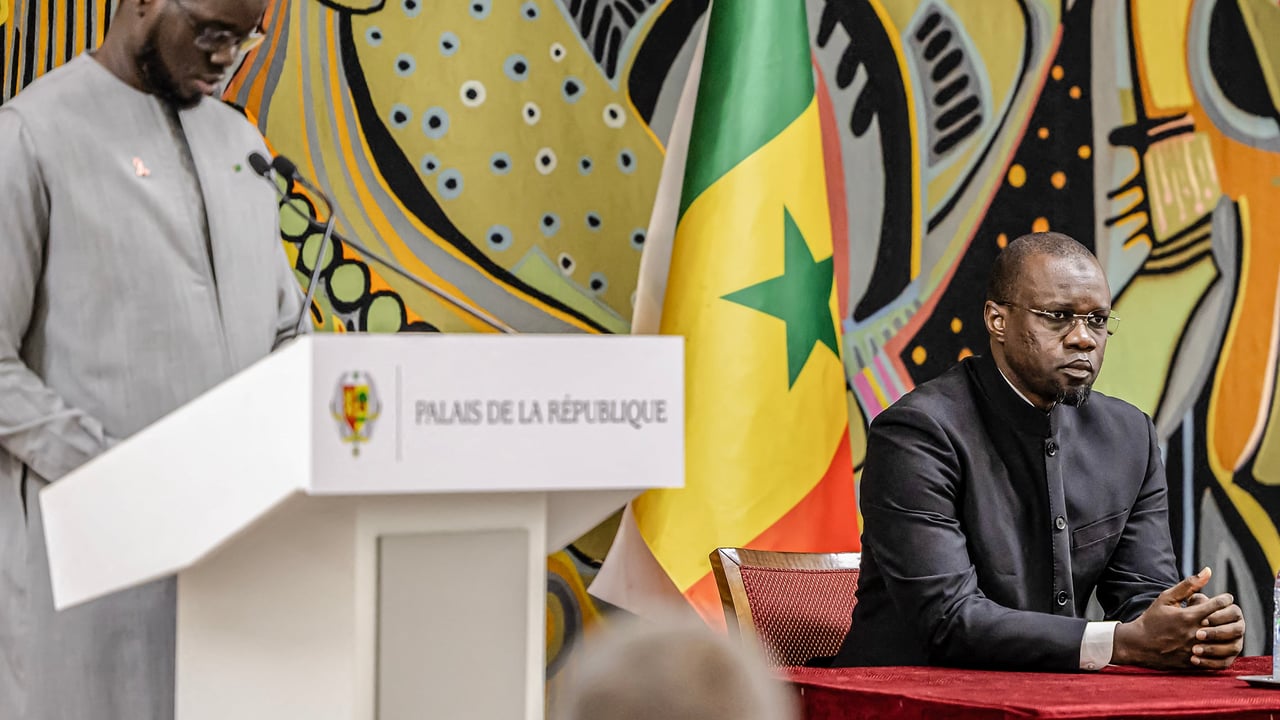

Why Senegal’s constitutional reform may strengthen Ousmane Sonko’s political position
A deep dive into the proposed changes and their potential impact on Senegal’s political landscape.
During a national celebration press briefing on April 4, 2025, President Bassirou Diomaye Faye made a striking declaration: he intends to reshape the balance of power between Senegal’s presidency and other key institutions. His statement—“I want strong CEOs, strong ministers, a powerful Prime Minister. I refuse to be the kind of president who concentrates all authority in one place.”—signaled a sweeping constitutional overhaul aimed at redefining executive responsibilities.
While the President’s remarks framed the reform as a move toward decentralization and shared governance, political observers argue that the proposed changes could inadvertently consolidate influence for opposition leader Ousmane Sonko. Here’s how the constitutional amendments might tip the scales in his favor.
The proposed changes: reducing presidential dominance
President Faye’s vision includes limiting the presidency’s sweeping powers by:
- Strengthening the role of the Prime Minister, who would gain broader executive authority;
- Enhancing the autonomy of ministers and public enterprise directors;
- Establishing clearer checks and balances between institutions.
At first glance, these reforms appear to democratize governance. Yet, critics warn that a weakened presidency could create a leadership vacuum, particularly in a climate of heightened political tension and polarization.
How Ousmane Sonko stands to gain
Ousmane Sonko, leader of the Pastef movement and a prominent opposition figure, has long positioned himself as a reformist candidate advocating for greater government transparency and accountability. His political narrative resonates with a growing segment of the Senegalese public disillusioned with centralized power structures.
The constitutional reforms, if implemented, could indirectly amplify his influence in several ways:
1. A fragmented executive: opportunity or risk?
By diluting the presidency’s authority, the reforms may lead to a more fragmented executive branch—one where no single figure holds overwhelming control. While this could curb presidential overreach, it may also create operational inefficiencies and weaken crisis response capabilities.
For Sonko, this fragmentation could be strategic. As the opposition’s most visible leader, he could emerge as the de facto voice of coordination across government bodies, positioning himself as a unifying figure amid institutional divides.
2. Strengthening opposition influence
The proposed changes include provisions for greater parliamentary oversight, including enhanced committee powers and stricter accountability measures for ministers. With the National Assembly already dominated by opposition voices, these reforms could further embolden lawmakers aligned with Sonko’s movement to shape policy and public discourse.
Moreover, if the reforms introduce term limits or restrictions on presidential powers, they could inadvertently extend the political longevity of opposition figures like Sonko, who may benefit from a more fluid, less hierarchical power structure.
3. Public perception and political capital
Public sentiment in Senegal remains sharply divided over the balance of power. President Faye’s commitment to reform has earned him broad support, but skepticism lingers about the motives behind the constitutional shift. Sonko, already a vocal advocate for systemic change, could leverage any perceived shortcomings in the reform process to bolster his own credibility as a champion of democratic renewal.
If the reforms are perceived as overly rushed or lacking broad consensus, Sonko’s narrative of a “rigged system” could gain traction, further consolidating his base among disaffected voters.
Potential challenges and counterarguments
Not all political analysts agree that the reforms will necessarily favor Sonko. Some argue that a fragmented executive could lead to policy paralysis, particularly in areas requiring decisive leadership, such as economic recovery or national security.
Others point out that President Faye, despite his rhetoric, retains significant influence within his own party and among key stakeholders. His ability to shape the reform process from within could limit the extent to which Sonko benefits from the changes.
Furthermore, the reforms may include safeguards—such as transitional clauses or sunset provisions—to prevent institutional instability. These could dilute any immediate gains for the opposition.
What’s next?
The constitutional amendments are expected to undergo rigorous debate in the coming months. While President Faye has framed the reforms as a step toward a more inclusive governance model, the long-term implications remain uncertain. One thing is clear: in Senegal’s evolving political landscape, the outcome of these changes could redraw the balance of power—and Ousmane Sonko’s role in it—for years to come.