
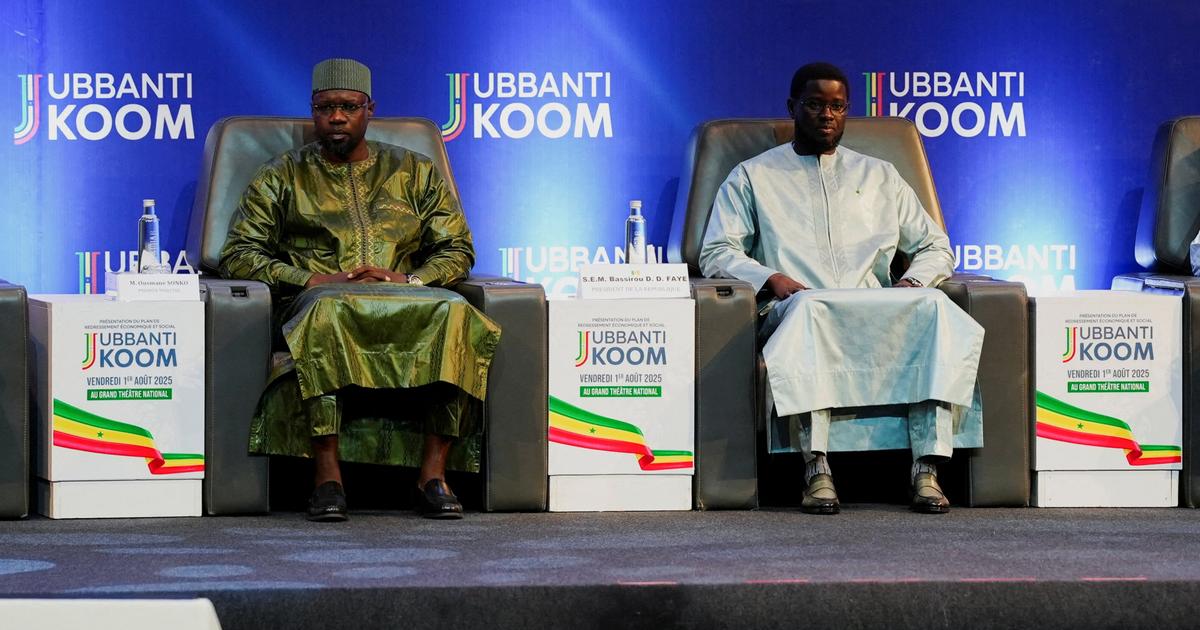
The political landscape in Senegal has reached a critical juncture following the abrupt dismissal of Prime Minister Ousmane Sonko by President Bassirou Diomaye Faye. This decisive move, announced on a recent Friday, marks the culmination of escalating tensions and irreconcilable differences between the two leaders of West Africa’s democratic stronghold.
The immediate aftermath saw Malick Ndiaye, President of the National Assembly, resign from his parliamentary post while retaining his seat. This strategic step appears designed to pave the way for Sonko’s return to the legislature, where he could reclaim his role as a deputy and potentially ascend to the Assembly’s presidency in a special session scheduled for May 26.
Parliament set for decisive vote on Sonko’s political future
The extraordinary parliamentary session, slated for May 26, will determine the new Assembly president. Political observers anticipate Sonko’s election to the position, given his strong support base within the Patriotes africains du Sénégal pour le travail, l’éthique et la fraternité (PASTEF)—the ruling party he founded. With 130 out of 165 deputies under its banner, the party holds overwhelming legislative influence.
Sonko’s potential elevation to Assembly president would position him as Senegal’s second-highest constitutional authority, providing a powerful platform to challenge President Faye’s agenda. Analysts warn this power shift could trigger institutional gridlock, as Sonko may leverage his legislative control to block government initiatives or advance his own political ambitions.
Rising tensions within the ruling party
Since assuming office, President Faye has sought to assert his independence from Sonko, his former mentor, whose legal ineligibility in 2023 prevented him from contesting the 2024 presidential election. Despite this setback, Sonko’s political influence remains intact, fueled by his grassroots popularity and the PASTEF’s dominance in parliament.
The recent electoral code reform, passed on May 12, has further complicated the dynamic. While intended to clarify ineligibility criteria, critics argue it was tailored to accommodate both Faye and Sonko’s political trajectories. Yet, Sonko’s eligibility for the 2029 presidential race remains uncertain until the Constitutional Council rules on the matter.
High stakes for Senegal’s stability and PASTEF’s future
The looming confrontation between the two leaders risks fracturing the ruling party, whose cohesion is already strained. Observers caution that unchecked rivalry could erode public trust, potentially benefiting opposition forces or triggering voter backlash in future elections. The “I hold you, you hold me” stalemate between Faye and Sonko threatens to destabilize Senegal’s governance, undermining the very reforms they pledged to deliver.
As the nation braces for the Assembly’s vote, the question lingers: will pragmatism prevail over personal ambition? The outcome will not only shape Senegal’s political trajectory but also test the resilience of its democratic institutions in the face of internal strife.