
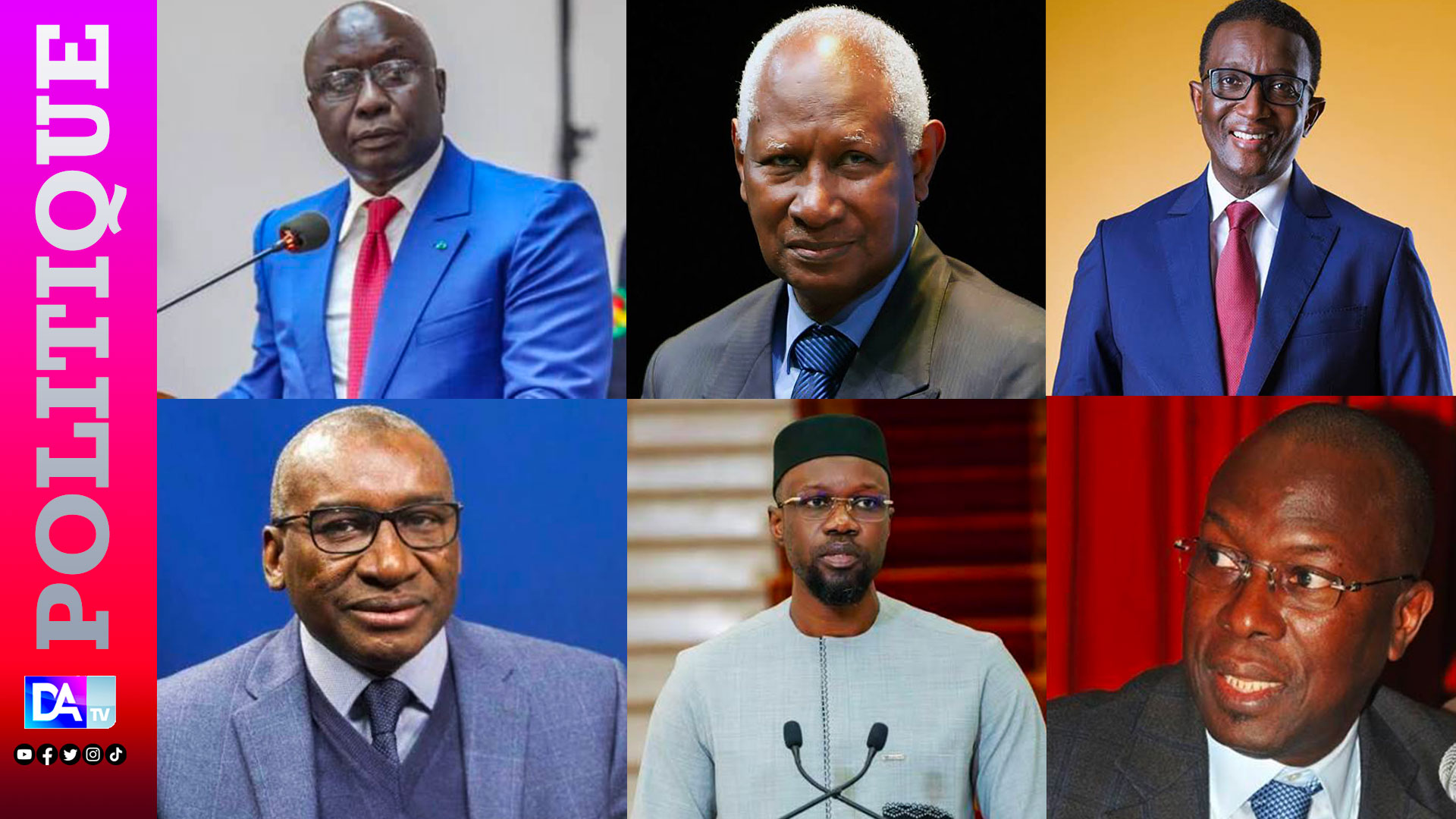
The controversy surrounding Senegal’s political discretionary funds has erupted into one of the most intense debates in the country’s political landscape. On television, social media, and public forums, politicians, former ministers, and lawmakers are locked in fierce disagreement over a system shrouded in secrecy. At its core, the debate asks a simple yet explosive question: who truly benefited from these special funds allocated to the Prime Minister’s office before Ousmane Sonko, and how were they used?
The debate has gained urgency as the National Assembly, now presided over by Sonko himself, convenes in an extraordinary session since August 10 to deliberate on a proposed law regulating special credits and secret funds. The session also includes discussions on asset declarations, labor laws, and the creation of six parliamentary investigative commissions.
The spark ignited by Aly Ngouille Ndiaye
The simmering tensions boiled over after former Interior Minister Aly Ngouille Ndiaye made bold claims during a television appearance on SenTV. Known for his outspoken nature, he asserted that Ousmane Sonko was the first Senegalese Prime Minister to receive political funds allocated exclusively to the Prime Minister’s office: « In reality, he was the first head of government to benefit from these funds. I was never Prime Minister, but there are former Prime Ministers still alive who can attest to this, and only Boun Abdallah Dionne has passed away. I know he did not have such funds. Therefore, this practice began with Sonko. Amadou Ba did not have them either, as he was replaced by Sidiki Kaba, who did not last long enough in office to benefit from them. »
Ngouille Ndiaye also addressed the frequently cited amount of 1.7 billion FCFA, questioning its frequency: « Some say it was quarterly, others say annually. If it were annual, Sonko would have received around 8 billion FCFA. But I know the initial 1.7 billion FCFA was exhausted. If it were annual and depleted in a single quarter, that would be alarmingly rapid. » He echoed statements from the Minister of Energy and Petroleum, Abdourahmane Diouf, that this first allocation was entirely spent before Sonko requested additional funding—an act he framed as evidence that Sonko’s successor found nothing left. For Ngouille Ndiaye, this demands answers: « In the investigative commissions, he should have included his own case for transparency’s sake. There are even things I know I cannot say here. »
Former Prime Ministers push back with counterclaims
Ngouille Ndiaye’s remarks triggered a wave of backlash on social media, where viral archival footage directly contradicted his claims. One of the most compelling testimonies came from Souleymane Ndéné Ndiaye, the last Prime Minister under President Abdoulaye Wade. In an April 2025 interview on the show *Faram Facce*, he stated: « Even when I was Director of the President’s Cabinet, I already had access to political funds. Every month-end, I received my allocation. » This revelation places the existence of these funds far earlier than Ngouille Ndiaye suggested—back to the time when Ndéné Ndiaye served as Director of the President’s Cabinet, not as Prime Minister.
Further contradictions emerged from statements attributed to former Prime Minister Macky Sall, who served under Wade between 2004 and 2007, and Idrissa Seck, who held the role from 2002 to 2004. Social media users also recalled a memorable episode: President Wade allegedly used his own presidential discretionary funds to « assist » his Prime Minister with certain expenses.
The Pastef camp dismisses claims as « baseless accusations »
The response from the presidential camp came swiftly. Elimane Pouye, Director-General of the Société de Gestion et d’Exploitation du Patrimoine bâti (SOGEPA SN), condemned the accusations as « baseless. » He urged a comparison of the Prime Minister’s budgets for 2023, 2024, and 2025, arguing that the variations were due to institutional changes rather than the existence of funds. For Pouye, the real question is not whether these funds existed before Sonko, but how previous leaders used them. The debate, he insists, should focus on the democratic and accountable use of public funds, not on divisive arguments over amounts and timing.
Supporters of the Pastef movement also pointed out that the party has long criticized the lack of oversight on these funds, with reform proposals dating back to 2014 and included in their 2019 electoral manifesto—years before Sonko became Prime Minister in 2024. This underscores that the practice was neither new nor exclusive to Sonko’s administration.
Tracing the historical roots of discretionary funds
To move beyond the current controversy, parliamentary records reveal that these discretionary envelopes have grown significantly over successive administrations. Under President Abdou Diouf, allocations stood at approximately 650 million FCFA, while under Abdoulaye Wade, they ballooned to nearly 8 billion FCFA. A 2008–2012 report by the General Inspectorate of State (IGE) uncovered that 108 billion FCFA in political funds were spent during this period, with 48 billion FCFA lacking any accounting records—a figure long buried in Senegal’s public accounts.
A stark example of mismanagement emerged with the National Program for Local Development (PNDL), a 100 billion FCFA fund allocated to the Prime Minister’s office. This program became the center of an investigation into former Prime Minister Idrissa Seck after his departure from Wade’s government in 2004. Investigators probed the management of the PNDL and two of Seck’s real estate assets in Saly and Atlanta, in connection with allegations of illicit enrichment. This documented episode highlights how long the issue of oversight on Prime Ministerial discretionary funds has persisted.
Calls for legal oversight intensify
The demand for transparency has found strong advocates in the National Assembly. Deputy Guy Marius Sagna revealed he submitted a draft law in September 2025 to create a « Verification Commission for Political Funds Credit, » which he presented to the Pastef parliamentary group and Ousmane Sonko himself, then party leader. According to Sagna, Sonko asked him to delay the initiative, preferring the reform come from the government rather than the legislature: « President Sonko asked me to wait as he discussed the matter with the relevant parties, » he wrote on Facebook. Sagna noted that Sonko later amended the proposal « fruitfully » to strengthen oversight but lamented that the President seemed intent on maintaining the status quo. Since then, Sagna has introduced a package of four draft laws, one of which proposes creating a commission to audit the use of political funds.
Deputy Thierno Alassane Sall, a former Energy Minister famed for his 2017 resignation over transparency concerns, went further, calling these funds « theft » for lacking parliamentary approval. Speaking in the National Assembly on May 22, he declared: « The Prime Minister came here to discuss political funds, but this is not his responsibility to address. » However, he carefully distinguished these controversial envelopes from the officially approved intelligence funds allocated to the presidency, which he argued should not be conflated.
Not all voices align. El Hadj Momar Samb, Secretary-General of the RTA-S, accused the parliamentary majority of « opportunism, » noting that many current members held high-ranking positions in past administrations without advocating for oversight earlier. While supporting transparency, he called for broader parliamentary scrutiny, extending to the management of the National Water Company (ONAS), oil revenue tracking, and funds allocated to the Matam region.
Balancing transparency with institutional continuity
Amid the debate, the official stance favors regulation over abolition. In May, President Bassirou Diomaye Faye defended the retention of these funds, citing their role in intelligence and social solidarity, arguing that their outright removal could leave critical needs unmet. Sonko, for his part, ruled out abolishing the funds but supported stricter oversight. In a May 22, 2026 address to the National Assembly, he cited the 1.77 billion FCFA allocated to the Prime Minister’s office as an example of the need for accountability.
This context frames the extraordinary session that opened on August 10, 2026, where the urgent legislative agenda includes a draft law to regulate special credits and secret funds, alongside a constitutional amendment on presidential asset declarations. The debate underscores the persistent tension between an entrenched institutional practice—documented across regimes from Abdou Diouf to the present—and the demands for transparency and accountability championed by the current administration since 2024.