
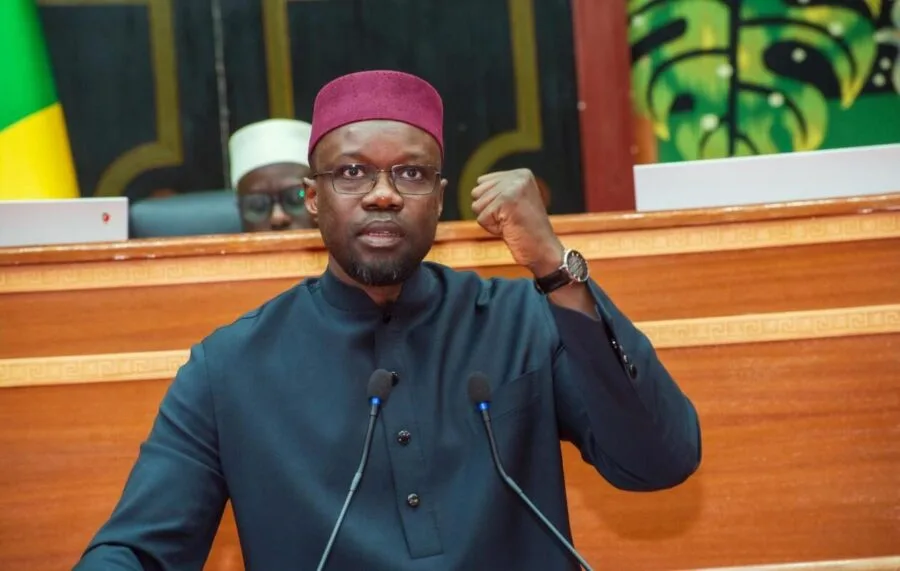
The Prime Minister of Senegal, Ousmane Sonko, is set to face the National Assembly this Friday, May 22, 2026, during a high-stakes session of parliamentary questions. The encounter, announced by Assembly President El Malick Ndiaye, will unfold against a backdrop of intense political and social tensions, transforming a routine institutional exercise into a defining moment for both the government and the opposition.
a parliamentary showdown with high political stakes
While the formal purpose of the session is to scrutinize government policies and address urgent national issues, the stakes extend far beyond routine oversight. The recently adopted electoral code reform, widely criticized by opposition parties as a partisan maneuver designed to favor the ruling Pastef party, is expected to dominate discussions. Accusations that the reform was “tailor-made” to entrench the party’s dominance have fueled tensions, with some legislators calling for immediate revisions.
In response, the Prime Minister may need to clarify the government’s position and outline a path forward to ease concerns. Beyond electoral matters, institutional reforms announced by the administration will also take center stage. These reforms, aimed at modernizing governance and strengthening democratic mechanisms, have drawn scrutiny from both sides of the aisle. While the majority defends them as necessary for progress, the opposition warns against further centralization of power and demands greater transparency in their implementation.
social and economic pressures weigh on the government
The session will also serve as a platform for lawmakers to press the government on pressing national concerns, including rising living costs, youth unemployment, public infrastructure deficits, and agricultural productivity. With Senegalese families grappling with economic hardship, these issues are expected to dominate the debate, forcing the Prime Minister to address public frustrations and outline concrete solutions.
The government’s two-year tenure has been marked by high expectations following the 2024 political transition. Now, with local elections looming and the 2029 presidential race on the horizon, the stakes are higher than ever. Observers will closely watch how Sonko navigates these challenges, balancing the demands of governance with political strategy.
regional tensions and internal dynamics add complexity
The Prime Minister’s appearance comes at a time of heightened regional instability, particularly in neighboring Mali, where ongoing crises continue to reshape the Sahel landscape. While Senegal maintains a position of diplomatic caution, the government’s approach to regional security and international partnerships is likely to face scrutiny. Questions about contract negotiations, geopolitical alignments, and even domestic controversies could surface, testing Sonko’s ability to maintain cohesion within his party and the broader political spectrum.
A particularly sensitive topic is the reported tension between Sonko and President Bassirou Diomaye Faye, which has sparked speculation about potential resignations or shifts in the government’s direction. The Prime Minister may use this session to dispel rumors and reaffirm his commitment to the administration’s agenda. With expectations for stability and results at an all-time high, the stakes could not be higher for Sonko and his government.