
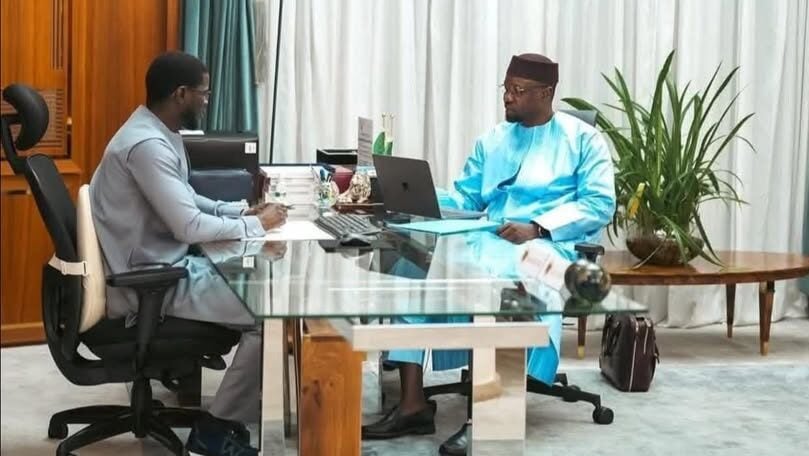
Senegal’s 2029 presidential race: Diomaye Faye’s electoral reform paves way for Sonko
The President of Senegal, Bassirou Diomaye Faye, has signed into law a controversial electoral reform bill, reshaping the political landscape ahead of the 2029 presidential election. The move, confirmed through an official decree on Saturday, significantly strengthens the path for Prime Minister Ousmane Sonko to run for office, while deepening internal divisions within the ruling Pastef party.
Diomaye Faye’s decree follows weeks of heated debate over the revised electoral code, which now includes provisions that could overturn previous ineligibility rulings. The reform was first adopted by the National Assembly on April 28 but faced unexpected delays when the president requested a second review, citing “clerical errors” in the initial draft. This decision sparked sharp criticism from within Pastef, with some party officials accusing the president of deliberately obstructing the process to serve his own political ambitions.
The revised law, officially enacted on May 9, introduces key changes to the civil rights deprivation framework. Under the new rules, the automatic loss of civic rights following a conviction is now capped at five years post-sentence. This provision is widely seen as a direct response to the legal challenges that have long shadowed Ousmane Sonko’s political career.
Legal hurdles and political fallout
Sonko’s eligibility has been a recurring issue since his 2023 conviction for defamation—a case stemming from a complaint filed during former President Macky Sall’s administration. The ruling, confirmed by the Supreme Court in January 2024, barred him from running in the 2024 presidential election. At the time, he endorsed Bassirou Diomaye Faye as the Pastef candidate, a decision that ultimately secured the presidency for the young leader.
Despite his ineligibility in 2024, Sonko made a political comeback in November 2024, winning a seat in the National Assembly before resigning to focus on his role as Prime Minister. A subsequent appeal to the Supreme Court in July 2025 was rejected, further complicating his path to candidacy. The new electoral reform, however, now offers a potential lifeline by shortening the period during which civil rights—including voting rights—are suspended.
Divisions within the ruling party
The passage of this law has exposed growing rifts within Pastef. While some members view it as a pragmatic step toward consolidating the party’s future, others see it as a calculated move by the president to marginalize Sonko and secure his own influence ahead of 2029. The debate over the reform’s retroactive application has intensified these tensions, with critics warning that the changes could be perceived as politically motivated.
The electoral reform’s swift adoption—despite initial resistance—signals a strategic shift in Senegal’s political strategy. Whether this move will unite or further fracture the ruling party remains uncertain. What is clear, however, is that the 2029 presidential race has just taken a decisive turn.