
The Turning Point in Burkina Faso’s Military Narrative
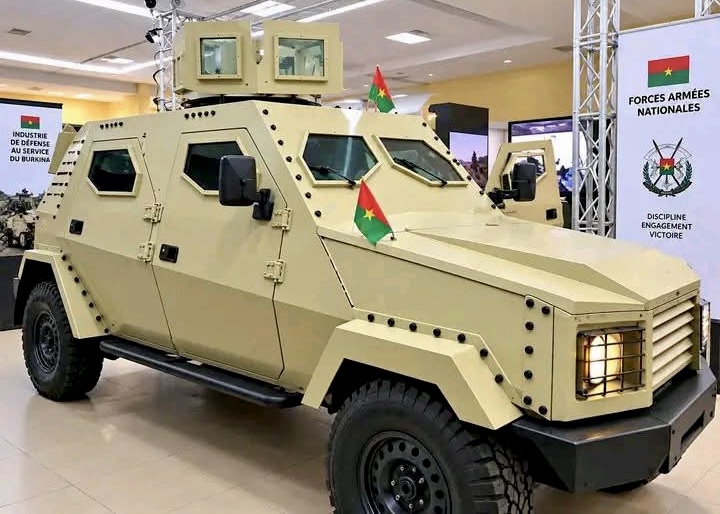
The Burkina Faso government stunned observers this week with a sweeping claim: the nation has produced nearly 300 armored vehicles in just ten months. President Ibrahim Traoré presented Faso Armored, a purportedly domestic defense manufacturer, as the driving force behind this unprecedented industrial achievement. Yet beneath the bold headlines lies a far murkier reality—one that challenges not just the credibility of the announcement, but the very foundation of Burkina Faso’s self-styled arms production revolution.
What Faso Armored Really Means for Burkina’s Security Landscape
During a public address to female science laureates on September 21, President Traoré announced that Faso Armored had already deployed over 150 of the newly minted armored vehicles to frontline units, including national defense forces and local volunteer militias. He described a rigorous testing process focusing on ballistic resistance, improvised explosive device threats, and terrain adaptability. Yet despite the high stakes, Faso Armored remains an enigma: its locations, workforce, and supply chains have never been disclosed. The president also hinted at four to five other clandestine military contractors operating across Burkina Faso, but provided no details on their operations or affiliations.
The hidden origins of Faso Armored’s ‘production’
Investigations reveal a more complex backstory. High-ranking military sources indicate that Faso Armored’s current fleet has roots in foreign conflict zones. During the UN–AU peacekeeping mission in Darfur (UNAMID), Burkina Faso operated South African-made Casspir mine-resistant vehicles. After years of service, many were removed from active duty due to mechanical failure. With limited options following the 2022 military takeover, engineers from a neighboring nation attempted repairs—without success. Rather than abandon the vehicles entirely, a new approach emerged: salvaging usable parts—armor panels, structural components, drive trains—from the immobilized Casspirs and retrofitting them onto civilian pickup trucks. This adaptive process, though technically skilled, falls far short of full industrial production of armored vehicles.
When ‘Made in Burkina’ means ‘Made from Secondhand Parts’
This isn’t the first time Burkina Faso has rebranded foreign military equipment as domestically produced. In late 2024, viral social media posts labeled Chinese Norinco-built armored personnel carriers as “Made in Burkina,” complete with staged local branding. Months later, the nationwide rollout of ITAOUA-branded electric vehicles—hailed as a national automotive triumph—revealed that the cars were in fact rebadged models from China’s Dongfeng, assembled (not built) in Burkina Faso. Faso Armored’s announcement follows this pattern: a rapid communication campaign amplifying a narrative of technological sovereignty, despite minimal evidence of genuine domestic fabrication.
Why This Moment Could Define Burkina Faso’s Future Trust
The timing of Faso Armored’s unveiling is no coincidence. In an era of deep social polarization and regional instability, the government is leveraging the armored vehicle claim to reinforce its image of strength and self-sufficiency. But the claim has triggered debate far beyond military circles. Analysts and citizens alike are questioning whether this surge in output signals true industrial progress—or if it’s another chapter in a long-running pattern of manufactured narratives designed to consolidate power under Traoré’s leadership.
At the heart of the controversy is a fundamental question: Can a nation credibly claim to produce armored vehicles at scale without revealing its supply chains, workforce, or even the locations of its factories? With no public data on component sourcing—from ballistic glass to armored steel—the claim of 300 vehicles in ten months demands an industrial ecosystem Burkina Faso has not yet demonstrated.
From Darfur to Ouagadougou: The Recycled Legacy of Burkina’s Defense Narrative
The Faso Armored story is not an isolated episode. It builds on a broader tradition of strategic storytelling in Burkina Faso’s defense sector. The use of South African Casspirs in Darfur, the repurposing of Chinese vehicles, and the rebranding of Chinese cars such as the ITAOUA Sahel and Native models all reflect a pattern: military hardware is imported, modified, and then presented as a product of national ingenuity. This technique—where the appearance of technological sovereignty outweighs the reality—has been used to cultivate public trust, distract from economic challenges, and elevate the profile of Ibrahim Traoré on both national and international stages.
But the latest claim is reaching a turning point. As skepticism grows, the Burkina Faso government faces pressure to either substantiate its industrial miracle with verifiable data or risk seeing its credibility collapse under the weight of public doubt.
What Comes Next for Faso Armored and Burkina’s Security Future?
For now, Faso Armored remains shrouded in secrecy. The military has provided no production timelines, no technical specifications, and no third-party audits. Without transparency, the armored vehicle program risks becoming another footnote in a larger story of perception management—a narrative built on bold claims rather than proven capabilities.
Yet even amid the uncertainty, one thing is clear: Burkina Faso stands at a crossroads. The Faso Armored initiative could either mark the beginning of a genuine defense industrial awakening—or it could deepen a cycle of questionable claims that ultimately erode national trust. The coming months will determine whether this moment is a true turning point, or simply another chapter in a manufactured success story.