
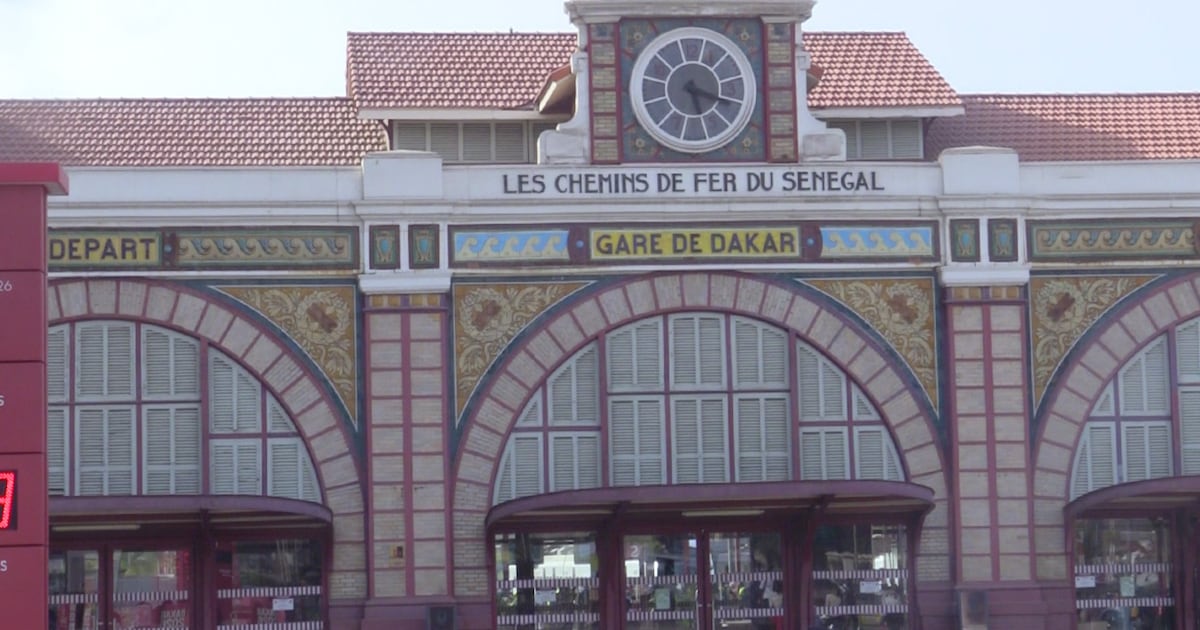
Despite significant upgrades accompanying the introduction of the Regional Express Train (TER), the intrinsic character of these venerable structures remains undiminished. This deliberate choice underscores a commitment to safeguarding and celebrating a protected historical legacy.
Erected in 1914, the Dakar station served for decades as the pulsating heart of the extensive Dakar-Niger railway network. Long before national independence, it stood as a powerful emblem of economic advancement and commercial exchange across French West Africa. A similar narrative unfolds for the Rufisque station, which once functioned as a pivotal crossroads for the groundnut trade, forging vital links between the port and the nation’s interior regions.
Following years of neglect and the decline of rail transport in favor of roadways, these two architectural marvels have experienced a profound renaissance, catalyzed by the TER project initiated in 2019.
Even today, their history-rich walls continue to captivate residents, daily commuters, and international visitors alike. For many, they represent far more than mere transit points; they embody a precious heritage destined for future generations.
Amadou Diallo, a Dakar resident, emphasizes the critical need to preserve their original architecture as a means of upholding collective memory. He views these infrastructures as an expansive, open-air history book. «By maintaining the Dakar station’s architecture as it is, we aim to protect a vital heritage. As you may know, UNESCO has recognized certain pre-independence infrastructures, including the Dakar and Rufisque stations, as classified historical heritage sites. This explains their enduring antique appearance, and it’s invaluable for our children, born after independence, to understand that this station is a part of their heritage.»
Moustapha Fall, a frequent traveler familiar with the sites, shares a similar perspective. He believes the stations’ architectural splendor now stands as an attraction in its own right. Blending historical depth with aesthetic appeal, these buildings consistently charm visitors. «I think it’s excellent because it dates back to the colonial era. While there have certainly been some redevelopments and even reconstructions in parts, the core architecture is preserved, offering insights into the lifestyle and construction methods of past generations. The station is magnificent and symbolic; some people even come here solely to take photographs.»
Designated as historical monuments within Sénégal, the Dakar and Rufisque stations now embody a compelling dialogue between their storied past and the demands of modernity. Old Rufisque itself has been featured on UNESCO’s indicative list of World Heritage sites since 2005, a testament to the extraordinary value of this urban and architectural legacy.
For Victor Hugo Manga, another traveler, this preservation primarily serves to maintain a crucial connection between older generations and contemporary ones, especially in an era defined by rapid infrastructure modernization. «Everyone who passes through here daily, both residents and foreigners, discovers this ancestral gem and can inquire about its history. Today, with the arrival of the TER, it’s beneficial to retain this piece of our history, allowing children and students to learn how their grandparents lived and to grasp the significant evolution that has occurred.»
Harmonizing the modernity of the TER with the inherent charm of their century-old structures, the Dakar and Rufisque railway stations continue to transcend time without relinquishing their core identity. More than simple points of departure or arrival, they stand as the silent guardians of a collective memory that Sénégal is steadfastly committed to preserving.