
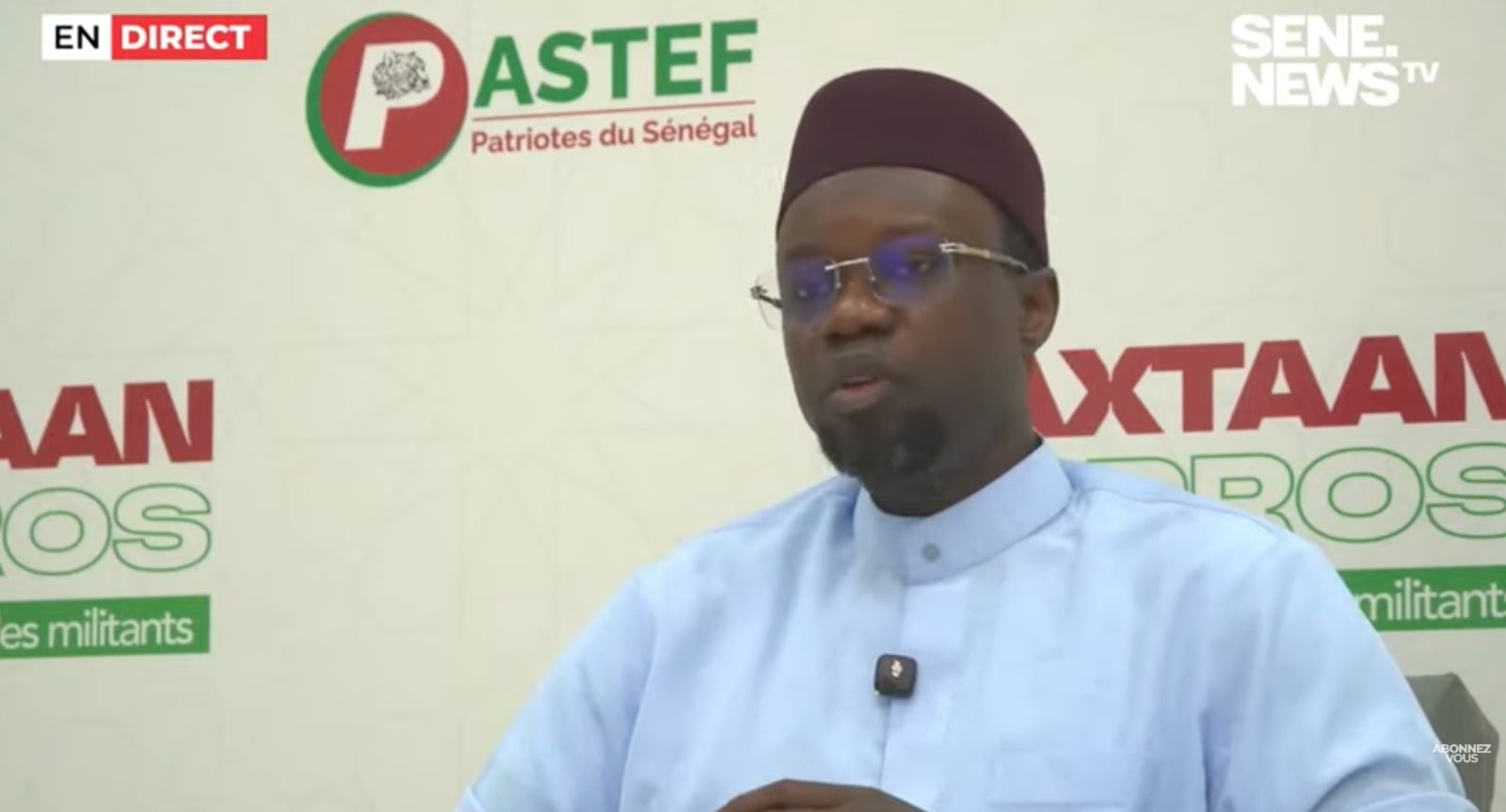
In a pivotal interministerial council meeting yesterday, Senegalese Prime Minister Ousmane Sonko unveiled alarming findings from a comprehensive audit of the nation’s infrastructure and state assets. The assessment, which scrutinized public projects and strategic holdings, revealed a disconcerting pattern of stalled initiatives, underutilized facilities, and questionable transfers of state property.
The audit identified 245 critical infrastructure projects—spanning roads, hospitals, ports, stadiums, schools, and administrative buildings—languishing in various states of incompletion or non-operation across Senegal. The cumulative financial commitment for these projects exceeds 5 000 billion FCFA, an amount Sonko noted is nearly equivalent to the country’s annual national budget. « The figures defy comprehension, » he remarked, highlighting the stark contrast between the scale of investment and the lack of tangible outcomes for citizens.
Among the most glaring examples is the Port of Dakhonga, alongside multiple fishing docks and refrigerated storage facilities. Despite substantial investments, these projects remain non-operational, depriving communities of economic opportunities. The audit further revealed 30 fully completed projects that have yet to be commissioned, with 25 of them facing major operational hurdles, tying up 279 billion FCFA in frozen assets. Sonko singled out the Sandiara High School, whose construction began in 2014 and remains unfinished—a delay he condemned as unacceptable for an educational institution.
Fiscal mismanagement and judicial inertia
The audit also cast a spotlight on the state’s real estate and land holdings, particularly in Dakar. Of the 97 properties assessed, valued at 132 billion FCFA, Sonko alleged that several prime parcels were improperly transferred under the previous administration, often bypassing required legal procedures or parliamentary approvals. He cited the former gendarmerie headquarters site as a case in point, which was allegedly sold to a private entity before being reclaimed by the state. Some transactions, he claimed, saw assets valued between 10 and 15 billion FCFA sold for less than 1 billion FCFA.
The Prime Minister reserved his harshest criticism for the judicial system, expressing frustration over the lack of prosecutions in cases involving financial mismanagement. « It makes me question whether this effort is even worthwhile, » he stated, accusing what he termed « judicial sabotage »—a deliberate slowdown in processing sensitive cases. « These cases belong to the Senegalese people, not magistrates, » he asserted, hinting at a potential escalation in his approach if progress isn’t made.
Minister of Justice Yassine Fall responded by assuring that accountability would be enforced, though her remarks did little to allay Sonko’s concerns. The Prime Minister emphasized the urgency of expediting legal proceedings and clarifying responsibilities to restore public trust.
Government’s action plan to revive stalled assets
To address the crisis, Sonko announced the immediate establishment of a high-level monitoring committee, chaired by himself, tasked with overseeing the inventory, identifying responsible parties, and exploring financing solutions. The committee will leverage partnerships with the National Investment Fund for Economic and Social Development (Fonsis) and private sector collaborations to revalorize underperforming assets.
The government adopted 11 directives to unblock financial, legal, and technical bottlenecks. Key measures include:
- A comprehensive reinventory of all projects to determine which should be completed, repurposed, or decommissioned;
- The creation of an inclusive body, also chaired by Sonko, to ensure rigorous follow-up and accountability;
- Stricter technical oversight for future infrastructure projects, including mandatory provisions for water, electricity, and telecommunication connections, as well as maintenance frameworks to ensure long-term viability.
Sonko’s remarks underscored a broader commitment to transparency and efficiency, signaling that the government will no longer tolerate systemic inefficiencies that drain public resources without delivering for Senegal’s citizens.