
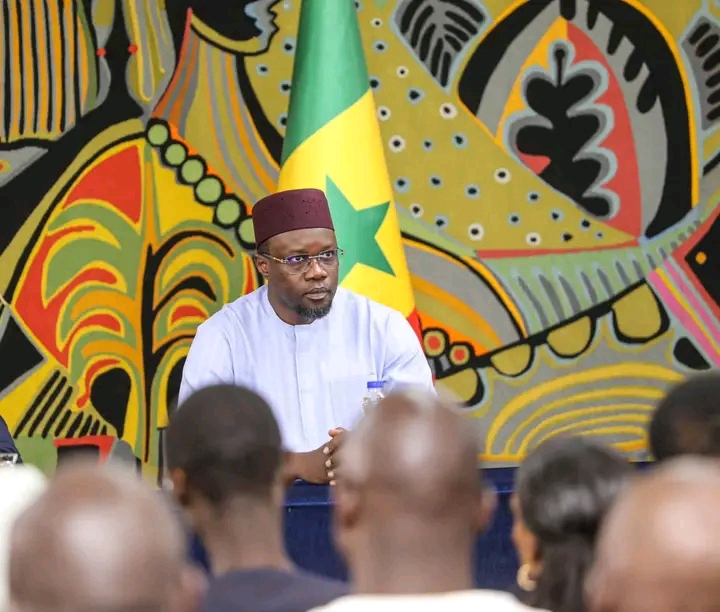
In Dakar, Senegal’s Prime Minister Ousmane Sonko convened an inter-ministerial council on May 21, delivering a stern critique of the previous administration’s handling of public projects and finances. The meeting followed the presentation of a sweeping audit report on state-owned assets and infrastructure, which revealed staggering irregularities and inefficiencies.
The audit uncovered 245 stalled or underutilized infrastructure projects and strategic assets, with an estimated cost exceeding 5,000 billion CFA francs—an amount equivalent to the country’s annual national budget. Sonko condemned what he described as “unjustifiable waste and systematic mismanagement”, highlighting that some figures rivaled the nation’s total public debt.
Among the most glaring examples was the Sandiara high school project, initiated in 2014 and still incomplete a decade later. Sonko expressed outrage, declaring, “Twelve years to build a single school? That is nothing short of absurd.”
The audit also revealed that out of 94 ongoing construction projects nationwide, 62 have been effectively frozen, consuming over 5.227 billion CFA francs in frozen funds. Sonko lamented the scale of financial hemorrhage, stressing that these resources could have transformed sectors like education, healthcare, and transportation.
Demanding accountability: Sonko questions the justice system
In a pointed critique, Sonko turned his attention to Senegal’s judicial system, accusing it of shielding high-ranking officials from the former government accused of embezzling public funds. “I sometimes ask myself if it’s even worth continuing,” he declared. “Here, you can do anything and still be protected. The system remains untouched.”
He went further, alleging “judicial sabotage” involving certain magistrates, and insisted that case files belong to the people, not the courts. “The files don’t belong to the judges—they belong to the nation,” he asserted, warning of a potential escalation in rhetoric in the coming weeks.
Sonko’s remarks signal a growing impatience with perceived impunity and a call for sweeping reforms in public finance governance and judicial transparency.