
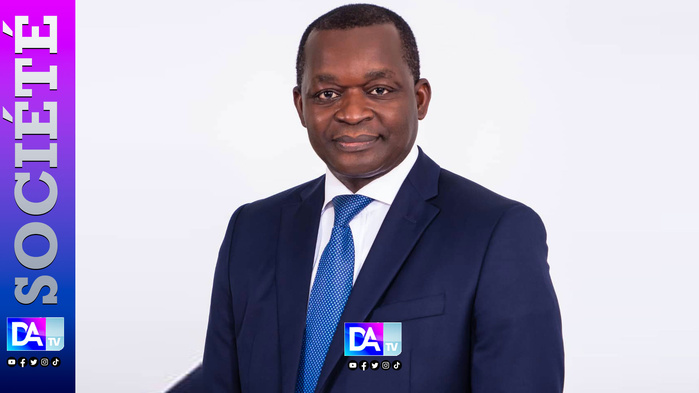
During a series of engagements across France, Alioune Sarr, President of Senegal’s Alliance for Senegal party (APS/ANS), underscored the vital role of Senegal’s regions in shaping the nation’s future. From Paris to Massy and Creil, his meetings with the diaspora highlighted a vision centered on decentralized development, economic sovereignty, and collective governance.
Sarr’s tour was not merely a political campaign but a dialogue with Senegalese communities abroad, listening to their concerns and gathering their input on national priorities. At the Foyer Les Mûriers in Paris’ 20th arrondissement and in Massy, Essonne, he engaged with families, entrepreneurs, and students, emphasizing the need to bridge the gap between urban centers and rural areas.
Strong turnout in Creil underscores diaspora commitment
Creil, in the Oise department, witnessed a remarkable mobilization as Amy Faye, APS’s political coordinator in France, led discussions with local Senegalese. The session focused on Sarr’s proposals for territorial development, productive investment, and economic sovereignty—key pillars of his party’s agenda.
Faye praised Sarr’s dedication to the diaspora, calling on fellow Senegalese abroad to play an active role in the country’s transformation. The audience, including community leaders, workers, students, and families, showed strong interest in initiatives aimed at job creation and sustainable growth across Senegal.
A call for unity beyond political divides
Sarr’s message was clear: Senegal’s challenges require a unified approach. “We may be political opponents, but we must never be enemies of the Republic,” he stated, urging all stakeholders to prioritize national development over partisan disputes. His vision rejects the failures of over-centralized governance, which has long concentrated resources in Dakar while leaving other regions underdeveloped.
“When decisions are made only in the capital, the territories wait. When territories take charge, the country moves forward,” Sarr argued. He advocates for a shift toward empowering local governments to drive inclusive growth, ensuring that every region contributes to national prosperity.
Dakar and the regions: complementary partners
Sarr dismissed the notion of pitting Dakar against other regions, instead framing them as complementary forces. “Dakar is the heart of Senegal, but the regions are its lungs. No nation can thrive with just one functioning lung,” he explained. “Together, we will build a sovereign, prosperous, and balanced Senegal.”
He highlighted the Notto Diobasse Smart City project as a model for territorial development, emphasizing that Senegal’s growth must originate from its regions—not trickle down from the capital. “Senegal will not develop from Dakar outward. It will develop from the regions inward,” Sarr asserted.
Land as a strategic asset, not a commodity
The tour also addressed the critical issue of land use. Sarr criticized the sale of undeveloped land as akin to exporting raw materials, advocating instead for value-added transformation. “Land is not valuable because it is sold; it is valuable because it is developed,” he said. “Nations that grow rich do not sell their resources—they transform them.”
He framed land development as a generational investment, warning that selling land without adding value drains the nation’s future. “Selling land consumes the future. Developing it builds the future.”
The diaspora as a catalyst for change
Throughout his engagements, Sarr positioned the diaspora as a cornerstone of Senegal’s development. “The diaspora is not an ATM. It is an open ministry of development,” he declared, urging Senegalese abroad to become investors, job creators, and partners in local projects.
He called for a new national pact built on three foundations: empowered territories, mobilized diaspora, and economic sovereignty. The turnout in Paris, Massy, and Creil reflected growing diaspora enthusiasm for territorial development and their eagerness to contribute to Senegal’s progress.
Concluding his tour, Sarr left attendees with a rallying cry: “We did not come to manage the future. We came to build it.”