
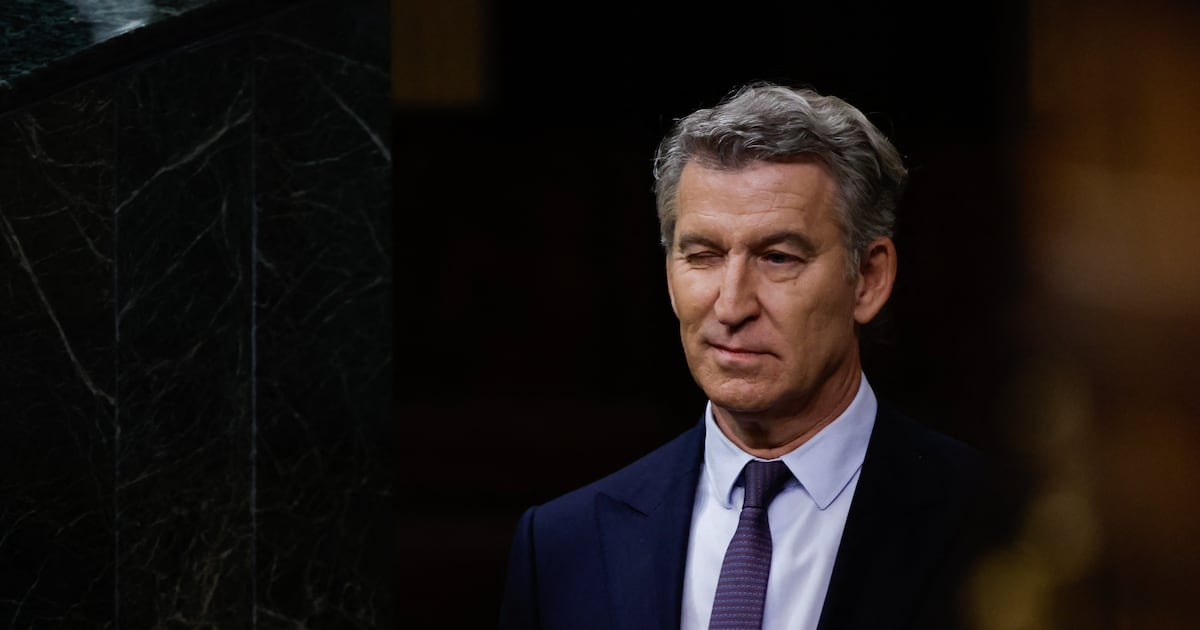
The Spanish government has accused the main opposition party, the Partido Popular (PP), of adopting an anti-Moroccan stance, escalating a political feud that now threatens to undermine decades of carefully cultivated bilateral ties. José Manuel Albares, Spain’s Foreign Minister, recently labeled the PP’s approach as “an obstacle” to the country’s foreign policy, particularly concerning its relationship with Morocco.
Since 2022, Spain and Morocco have built a robust strategic partnership spanning migration control, trade, security, and joint infrastructure projects, including co-hosting the 2030 FIFA World Cup. In late 2025, both nations reinforced this alliance with fourteen new cooperation agreements and a joint declaration to deepen political dialogue, setting the stage for a new era of collaboration.
Yet the PP’s ascent to power presents a dilemma: if victorious, it would inherit this relationship at its most developed stage. The question remains—how would the party manage it?
The Sahara issue: a defining challenge for the PP
The Western Sahara dispute stands as the most contentious hurdle. When Pedro Sánchez’s government endorsed Morocco’s autonomy plan in March 2022, calling it “the most serious, credible, and realistic basis” for a solution, the PP fiercely criticized the move. Alberto Núñez Feijóo, the party’s leader, condemned what he framed as a departure from Spain’s long-standing foreign policy consensus, arguing that the decision was made without consulting the opposition.
The PP has since maintained a deliberately vague stance. While its official documents emphasize respect for international law and UN resolutions, they stop short of fully endorsing the government’s position on Morocco’s autonomy proposal. This ambiguity reflects deeper divisions within the party—some factions advocate a strong strategic alliance with Rabat, while others align more closely with separatist views.
The contradictions became glaring in July 2025 when a purported Polisario representative attended the PP’s national congress, sparking outrage in Morocco. Then, in February 2026, Albares accused the party of deploying “secret emissaries” to Morocco to quietly support positions they publicly condemned when advocated by the government—a charge that, if true, underscores a troubling double standard.
A shifting international landscape
Any attempt by the PP to reverse Spain’s current stance on Western Sahara would carry heavy diplomatic consequences. Since 2022, the Moroccan autonomy initiative has gained traction on the global stage, and Spain’s position is now embedded in a broader framework of bilateral cooperation. Reverting to pre-2022 policies wouldn’t be a simple policy tweak—it would reopen one of the most sensitive chapters in Spanish-Moroccan relations.
The PP has yet to clarify whether a future government under Feijóo would uphold the current approach or revert to the earlier doctrine. So far, the party has avoided giving a definitive answer.
Immigration, Vox, and the rise of ‘national priority’
The PP’s challenges extend beyond the Sahara. In recent months, the party has adopted a harder line on immigration and access to public services, partly in response to pressure from the far-right Vox, which has pushed the concept of “national priority”—prioritizing nationals over foreigners in welfare and aid distribution. This idea, once confined to the fringes, has increasingly shaped Spain’s political debate.
The PP initially distanced itself from the term, with some leaders insisting that “all legally resident immigrants have the same rights as Spanish citizens”. Others softened the rhetoric by referring to “residential priority” or “anchoring” instead. Yet the damage was done: Vox has successfully pushed its agenda into mainstream discourse, forcing the PP to navigate a delicate balance between its base and broader electoral appeal.
The paradox of power for the PP
The PP’s central dilemma is this: while it can attack the government from the opposition benches using Morocco and the Sahara as political tools, governing would require managing one of Spain’s most vital yet complex international relationships. The two stances don’t always align.
Cooperation with Morocco isn’t merely a PSOE ideological choice—it’s rooted in geography, economics, security, and shared strategic interests. The most likely outcome isn’t a break with Rabat but a clash between the party’s opposition rhetoric and the pragmatic realities of governance. If Feijóo takes office, he may find himself preserving the very policies he once condemned, forced to justify why the policies he criticized for years remain intact.
Albares’ allegations about covert PP diplomacy in Morocco suggest that behind closed doors, the party might adopt a far more pragmatic approach than its public statements imply. The real question isn’t whether the PP is anti-Moroccan, as the minister claims, but how far the party is willing to go in using Morocco as a political tool to challenge both the PSOE and Vox—and whether any of that rhetoric would survive the transition from opposition to power.
Spain and Morocco will always be neighbors, and Rabat will remain a critical partner for Madrid, regardless of who holds power in La Moncloa. If Alberto Núñez Feijóo becomes prime minister, he won’t inherit a blank slate. He’ll step into a relationship that has been fundamentally transformed—one shaped by a new international reality on Western Sahara, robust security cooperation, and the looming 2030 World Cup, which demands sustained collaboration. His first major foreign policy test may well hinge on whether he can reconcile his party’s opposition firebrand rhetoric with the demands of governance.