
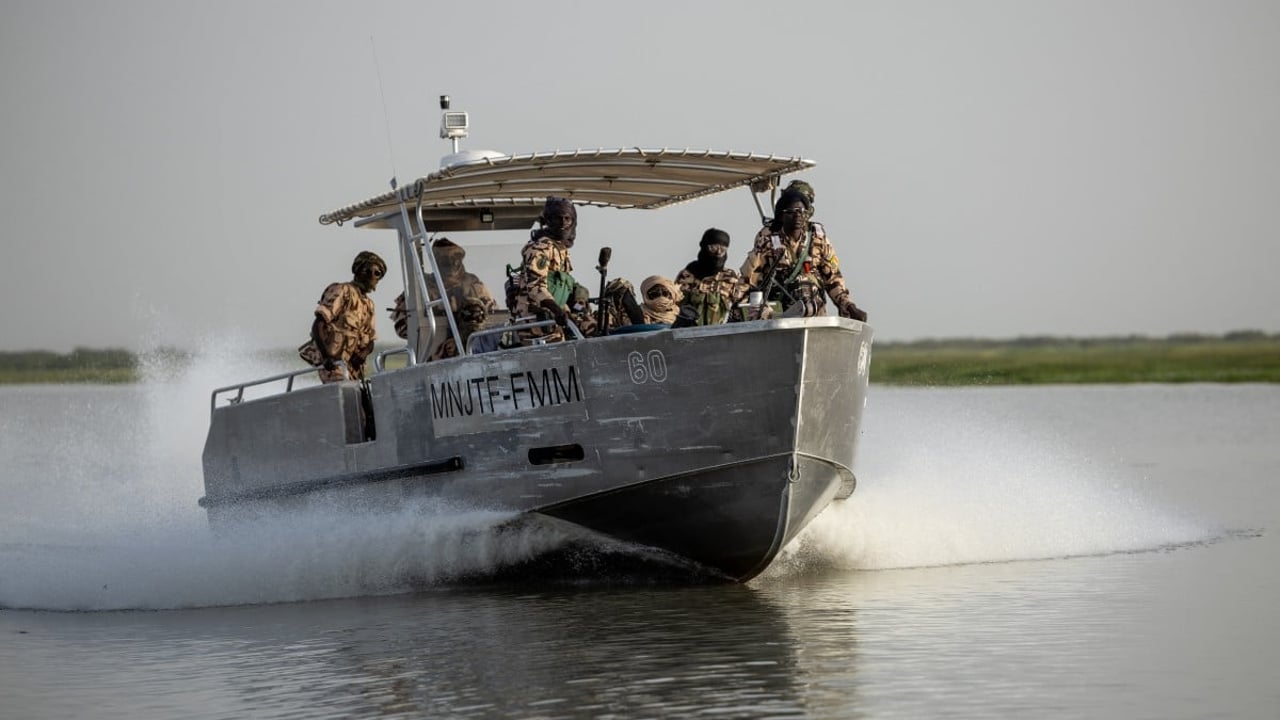
The Chadian government has categorically rejected allegations that its military forces were responsible for airstrikes that resulted in civilian casualties along the shores of Lake Chad. The denial comes after the United Nations High Commissioner for Human Rights urged both Nigerian and Chadian authorities to conduct urgent, thorough, and impartial investigations into the deadly incidents.
In a stern statement delivered to local media, Gassim Chérif Mahamat, the country’s Minister of Communication and government spokesperson, dismissed the accusations as an attempt to undermine the credibility of Chad’s armed forces. He emphasized that the Chadian military operates with professionalism and remains at the forefront of the regional fight against terrorism in the Sahel and around Lake Chad.
Volker Türk, the UN High Commissioner for Human Rights, had called for immediate probes into the bombings, which were reportedly carried out by Nigerian and Chadian forces and claimed dozens of lives in Nigeria’s northeast. “It is essential that the authorities in both countries swiftly launch independent and unbiased investigations to address these disturbing events,” Türk stated in an official release.
N’Djamena affirms commitment to transparency
While acknowledging the allegations, the Chadian government maintained its stance of cooperation. Minister Gassim Chérif Mahamat reassured the public that authorities are prepared to initiate transparent investigations. He pointed out that Chad’s judiciary and institutions are fully capable of conducting fair probes. “We stand by our commitment to transparency. The State is ready to investigate any credible claims, supported by our independent justice system,” he declared.
The government also placed responsibility on the terrorist group Boko Haram, accusing it of destabilizing communities and terrorizing civilians in already vulnerable regions. “This group continues to exploit divisions and spread fear, undermining peace and stability in areas already struggling with insecurity,” the spokesperson added.
In response to the accusations, Nigerian military officials defended their operations, stating that they had targeted a confirmed terrorist facility exclusively used by non-state armed actors posing a direct threat to civilian lives.
The UN’s Volker Türk had stressed the importance of military operations adhering to international humanitarian law and human rights standards. “Under no circumstances should civilians or civilian infrastructure be targeted in military operations,” he warned.
The vast Lake Chad basin, spanning Nigeria, Cameroon, Niger, and Chad, has been a hotspot for jihadist activity since 2009. Both Boko Haram and the Islamic State in West Africa Province (ISWAP) have established strongholds in the region’s marshy and waterlogged terrain.