
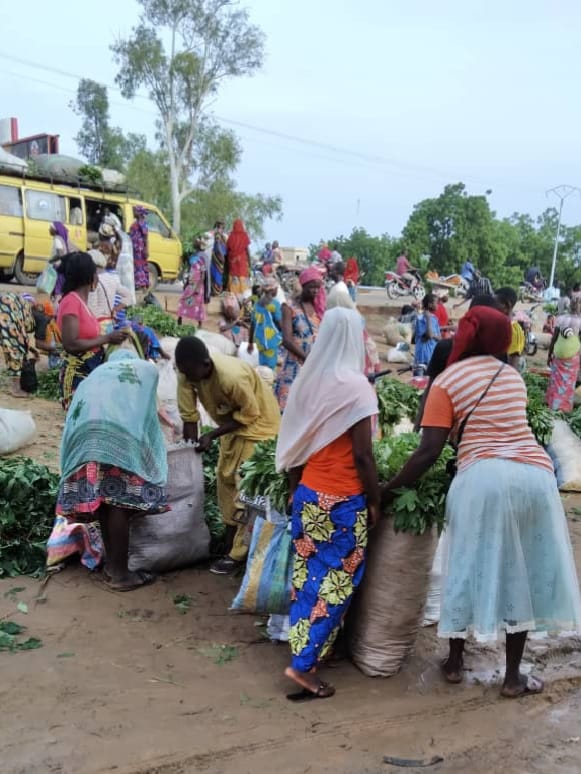
In N’Djamena, authorities have launched a sweeping campaign against urban disorder, vowing to restore order and modernize the city’s landscape. The crackdown targets unregulated street vendors, aggressive begging, and inconsistent enforcement by security personnel, signaling a new phase of strict regulation in the capital.
While the goal of a clean, orderly urban environment is commendable, the approach raises critical questions. Can a city truly eliminate disorder without addressing its root causes? The answer lies not in the streets of N’Djamena, but in the systemic challenges that shape them.
The invisible link between poverty and urban chaos
Behind the visible signs of urban disorder—whether it’s sidewalk hawkers, persistent beggars, or chaotic traffic—lies a far more complex reality. For many residents, the street is not a choice but a necessity. Informal vendors, jobless youth, and struggling families often rely on public spaces to survive. The absence of viable economic alternatives forces them into a cycle of marginalization, making urban chaos an inevitable byproduct of deeper socio-economic struggles.
The limits of a purely repressive strategy
A heavy-handed approach may temporarily clear the streets, but it does little to address the underlying issues. Evicting street vendors without providing alternative livelihoods or strengthening controls without social support programs only displaces the problem rather than solving it. True urban renewal requires more than just enforcement; it demands a holistic strategy that integrates economic inclusion, job creation, and social protection.
A call for sustainable urban development
N’Djamena’s fight against urban disorder is not just about aesthetics or security—it’s about building a city that works for all its residents. A modern, functional urban space cannot be achieved through sweeping measures alone. It requires policies that empower informal workers, create job opportunities, and protect the most vulnerable. Without these, the cycle of disorder will persist, and any sense of order will remain fragile and short-lived.
The challenge ahead is clear: will the capital prioritize quick fixes or invest in long-term solutions? The answer will determine whether N’Djamena’s urban renewal is a fleeting victory or a sustainable transformation.