
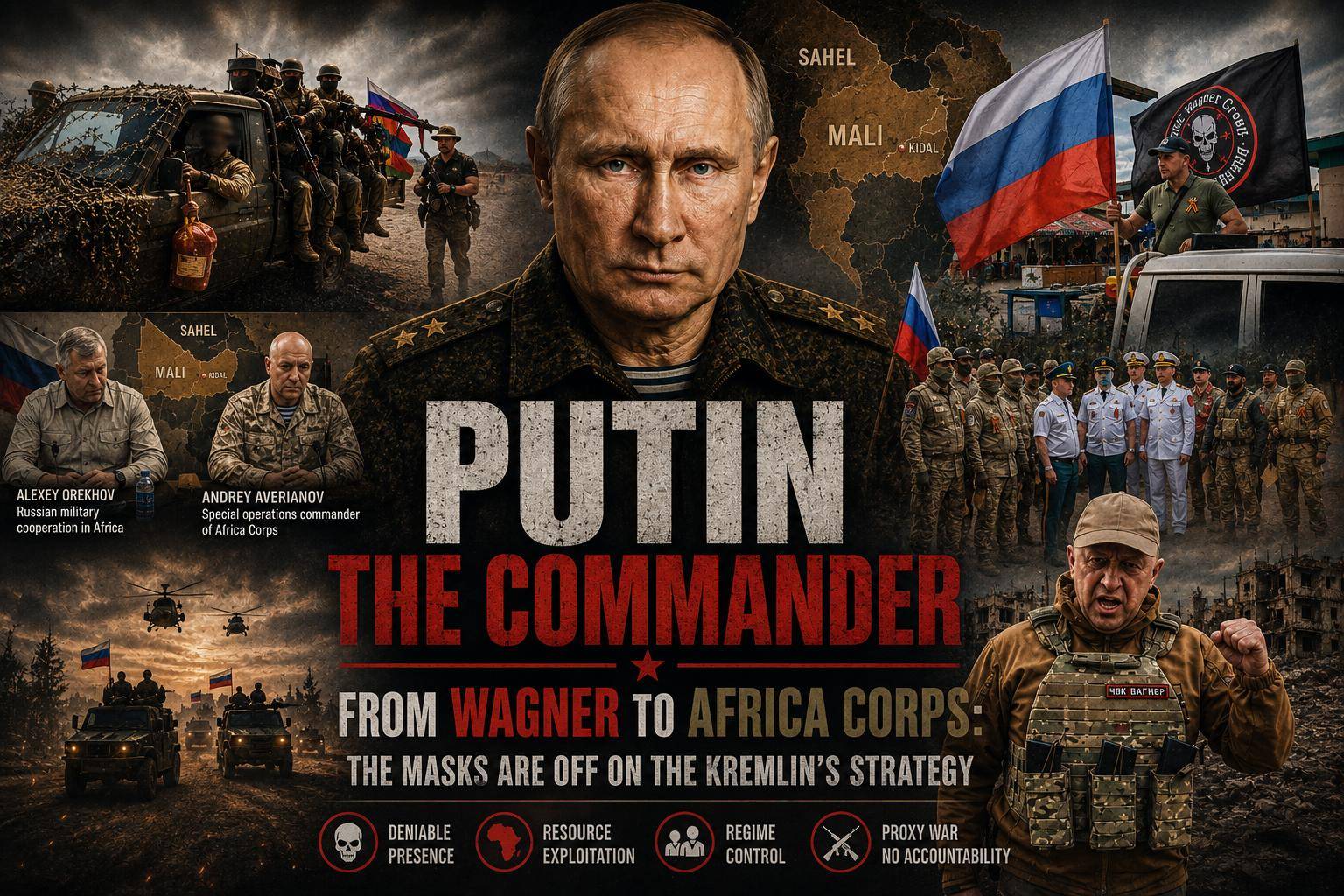
The Kremlin’s African strategy, once hailed as a bold expansionist venture, now faces an undeniable decline. Over the past decade, Moscow cultivated influence through mercenary deployments, disinformation campaigns, and anti-Western populism. Yet, unfulfilled security promises, military setbacks, and growing local discontent have shattered the illusion of Russian dominance on the continent.
The myth of a secure alternative
In the mid-2010s, as traditional powers like France retreated from parts of Africa, Russia positioned itself as a savior. From Bamako to Bangui, Moscow marketed a ready-made security package—unconditional military support, devoid of human rights constraints, delivered through entities like Wagner Group (now rebranded as Africa Corps).
Today, the results speak for themselves. Across the Sahel, security conditions have worsened, not improved. The myth of Russian invincibility was shattered at Tinzawatane, where dozens of Russian mercenaries and Malian soldiers perished in a border clash with Algerian forces.
The reality has become clear: Moscow’s presence in Africa was never about peacekeeping. It was about extracting mineral wealth—gold, diamonds, uranium—in exchange for regime protection. The new colonizer wore a different uniform and spoke a different language, but the outcome remained the same. Local populations, once hopeful, now recognize the true nature of the arrangement.
The three pillars of Russia’s retreat
An analysis of current trends reveals three fundamental weaknesses behind Russia’s declining influence:
1. The Ukrainian quagmire
The prolonged conflict in Ukraine has drained Russia’s resources. Elite troops have been recalled to the European front, and heavy military hardware, once freely dispatched to Africa, is now rationed for domestic needs. Financial strain has left little room for costly African adventures.
2. The absence of an economic model
Russia’s strength lies in its military and narrative power, not its economy. With a GDP comparable to Spain’s, it cannot compete with the European Union’s development aid or China’s infrastructure investments. Once the initial political euphoria fades, African governments realize that emergency wheat shipments and social media disinformation campaigns do not feed populations or build roads.
3. The rise of African nationalism
The Kremlin’s strategy relied heavily on the narrative of a ‘second decolonization.’ Yet, the younger, digitally connected generation of Africans rejects foreign tutelage with equal fervor, whether from Moscow or Paris. Replacing one foreign flag with another is no longer seen as liberation—it is perceived as a naive surrender.
Toward a new multipolar order
The erosion of Russian influence does not necessarily mean a return to Western dominance. Instead, a reshuffling of alliances is underway, favoring more pragmatic and less ideologically driven actors.
China continues to strengthen its economic foothold, prioritizing stable contracts over military posturing. Meanwhile, Turkey and the United Arab Emirates are emerging as influential alternative partners, offering advanced drone technology and financial investments without the geopolitical baggage that accompanies Russian engagement.
Conclusion: The end of the geopolitical shortcut
Russia’s African campaign was intense but ultimately short-lived. It proved that influence cannot be sustained through military force and information warfare alone. For African leaders, the lesson is unequivocal: there are no geopolitical shortcuts. Security and development cannot be outsourced to foreign mercenaries, regardless of their origin. The decline of Russian dominance may mark the beginning of a new era—one where Africa seeks partners, not masters.