
Thousands of Burkinabè flee to Mali as jihadist threats force displacement
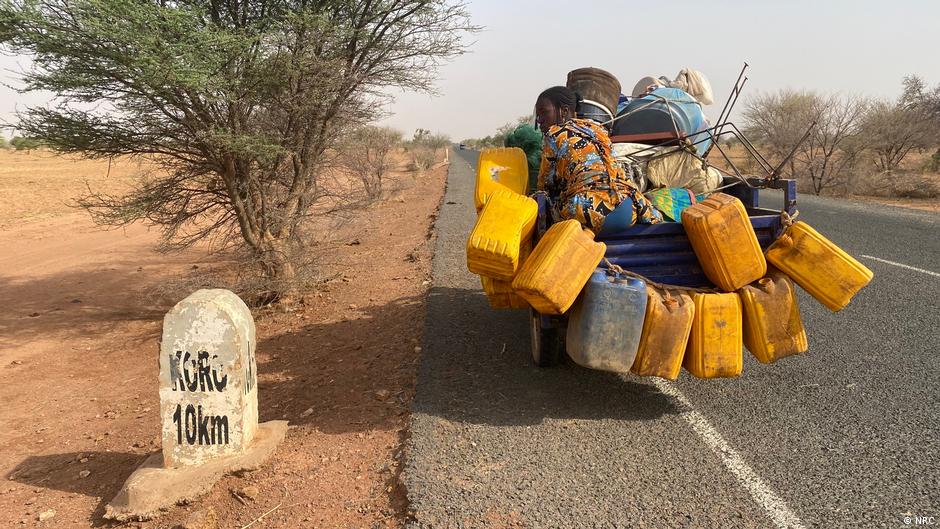
Since May 26, Burkinabè refugees have been steadily arriving in Koro, a town in central Mali. Local authorities estimate the number of displaced at several thousand.
These displaced individuals fled violence in their home region after receiving threats from armed jihadist groups.
“Two people arrived on a motorcycle. I think they were messengers. We were terrified,” recounted Hamsetou, a refugee now in Koro.
Hamsetou reached Koro with her daughter and other family members after armed groups passed through the village of Sia, in the Gomboro department of central Burkina Faso.
“They came on the day of our weekly market, ordering us to leave our village before sunrise,” she added. “So we left that night, taking the road and hiding in neighboring villages. The next day we took a taxi to Koro.”
“We left everything behind”
Hamsetou plans to settle in Koro until calm returns to her village. In addition to Sia, most residents of Gani, Bouli, Kogan, Ganagoulo, and Kouéré have also fled violence to seek refuge in Mali. Nearly three-quarters of the refugees are women and children.
Oumou, a resident of Ganagoulo, recounted that on May 26 she spotted armed men heading toward the neighboring villages of Bouli and Gani. “They later came to our village and said we would face the same fate. That’s when we decided to flee, leaving everything behind—our homes, granaries, and livestock. Some walked, others used tricycles, carts, or bicycles to reach Koro.”
Oumou eventually reached Koro with her husband and four children, all safe and sound.
Issa Sagara, the deputy mayor of Koro, described the reception, shelter, and food conditions for the Burkinabè refugees as precarious. He called for a general mobilization. The refugees are currently spread across several sites in and around the town.