
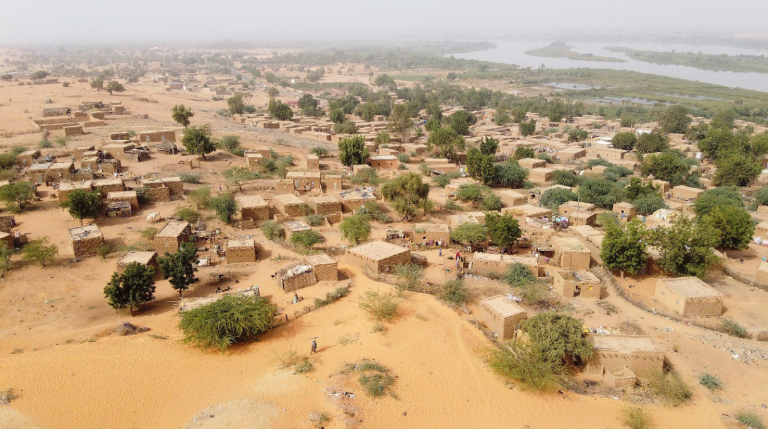
The brutal reality of life in Niger’s Tillabéri region has been laid bare once again after an ambush near Téra claimed at least 37 civilian lives. The victims, all from Tillim, were traveling in a convoy protected by local militias when they were attacked—raising urgent questions about the safety of rural communities caught in the crossfire of jihadist violence.
What happened in the deadly convoy attack near Téra
On a seemingly ordinary day, a group of civilians from Tillim set out for the local market, relying on the protection of Domol Leydi militiamen—a network of local self-defense groups tasked with safeguarding rural populations from armed incursions. Despite their escort, the convoy became a target, and the attack left 37 people dead, underscoring the grim toll of insecurity in western Niger.
The tragedy unfolded after a surge of violence in the region, with reports of multiple attacks attributed to the Islamic State in the Greater Sahara (ISIS-Sahel) over the preceding ten days. The escalation highlights the persistent threat facing communities in Tillabéri, where daily routines—such as market visits or livestock movements—have become perilous undertakings.
How jihadist violence is reshaping life in Tillabéri
For the people of Tillabéri, the journey to the market is more than a necessity—it is a lifeline. But with armed groups roaming the countryside, these essential trips now carry deadly risks. The recent violence has forced many to reconsider their routines, leading to:
- Fewer visits to markets, disrupting local trade
- Restricted movement of livestock, crippling pastoral livelihoods
- Reduced agricultural productivity in high-risk zones
The Domol Leydi militias, formed to fill gaps where state security forces are stretched thin, have become a critical—but insufficient—line of defense. While their presence deters some threats, determined jihadist groups have repeatedly demonstrated the ability to breach even escorted convoys.
Why are civilians paying the heaviest price in this conflict?
The attack near Téra is not an isolated incident but part of a broader pattern of violence in western Niger. Two of the most active armed groups—the Islamic State in the Greater Sahara and the Group for the Support of Islam and Muslims (JNIM)—operate with near impunity in the Tillabéri region, which borders Mali and Burkina Faso. Their activities have plunged local communities into a cycle of fear and economic decline.
The human cost is staggering. Families displaced by violence struggle to rebuild their lives, while traditional support systems fray under the strain. For many, the choice is stark: risk their safety to maintain their livelihoods, or face starvation in a region where poverty is already rampant.
What’s next for Tillabéri’s vulnerable communities?
The massacre near Téra is a stark reminder of the urgent need for stronger protections for civilians in Niger’s rural heartlands. With armed groups tightening their grip, the government faces mounting pressure to:
- Enhance security measures along high-risk routes
- Expand community-based defense initiatives
- Restore safe passage for essential movements
Yet for the families of the 37 victims, such measures come too late. Their loss serves as a grim warning: in Tillabéri, the struggle for survival is increasingly a fight against time itself.
The human face of Tillabéri’s crisis
The victims of the Téra attack were more than numbers—they were neighbors, breadwinners, and pillars of their communities. Their deaths have left behind grieving families and a region teetering on the edge of collapse. As Tillim mourns, the broader question lingers: How many more lives must be lost before the tide of violence in western Niger is turned back?