
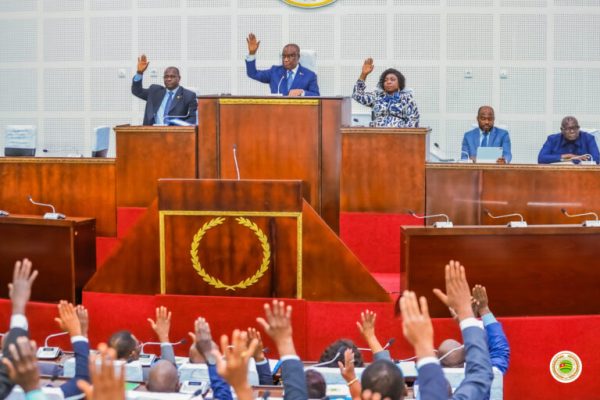
LOMÉ — On Tuesday, June 9, 2026, the Togolese National Assembly adopted four key legislative proposals designed to bolster nuclear safety and radiological risk management. The landmark decision, taken during the third plenary session of the first ordinary session of the year, signals a pivotal step toward aligning Togolese legislation with international safety standards.
The session, presided over by Speaker Prof. Komi Selom Klassou, welcomed Robert Koffi Messan Eklo, the Deputy Minister in charge of Energy. Lawmakers approved, in first reading, the texts that will enable Togo to join four critical international conventions: the Vienna Convention on Nuclear Safety (1994), the Joint Convention on the Safety of Spent Fuel Management and Radioactive Waste (1997), the Convention on Early Notification of a Nuclear Accident (1986), and the Convention on Assistance in the Case of a Nuclear Accident or Radiological Emergency (1986).
Multilateral commitments to global safety standards
«Nuclear energy holds immense potential for sectors like electricity production, healthcare, industry, agriculture, and livestock farming,» noted Aklesso Atcholi, President of the UNIR Party. «Yet, without stringent safety measures, its benefits cannot be fully realized. Protecting people, assets, and the environment demands unwavering vigilance.»
The Togolese government’s decision to ratify these conventions underscores its commitment to both technological advancement and environmental stewardship. By doing so, the country not only strengthens its domestic capacity to anticipate and mitigate risks but also gains access to international mechanisms for real-time information sharing and mutual assistance in times of crisis.
«These laws reflect a clear vision: embracing nuclear energy is not just about progress; it is about ensuring the highest standards of safety,» stated Minister Eklo. «By ratifying these texts, Togo reaffirms its role as a responsible, modern, and rigorous nation on the global stage.»
Balancing innovation with public safety imperatives
Speaker Klassou emphasized that the reforms embody a collective responsibility to address cross-border crises. «The lessons of Chernobyl are a stark reminder that no country can face such risks in isolation,» he remarked, framing the move within a broader commitment to population safety and diplomatic cooperation.
Following Togo’s parliamentary procedures, the four bills will now proceed to the Senate for review under identical terms. Once approved and promulgated, these laws will cement the nation’s institutional evolution, intertwining its technological ambitions with the unyielding priority of public security.