
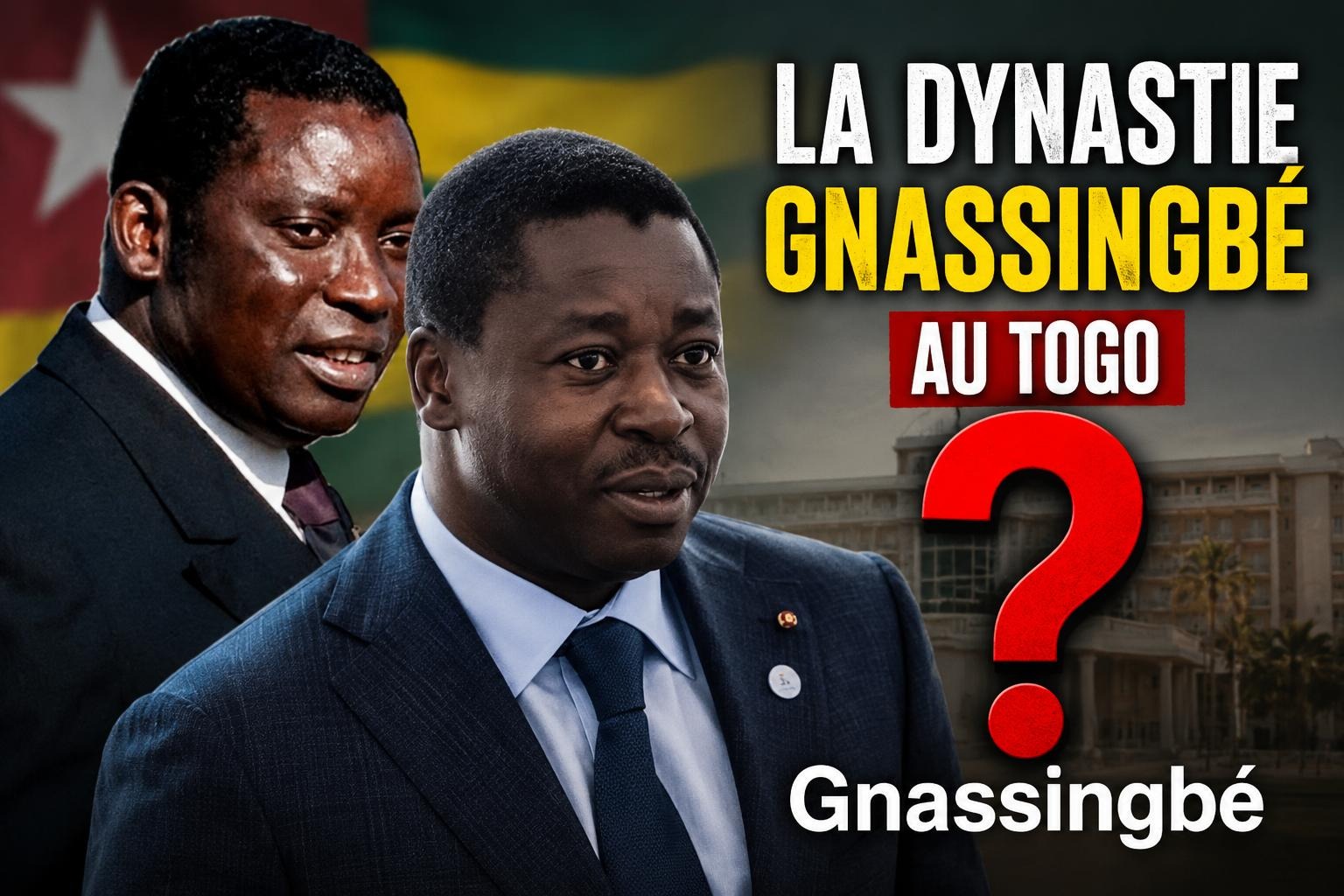
The Republic of Togo stands out in Africa for a dubious distinction: it has hosted the continent’s longest-running political dynasty. For 38 years, Gnassingbé Eyadéma governed with an iron fist, and today, his son, Faure Gnassingbé, is closing in on three decades in power. By entrenching control over state institutions and securing unwavering loyalty from the armed forces, the current president appears to have paved his own path to a lifelong presidency—echoing the fate of his predecessor, who died in office.
The trap of hereditary rule: clan survival over national progress
To grasp why Togo’s transition to democracy remains blocked, one must look beyond politics and into the regime’s very DNA. This is not merely a political party in power; it is a familial and dynastic structure. Since 1967, the Gnassingbé clan and its close allies have treated the presidency as a private inheritance rather than a public trust.
For Faure Gnassingbé, stepping down is no longer a political calculation—it is an existential one. Letting go of the presidency would open the door to scrutiny over state finances, systemic corruption, and the dark legacy of state violence, particularly the bloodshed of the 2005 post-election crisis that left hundreds dead. For the ruling circle, holding onto power is no longer a strategic choice; it is a matter of survival. This fear has bound the president to the presidential palace, ensuring he will cling to power until his final days.
Constitutional engineering: burying democracy under legal reforms
The recent shift to a parliamentary system in Togo has extinguished the last flicker of hope for democratic change. By rebranding himself as Président du Conseil des ministres, Faure Gnassingbé has sidestepped presidential term limits and direct public elections.
This constitutional overhaul serves as an irreversible milestone:
- End of direct suffrage: Citizens no longer elect their head of state, removing any mechanism for voters to hold leaders accountable.
- Unlimited mandate through proxy: As long as his party, UNIR, wins elections—orchestrated by the regime—he remains in office indefinitely.
This legal maneuver reflects a pattern set by his father, who in 2002 amended the constitution to ensure he could remain in power until his death in 2005. Faure has merely refined the strategy: where his father relied on brute force to bypass laws, the son uses laws to legitimize control.
The Togolese Armed Forces: the praetorian shield against change
The final pillar supporting this dynastic lock is the Togolese Armed Forces (FAT). Built by Gnassingbé Eyadéma on a foundation of regional and clan-based loyalty, the FAT functions as the regime’s backbone. Senior military officers benefit economically and politically from the status quo, sharing vested interests with the presidential family.
“In Togo, the army does not defend institutions; it defends a dynasty against the will of its own people.”
For top brass, a departure by Faure Gnassingbé would mean losing privileges and destabilizing their web of influence. The president, in turn, is a hostage to this system. He understands that his survival depends on remaining at the helm, and the military would never accept a successor outside the established order. This unholy alliance has sealed his fate—and the nation’s—together.
A prison of gold: the inescapable cycle of dynastic rule
Faure Gnassingbé is now trapped in the same golden cage as his father. Bound by a clan that refuses to relinquish power, shielded by an army that fears reform, and shielded by laws he himself crafted, he has sentenced himself to a political life sentence. Togolese history repeats itself: like Eyadéma before him, Faure will govern until nature decides otherwise.
But by refusing to offer a peaceful exit, he risks leaving behind a ticking time bomb. The end of this dynasty may not bring stability—it could instead ignite chaos, as the nation’s pent-up frustrations finally erupt.