
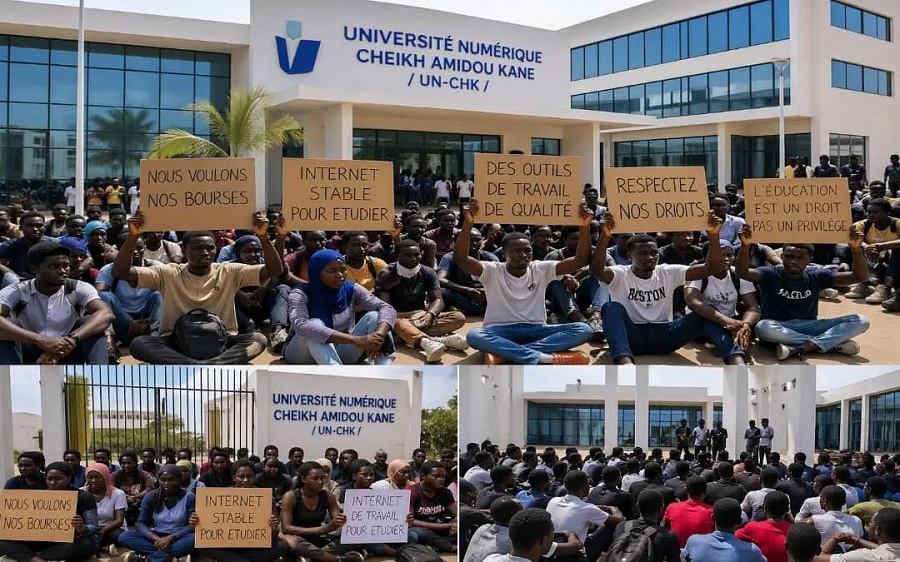
Senegal faces May turmoil: universities, workers and agencies unite in protest
Since 1968, May has been synonymous with social and university unrest worldwide. In Senegal, this month now carries added significance, blending historical echoes with modern-day grievances. From Dakar’s urban transport systems to the corridors of Ageroute and the lecture halls of the Université Numérique Cheikh Hamidou Kane (UN-CHK), discontent is spreading across multiple sectors.
The 1st of May, International Workers’ Day, traditionally kicks off a month of heightened activism. This year, however, the intensity of protests—spanning universities, trade unions, political groups and state agencies—has taken on a new dimension, prompting questions about whether coincidence or deeper forces are at play.
Why does May trigger such widespread social unrest in Senegal? The month holds historical weight. Beyond its global association with labor rights, May 1968 in France—marked by student revolts that spread to workers and paralyzed the nation—left a lasting ideological imprint on Senegal and other former French colonies. Today, that legacy resurfaces as workers, students and civil servants voice frustrations over governance, employment precarity and unmet demands.
Transport workers halt Dakar’s urban mobility
The Association de Financement des Professionnels du Transport Urbain (AFTU) called for a strike on May 14, crippling part of Dakar’s urban transport network. The dispute centers on electronic ticketing systems. After a legal battle, the Dakar High Court ordered the suspension of new ticketing machines and the seizure of existing ones in terminals and sales points—sparking outrage among AFTU members who view the decision as an attack on their livelihoods.
Ageroute’s HR director denounces management failures
At the Agence des Travaux et de Gestion des Routes (Ageroute), Director of Human Resources Cheikh Ahmed Tidiane Thiam publicly criticized the agency’s new leadership for what he described as a lack of consultation and systematic erosion of human capital. Workers allege that 23 colleagues were abruptly dismissed, further straining an already tense social climate.
University students demand unpaid scholarships
Students from the 10th cohort of the Université Numérique Cheikh Hamidou Kane (UN-CHK) took to the press to denounce the partial payment of their scholarships. They report receiving only two years of financial support out of the three allocated for their bachelor’s degree cycle, calling on authorities to resolve the issue promptly.
Trade Point Senegal exposes governance crisis
Members of the Fondation Trade Point Senegal held a press conference to highlight what they describe as an “alarming” internal situation. They cited deteriorating social and managerial climates, unjustified mass recruitments and governance failures as key concerns.
From transport strikes to university protests and internal agency disputes, May in Senegal has become a month where frustrations converge. Workers, students and civil servants are raising their voices, demanding accountability and reform across the board.