
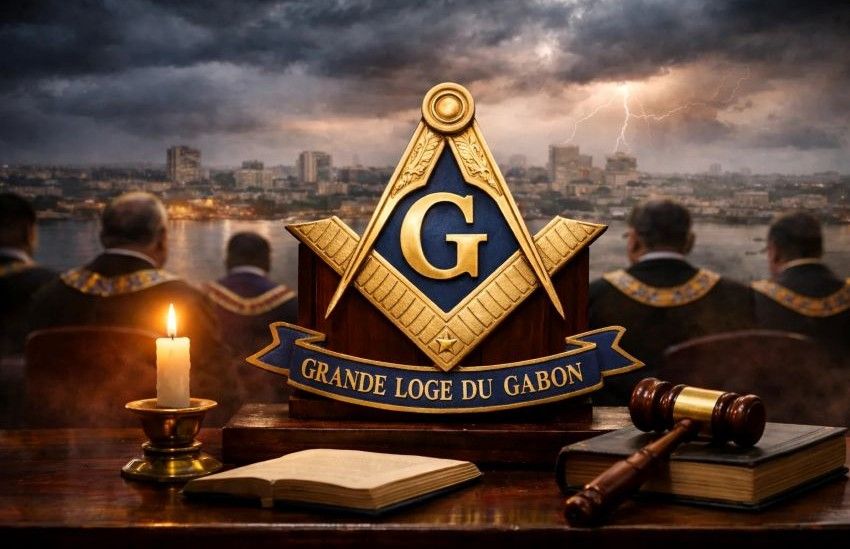
unrest shakes Gabon’s masonic grand lodge amid power shift
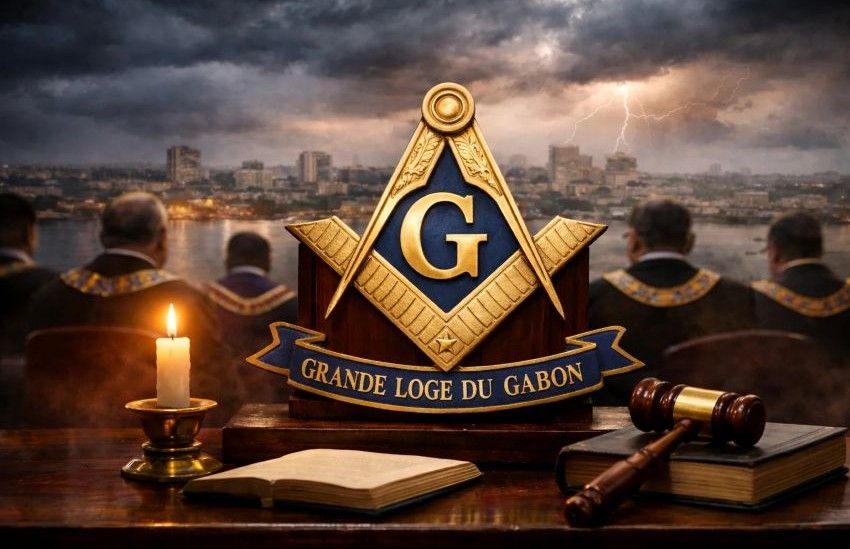
Libreville, June 19, 2026 – For generations, Gabon’s Masonic Grand Lodge (GLG) operated as a model of discretion and influence, maintaining its composure through political upheavals while keeping internal divisions hidden from public view. Today, that carefully constructed facade appears to be crumbling.
The institution, once regarded as the most powerful masonic body in the country, now faces an unprecedented crisis. What began as a contest over leadership succession has escalated into a full-blown confrontation involving financial irregularities, factional disputes, and challenges to the current Grand Master’s authority. Far from being merely an organizational squabble, this turmoil reveals deeper structural cracks in a system that has long depended on a single dominant figure for stability.
According to accounts from prominent members, tensions within the GLG have reached levels unseen in decades. The fraternity that has always presented itself as a beacon of moral elevation and brotherhood now finds itself embroiled in divisions that extend far beyond its ceremonial halls.
the end of a long-standing order
The current crisis cannot be understood without examining Gabon’s evolving power dynamics. For years, political authority and masonic leadership often converged in the same individual. When the nation’s president simultaneously held the position of Grand Master, personal ambitions existed but remained subordinate to an unchallenged hierarchy.
That delicate balance shattered after August 30, 2023. When the new Head of State, Brice Clotaire Oligui Nguema, chose not to assume the Grand Mastership in February 2024, Jacques-Denis Tsanga was installed instead. This decision broke with a tradition that had persisted for generations, leaving many to question whether it signaled a deliberate move toward depoliticization of the institution—or simply unleashed latent rivalries that had been suppressed for years.
a succession that exposes hidden fractures
Three years into his tenure, Jacques-Denis Tsanga faces mounting criticism. Supporters point to his restructuring of provincial masonic bodies, reforms in asset management, and efforts to expand the GLG’s international presence. Detractors, however, accuse him of concentrating too much power, operating with excessive opacity, and mishandling sensitive administrative matters.
Membership figures tell a stark story. Once numbering nearly six hundred, the GLG now counts fewer than two hundred active participants. A wave of suspensions, expulsions, and voluntary departures has eroded trust and left the organization profoundly weakened. The upcoming general assembly—once a routine administrative event—has suddenly become a pivotal moment that could determine the fraternity’s future.
Several candidates have already emerged, ranging from veteran leaders to representatives of younger generations. The coming election is no longer just about filling a symbolic position; it may decide whether the institution can survive in its current form.
power struggles in search of a new center
The GLG’s crisis offers a revealing glimpse into Gabon’s shifting centers of influence. For decades, the fraternity benefited from its proximity to state power, enjoying both protection and stability. Today, operating at arm’s length from political authority, it confronts divisions that were once contained by a unifying force at the top.
The irony is striking. Those who once criticized the entanglement of political and masonic power now see how that relationship once maintained internal cohesion. Conversely, the GLG’s newfound independence has exposed fault lines that can no longer be ignored. The challenge facing the fraternity goes beyond selecting a new Grand Master; it demands establishing an authority that all members can respect in an increasingly fragmented environment.
Like any organization, when the center of gravity becomes uncertain, ambitions stop aligning with established power and begin competing for control. The GLG stands at a crossroads. If it can transform this period of tension into an opportunity for renewal, it may emerge stronger. If not, the current infighting could lead to lasting fragmentation—and a once-unassailable institution may find itself diminished.
For a fraternity that has long prized secrecy as its greatest strength, the public spectacle unfolding today carries its own symbolic weight. It demonstrates that even within the oldest and most influential structures, the fundamental question remains unchanged: how do you preserve unity when authority is no longer absolute?