
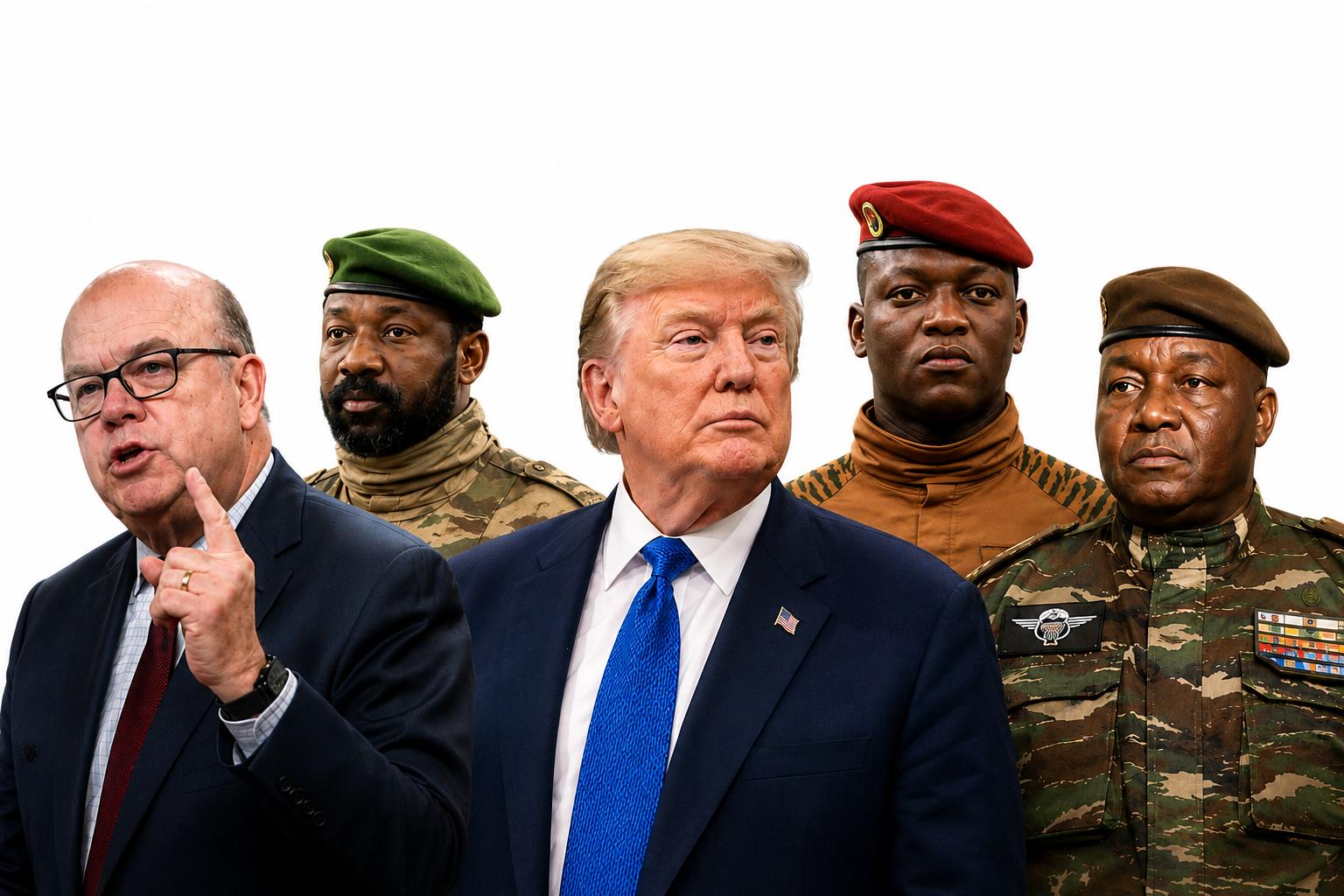
With civilian casualties mounting in the Sahel, the United States is facing mounting pressure to take decisive action against the military juntas ruling Mali, Burkina Faso and Niger. Congressman James P. McGovern is leading a push for targeted sanctions on the regimes in Bamako, Ouagadougou and Niamey, citing escalating human rights abuses and a death toll exceeding 2,600 in 2026 alone.
Washington’s dilemma: moral stance or strategic retreat?
The Democratic lawmaker has intensified calls for the Trump administration to deploy diplomatic and financial tools—including asset freezes, travel bans and Magnitsky-style sanctions—to hold accountable the officers behind the coups that have unraveled democratic rule across the region. A key demand is the immediate release of Mohamed Bazoum, the democratically elected president of Niger who has been detained since July 2023 by the junta in Niamey.
McGovern’s stance reflects growing unease in Washington over the juntas’ use of state repression under the guise of combating terrorism. Critics argue that military-led governments have not only failed to restore security but have exacerbated instability, fueling insurgencies and driving civilians into the arms of armed groups.
From massacres to forced conscription: the human cost of Sahel’s juntas
Mali: a spiral of state violence
The Mali junta’s military operations—often involving foreign mercenaries—have been marked by mass atrocities. In a recent incident, nearly 500 men were executed in villages suspected of harboring Islamist militants, a massacre that has drawn global condemnation. Rather than weakening jihadist networks, such actions have deepened local grievances and swelled militant ranks.
Burkina Faso: when the state turns against its people
Under Captain Ibrahim Traoré’s leadership, the Burkina Faso regime has weaponized counterterrorism laws to silence dissent. Journalists, judges, activists and even ordinary citizens face arbitrary detention, forced conscription into frontline combat, and extrajudicial killings. The so-called “general mobilization” law has become a tool of repression, effectively sentencing critics to death while doing little to curb insecurity.
Niger: airstrikes that miss their mark
The Niger junta, led by General Abdourahamane Tiani, has responded to rising insecurity with aerial bombardments that frequently strike civilian markets and gatherings. Investigations into these attacks are nonexistent, feeding a climate of total impunity. With each errant strike, the regime’s legitimacy erodes further, even as it claims to protect its people.
Trapped between terror and tyranny
For millions in the Sahel, survival has become a daily gamble. In the volatile Liptako-Gourma region—straddling the borders of Burkina Faso, Mali and Niger—villagers face a brutal paradox. Refuse to cooperate with militants, and they risk summary execution. Cooperate, and they risk being labeled traitors by state forces. One farmer from Mopti, Mali, who spoke on condition of anonymity, summed up the dilemma: “If we give our crops to the jihadists, they kill us. If the army comes and finds them in our homes, they accuse us of treason and kill us on the spot.”
The humanitarian fallout is staggering. Forced displacement has reached record levels, with entire communities uprooted by violence. Schools and hospitals are shuttered as public funds are diverted to military campaigns. Censorship stifles independent reporting, while foreign journalists are expelled, leaving the world in the dark about the suffering of millions.
Geopolitical stakes: the cost of inaction
Washington’s potential sanctions carry risks. By cutting ties with traditional Western allies, the juntas have already pivoted toward Russia and China. Some analysts warn that punitive measures could push the Alliance of Sahel States (AES) further into Moscow’s orbit, complicating U.S. influence in the region. Yet, inaction has its own peril: it normalizes military rule and emboldens regimes to commit further abuses under the banner of national sovereignty.
The stakes go beyond the Sahel. For the United States, the message is clear: counterterrorism cannot justify the erosion of human rights or the slaughter of innocents. As the death toll climbs and the humanitarian crisis deepens, the world is watching to see whether Washington will draw a line—or look away.