
- Breaking
- Politics
war from Sudan spills into Chad’s border regions
Three years into Sudan’s brutal civil conflict, the violence has now spilled across the border into Chad. Cross-border strikes, rising military tensions and deepening communal divisions are pulling N’Djamena into the fray.
Twin towns at the crossroads
The border town of Tiné straddles both sides of the Chad-Sudan divide. Its twin settlements—one in each country—are home to the same Zaghawa communities and serve as a critical crossing point for civilians fleeing the Darfur war’s horrors.
On February 21, 2026, the Rapid Support Forces (RSF) seized control of the Sudanese side of Tiné. They immediately clashed with the Toroboro resistance fighters—Chadian and Sudanese groups allied with Sudan’s army—as well as unofficially deployed Chadian troops. The counteroffensive reclaimed the town within days. In response, Chad sealed its border, yet fighting persisted, signaling the conflict’s entrenched presence along this volatile frontier.
Against this backdrop of escalating tensions, a deadly drone strike hit Tiné (Chad) on March 21, killing at least twenty civilians. While Chadian authorities deny involvement, accusations have mounted. Exiled opposition leader Ousmane Dillo, now based in Sudan, released an audio message widely circulated on private messaging platforms, directly accusing Mahamat Déby of orchestrating the attack and calling for his removal. Meanwhile, Sudan’s Darfur governor, Minni Arkou Minawi, publicly declared that “the war with Chad has already begun,” underscoring a dangerous regional escalation.
Government strikes hard
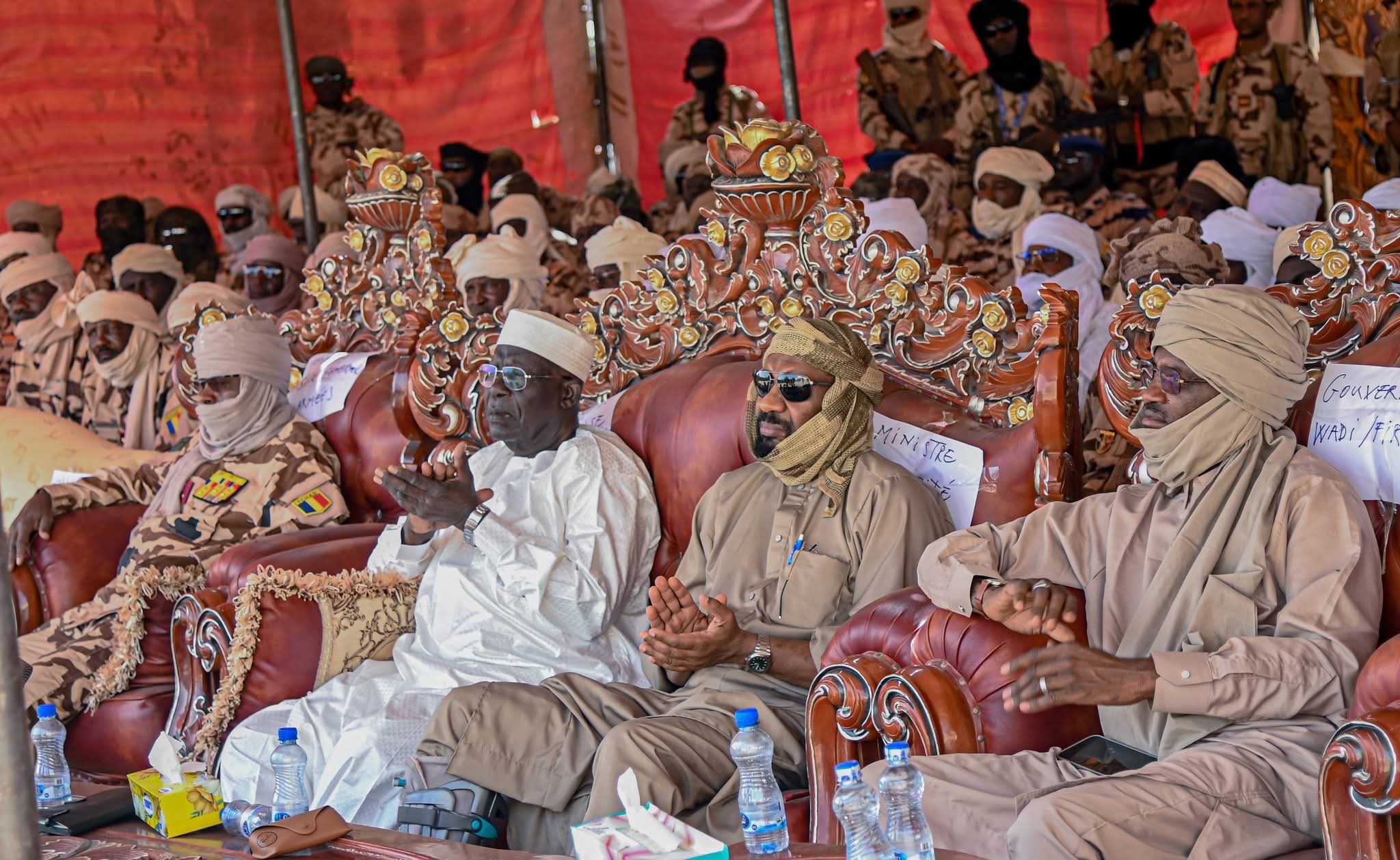
Chad’s government has adopted a defiant stance, reaffirming its neutrality while vowing a “measured response” to any incursions. President Mahamat Déby ordered the military onto high alert, and a March 22 emergency security summit in Tiné brought together top brass to reinforce border defenses. “This is Tiné, Chad—not Tiné, Sudan. Let the Sudanese army, the Toroboro fighters, and the RSF settle their scores inside Sudan. They are not welcome here to spill our blood or terrorize our people,” declared Security Minister General Ali Ahmat Akhabach.
Following the summit, N’Djamena imposed strict border restrictions, barring civilians—including women and children—from crossing into Chad. While framed as a measure to curb Zaghawa rebellion, the move has drawn sharp criticism. Analysts warn it could further destabilize the region. As Sudan expert Cameron Hudson noted, “Chad’s military buildup at the Sudanese border amid rising tensions risks deepening its direct involvement in the Sudan conflict—rather than preventing it. Déby’s pursuit of a tough image may backfire strategically.”
Communal fault lines deepen
The Sudan war’s ripple effects extend beyond the Zaghawa. Security sources report that the RSF has been actively recruiting young men from the Tama community in Chad’s eastern regions. This mobilization, resembling mercenary activity, leverages local networks tied to traditional leaders, administrative authorities, and pro-government figures.
Like the Zaghawa, the Tama straddle both sides of the Chad-Sudan border, with communities in Wadi Fira and Ouaddaï (Chad) and western Sudan. Though non-Arab, during Darfur’s first war (2003), many Tama joined Janjaweed militias—the forerunners of Hemedti’s RSF—and fought against ethnic groups, including the Zaghawa. This resurgence of old alliances risks reigniting long-dormant tensions within Chadian society and fueling inter-communal fear.
What was once a calculated gamble by Chad’s leadership now appears as a reckless misstep. The border, once a line of separation, has become a battleground where regional conflicts play out. The genie is out of the bottle—and Chad may struggle to put it back.