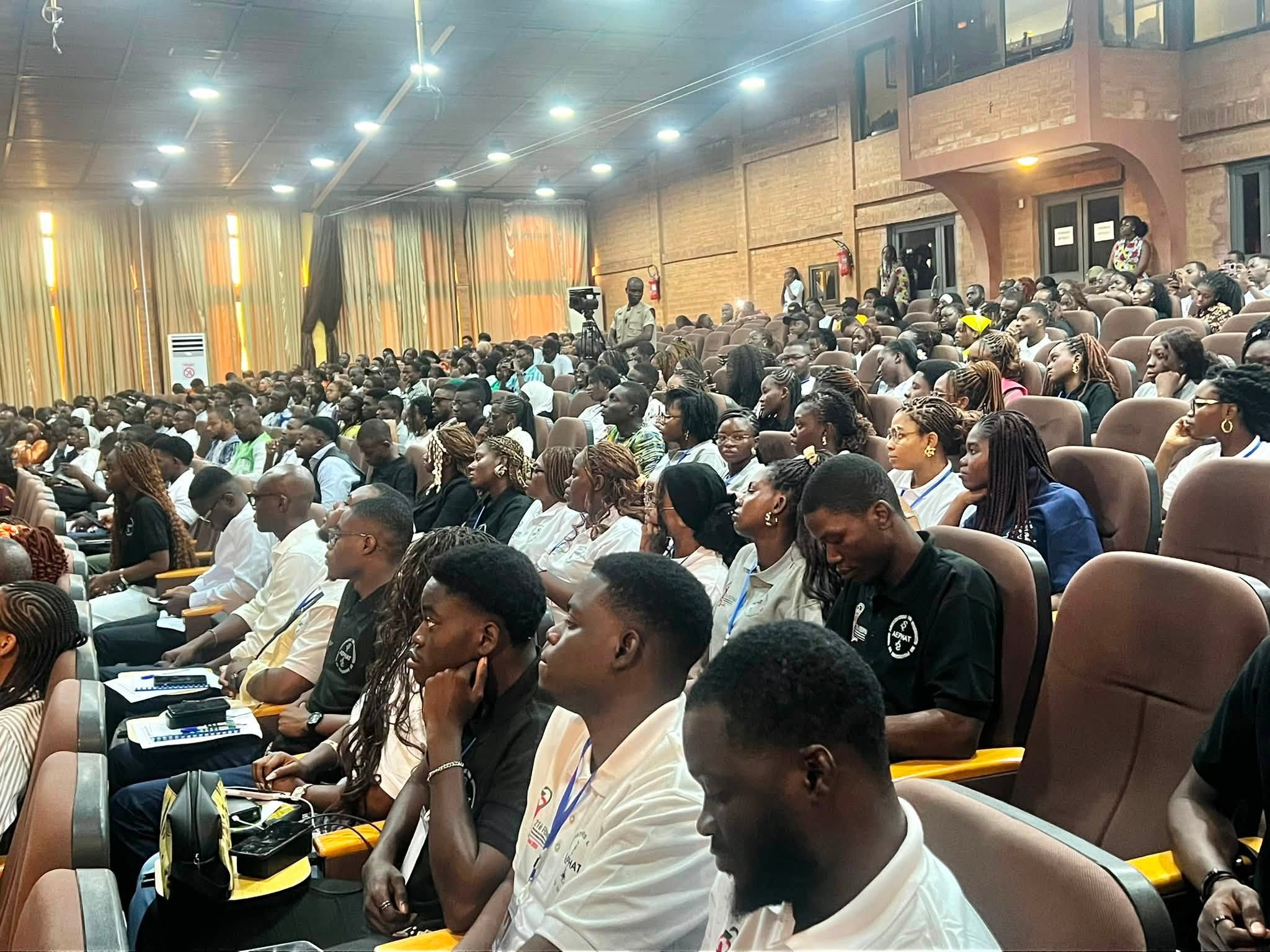
Lomé, August 12, 2026 — West Africa stands at a defining crossroads: continue relying on foreign pharmaceutical imports or build a self-sufficient health industry. This stark choice brought together medical and academic leaders across the subregion to Lomé’s Agora Senghor on August 12, laying the groundwork for a complete overhaul of West Africa’s healthcare strategy.
The Federation of Pharmacy Students of West Africa (FESPAO) convened its 21st Scientific and Cultural Conference, where the region’s future medical leaders moved beyond budgetary appeals to demand a fundamental shift in doctrine. The era of pharmacies serving merely as distribution points is ending. Today’s focus is on industrialization, genomic research, and scientifically validating traditional medical knowledge.
Local production: a national security imperative
The global pandemic and recent logistical disruptions have exposed a critical vulnerability: dependence on imported medicines is no longer just an economic burden—it’s a national security risk. This was the central argument at the summit.
Professor Gado Tchangbédji, Togo’s Minister Delegate for Higher Education and Research, outlined the government’s new vision under President Faure Essozimna Gnassingbé: positioning innovation and domestic pharmaceutical production as the region’s shield against future health crises. To achieve this, the state is committing to robust support for scientific cooperation and applied research.
Genomic epidemiology and indigenous knowledge: the core of sovereignty
Local production alone isn’t enough if it merely replicates foreign patents. True pharmaceutical sovereignty requires treatments tailored to Africa’s unique genetic and epidemiological profile. The Lomé conference highlighted the urgent need for genomic epidemiology—developing therapies based on African genetic heritage, which has long been underrepresented in global clinical trials.
Alongside this scientific modernization, there’s a push to reclaim and industrialize traditional medicine. No longer content with informal acceptance, experts advocate subjecting herbal remedies to rigorous clinical trials to patent entirely new molecules rooted in African knowledge.
Redefining the pharmacist’s role for tomorrow’s Africa
This industrial and scientific ambition faces a human capital challenge. As the sector evolves, so must academic training. Professor Tchin Darré, Togo’s Minister Delegate for Health and Dean of the Faculty of Health Sciences at the University of Lomé, emphasized the cornerstone of this revolution: curriculum reform. Tomorrow’s West African pharmacist must be more than a dispenser behind a counter. They must become a cutting-edge researcher, a key player in manufacturing, and an expert in validating indigenous knowledge.
As discussions continue in Lomé, the 21st conference’s goal is clear: translate these academic debates into binding public policy. The aim? To ensure universal healthcare access in West Africa no longer hinges on factories thousands of miles away from patients.
The stakes couldn’t be higher. Without a robust local pharmaceutical industry and research rooted in African realities, West Africa will remain dependent on external solutions. In the face of future pandemics, this dependence could cost lives. True health sovereignty will be determined by the ability of states to turn these resolutions into tangible actions—ensuring every African patient receives care designed, validated, and produced on the continent.