
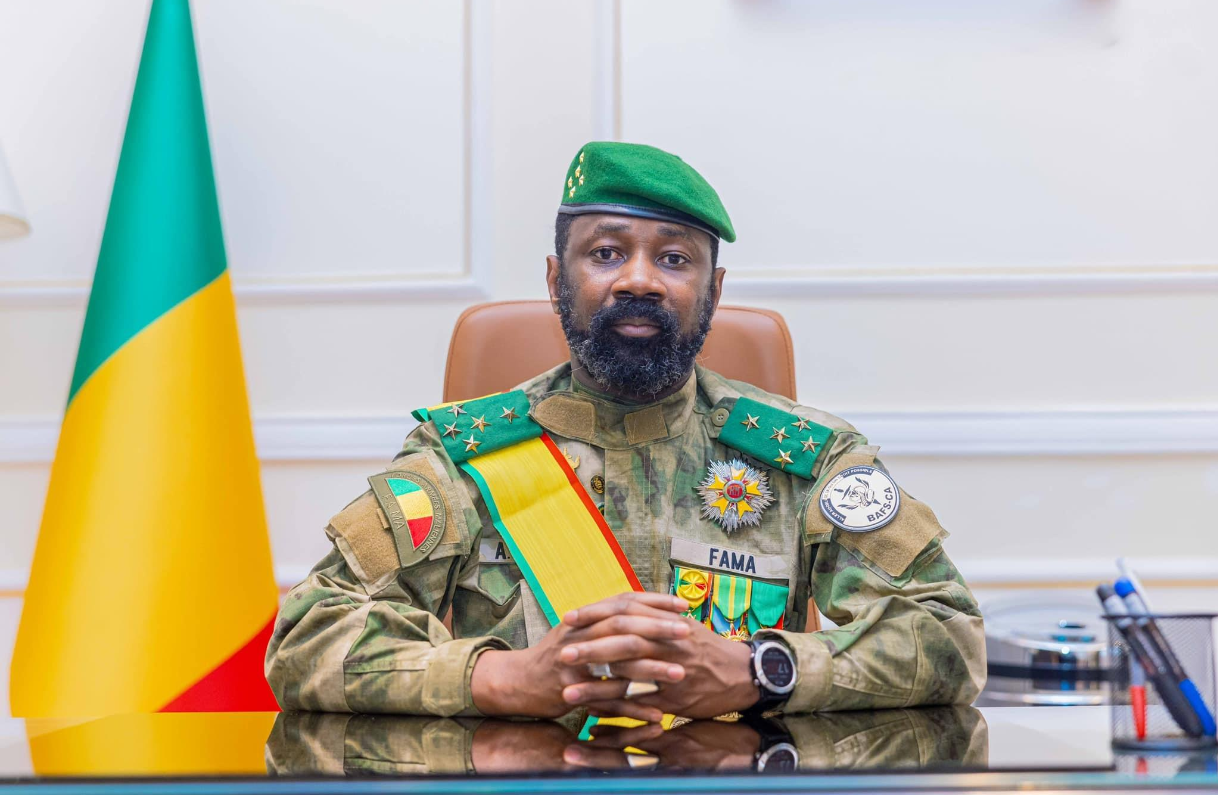
Diplomatic observers are closely watching the high-stakes meeting between Mali and Burkina Faso in Ouagadougou this November, as questions mount over the conspicuous absence of Niger from the summit. While the leaders of Bamako and Ouagadougou strengthen their bilateral ties, the missing third member of the Sahel Alliance raises critical questions about the future of regional unity.
Can the Sahel alliance hold together without Niger?
The visit of Malian transitional president Assimi Goïta to Burkina Faso on November 5, 2026, symbolizes the deepening relationship between two key members of the Alliance of Sahel States (AES). Yet as the two leaders engage in discussions, the conspicuous absence of Niger’s president Abdourahamane Tiani casts a shadow over the alliance’s cohesion. What message does this send to regional partners and the international community?
A bilateral meeting with far-reaching implications
According to official Burkina Faso protocol sources, Goïta’s visit is framed as a working and friendship trip. While both leaders have repeatedly emphasized the importance of regional solidarity, this meeting excludes Niger—the third pillar of the AES. The absence prompts speculation: is this a deliberate strategic choice, or simply a temporal diplomatic alignment?
Historically, the AES was founded on the principle of collective action, pooling resources and strategies to combat shared threats. With Niger absent from the talks, the alliance’s ability to present a unified front comes under scrutiny. The timing of this meeting, just weeks after foreign ministers from all three nations convened in Ouagadougou to discuss regional priorities, adds to the intrigue.
Why is Niger’s absence significant for the Sahel?
The Sahel alliance was designed to be more than a bilateral pact. It was envisioned as a tripartite framework uniting Burkina Faso, Mali, and Niger under a shared vision of sovereignty and mutual defense. Yet as Goïta and Traoré meet without Tiani, analysts are asking whether the alliance’s strategic depth is being diluted.
Security cooperation remains a top priority. The three nations continue to face threats from armed militias and insurgent groups operating across porous borders. The mutual exchange of intelligence and coordinated military operations have been central to the AES’s mission. But without all three leaders present, can the alliance maintain the momentum needed to address these challenges effectively?
Equally important is the diplomatic weight the AES carries on the global stage. A united front strengthens negotiations with international partners, from the African Union to bilateral allies. A fractured alliance risks weakening each member’s bargaining position.
Not an exclusion, but a test of unity
Despite the high-profile absence, Niger remains an active participant in the AES’s political and operational structures. Just weeks earlier, foreign ministers from all three countries met in Ouagadougou to align positions on regional security and economic integration. This suggests that Niger’s absence from this particular meeting may be circumstantial rather than intentional.
Yet the optics matter. In a union built on the principle of equal partnership, every member’s presence—or absence—sends a signal. For the AES to fulfill its mission, regular high-level consultations are essential. Bilateral meetings have their place, but the alliance’s long-term viability depends on inclusive decision-making.What’s next for the Sahel alliance?
As Mali and Burkina Faso move forward with their agenda, the future of the AES hangs in the balance. Will this meeting between Goïta and Traoré lead to new initiatives that include Niamey? Or does it mark a subtle shift toward a more flexible, less rigid alliance structure?
The outcome of these discussions could redefine regional cooperation in the Sahel. If the alliance is to survive—and thrive—it must find ways to balance bilateral cooperation with collective governance. For now, the absence of Niger remains a test of the alliance’s resilience and adaptability in the face of evolving regional realities.
What does this mean for citizens and economies?
Beyond the geopolitical implications, the cohesion of the Sahel alliance directly impacts the lives of millions. From trade routes to security, stability in the region depends on coordinated action. As Mali and Burkina Faso deepen their ties, the people of Niger—and the broader Sahel—are watching closely. Will their leaders find a way to reunite the alliance? Or will the absence of one nation weaken the bloc’s collective strength?
The answers will shape not only the future of the AES but the stability of the entire Sahel region.