
why the fight against high prices won’t succeed in supermarkets alone
Libreville, July 3, 2026 — For years, the struggle against rising living costs has dominated public discourse in many African nations. In Gabon, this issue has escalated into a pressing national debate as families grapple with the relentless erosion of their purchasing power.
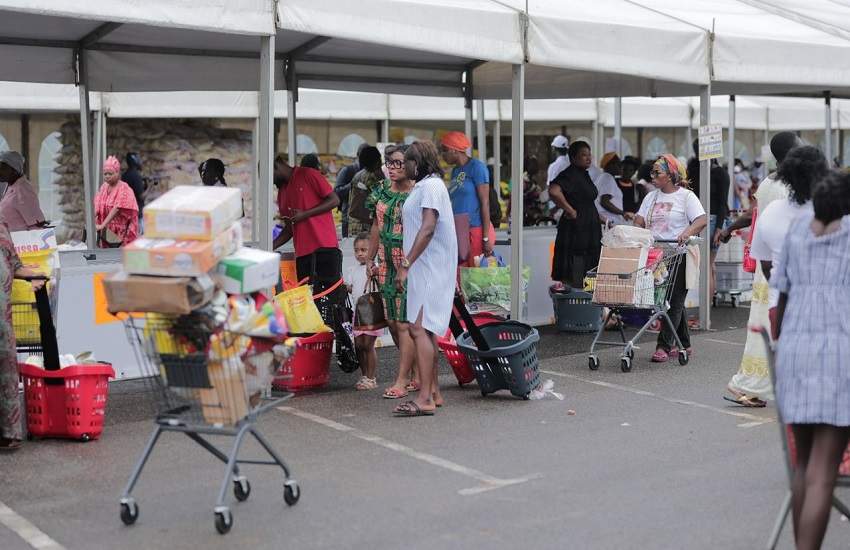
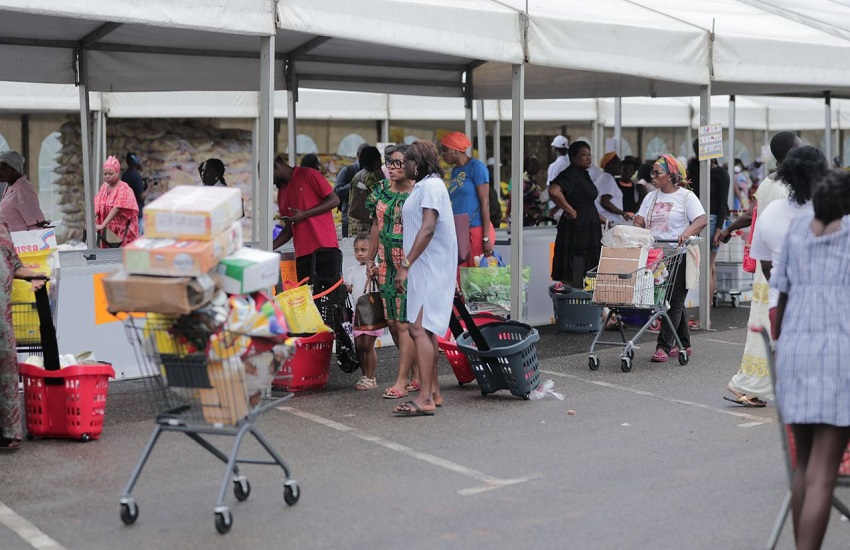
Government responses have been swift and varied—price controls, tax exemptions, subsidies, flash sales, tariff ceilings, and even massive discount markets orchestrated by the Gabonese Purchasing Center (CEAG). These measures, while well-intentioned, aim to shield citizens from immediate financial strain. Yet, despite their cumulative impact, a critical question lingers: why do prices remain stubbornly high even as anti-inflation strategies multiply?
The answer may force a fundamental rethink of how Gabon approaches economic policy. What if the root of the problem isn’t inflated prices but a systemic lack of wealth creation?
When price-reduction policies hit their limits
Temporary price interventions provide undeniable relief, particularly for vulnerable households. The CEAG’s discount markets, for example, grant families periodic access to essential goods at reduced rates, addressing urgent needs. However, these initiatives operate as band-aid solutions—effective in the short term but unsustainable in the long run.
Once the campaigns conclude, consumers revert to traditional retail channels, and the same economic pressures resurface. Prices rebound because the underlying drivers—import dependence, logistical inefficiencies, and structural production gaps—remain unchanged.
This realization doesn’t invalidate such measures. Instead, it underscores their role as stopgaps rather than lasting fixes. The real challenge lies in uncovering why prices stay structurally high and why administrative solutions fail to yield permanent change.
High living costs expose deep-rooted economic flaws
Public debates often fixate on the consumer, but the origins of high prices extend far beyond the checkout counter. An economy heavily reliant on imports—especially food and manufactured goods—faces inevitable exposure to global market fluctuations, shipping costs, and supply chain disruptions. Every spike in international prices inevitably trickles down to local wallets.
From this perspective, the high cost of living ceases to be a mere pricing issue. It becomes a symptom of a broader economic model. A nation that exports raw materials without adding value also exports potential jobs, future incomes, and purchasing power. The fight against high prices, then, transcends price controls; it demands a transformation of Gabon’s economic fabric.
The power of local production and transformation
Gabon possesses immense potential—vast forests, rich mineral deposits, fertile land, a strategic geographic position, and relative institutional stability. Yet, much of this wealth leaves the country in unprocessed form, only to be refined and resold at a premium.
Local processing isn’t just an industrial ambition; it’s a direct strategy to combat high living costs. Factories create jobs. Jobs generate income. Income strengthens purchasing power. And stronger purchasing power fuels economic growth. The same logic applies to agriculture and livestock. Boosting local food production, modernizing staple crop supply chains, expanding poultry farming, and supporting agro-industries can gradually reduce the country’s reliance on imported goods. Beyond lowering costs, these sectors offer a proven pathway to sustainable employment.
The future of Gabon’s fight against high prices may hinge as much on farm fields and processing plants as it does on price controls.
Building a resilient middle class
For decades, public policy has focused on managing prices. The time may have come to shift that focus toward income generation. A nation doesn’t thrive simply because prices are artificially suppressed. It thrives when the majority of its people earn enough to afford essentials, invest in education, plan for the future, and fully participate in the economy.
Expanding the middle class is one of Gabon’s most strategic goals. A vibrant middle class drives domestic demand, attracts private investment, and fosters homegrown entrepreneurship. In this context, the battle against high prices is less about price controls and more about creating productive jobs and durable incomes. Purchasing power should no longer be treated as an afterthought of growth—it must become one of its core objectives.
The role of economic transparency
This transformation requires modernizing governance tools. Digitizing price monitoring, for instance, could revolutionize economic regulation. Real-time tracking of price movements across Gabon would enable authorities to detect anomalies, enhance competition, and measure policy impacts with precision. Economic data, when leveraged effectively, can shift governance from perception-based assumptions to fact-driven decisions. In an era where citizens demand greater transparency, this evolution could rebuild trust among consumers, businesses, and the government.
The debate over high living costs extends beyond Gabon’s borders, resonating across Africa. Governments everywhere face the same dilemma: how to protect citizens without trapping the economy in a cycle of perpetual subsidies and price corrections. Gabon has a unique opportunity to pioneer a different approach—one that combines immediate social support with long-term economic transformation.
By maintaining social safety nets while accelerating local processing, agricultural development, industrialization, job creation, market digitalization, and middle-class expansion, Gabon can shift the fight against high prices from a battle of corrections to one of structural change.
The question isn’t how long the state can keep lowering certain prices. It’s how many Gabonese will soon live with dignity, supported by stable incomes from a value-creating economy, no longer dependent on constant corrective measures to safeguard their purchasing power.
That’s the line between an economy that treats symptoms and one that cures the disease—and perhaps, finally, the path to a lasting solution.