
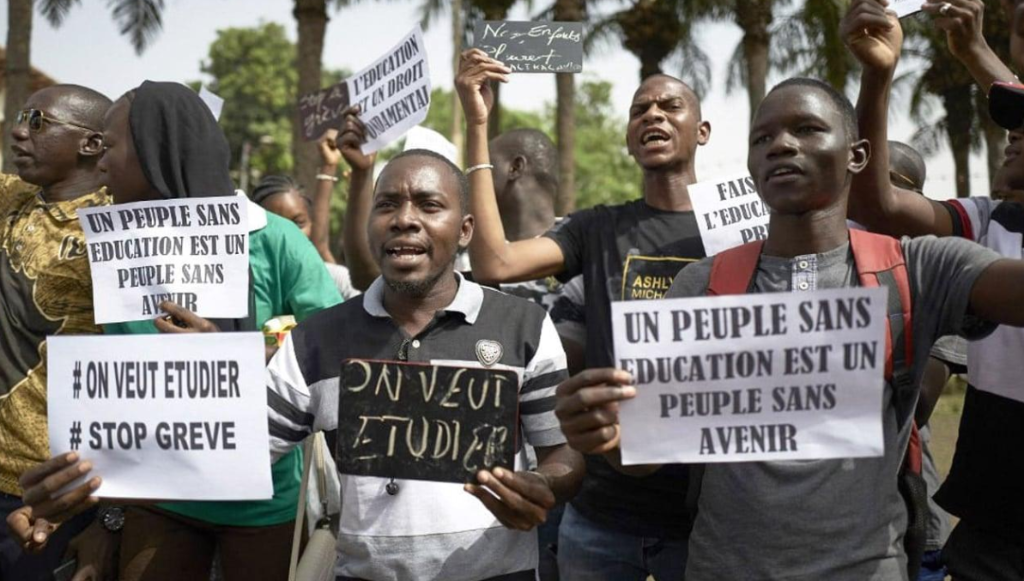
After nine years of broken promises, researchers push for long-overdue payments
The standoff between Malian academics and the transitional authorities has reached a critical juncture. As the nationwide university strike enters its fourth week, the Syndicat National de l’Enseignement Supérieur et de la Recherche Scientifique (SNESUP) reports its first high-level meeting with state officials. But with campuses paralyzed and students’ futures hanging in the balance, will this dialogue finally break the deadlock?
The crisis escalates just one week after the 16th of November, when SNESUP leaders announced their reception by top government figures. Their unprecedented engagement follows nearly a month of silence from state authorities—despite the strike disrupting higher education across the country since late October.
Will three weeks of disrupted classes finally force the government to act—or will academics remain stranded in protest?
From 2017 decree to 2024 deadlock: why the research bonus matters
The SNESUP’s demands trace back to a presidential decree issued in 2017. President Ibrahim Boubacar Keïta signed Decree No. 2017-0850/P-RM, introducing a research bonus for lecturers and researchers to support scientific work, publications, and knowledge production. Nearly seven years later, the bonus remains unpaid.
The union insists not only on the immediate payment of the bonus but also on the settlement of accumulated arrears and clear terms for future disbursements. For thousands of university lecturers, this is not a new protest—it’s a demand for long-overdue justice.
In a statement released on the 15th of November, SNESUP’s national executive confirmed the high-level meeting but emphasized that no concrete commitments were made regarding the payment plan. The union has called on its members to remain mobilized while it assesses the government’s next steps.
Students caught in the crossfire: how the strike is reshaping academic life
The strike’s ripple effects are growing harder to ignore. Lectures are canceled, exams are delayed, and academic calendars are thrown into chaos. For students—many already facing financial and logistical challenges—the prolonged disruption threatens their academic progression and career prospects.
A previous mediation attempt on the 7th of November, led by community leaders and traditional communicators, failed to yield a breakthrough. Now, with the government finally engaging, the stakes are higher than ever. Yet SNESUP insists that words must be backed by action—and that the strike continues until tangible progress is made.
Can dialogue end a decade of waiting?
The transitional authorities’ belated outreach marks the first real sign of state involvement in the conflict. After weeks of public inaction, the government now faces a clear choice: either negotiate a sustainable solution or allow the paralysis of Mali’s higher education system to deepen.
For SNESUP, the dialogue is a step forward—but only the beginning. The union has scheduled consultations with its members before deciding on the next move. Unless the authorities present a credible payment schedule soon, the strike is likely to push into a fifth week.
With the academic year hanging in the balance and no guarantee of resolution, one question looms large: Can Mali’s researchers finally see their long-promised benefits delivered—or will this winter of discontent leave the entire system in limbo?