
Is the world ignoring the education funding crisis that’s fueling youth unrest?
In 2026, a wave of student and youth protests swept across continents—from European classrooms to African universities—as young people voiced their frustration over underfunded education systems, unaffordable living costs, and political neglect. Governments in France, Italy, Albania, Greece, Belgium, Senegal, Kenya, South Africa, Argentina, and Indonesia now face a critical question: can they afford to ignore the demands of a generation that feels abandoned by its leaders?
Why young voices are louder—and more urgent—than ever
The 2026 protests weren’t coordinated, but they shared a common thread: a generation that believes institutions have failed them. Rising tuition fees, crumbling school infrastructure, and the growing disconnect between education and employment have pushed students to take to the streets. In many countries, a degree no longer guarantees stability, leaving young people trapped between debt and uncertainty.
The growing gap between education and opportunity
Across the globe, students are protesting not just for better schools—but for a future that works. In some places, financial aid arrives late or not at all. In others, overcrowded classrooms and outdated facilities make learning a struggle. And in nations where youth unemployment is high, the frustration is compounded by the sense that their leaders don’t understand—or care—about their reality.
Europe’s classrooms become battlegrounds
From Paris to Tirana, European students are forcing governments to confront long-neglected education crises. In each country, the protests took on a local flavor—but the underlying message was the same: young people refuse to accept an education system that doesn’t serve them.
France: when classrooms become symbols of neglect
French students launched protests in mid-September, escalating by October 1st with over 1,000 high schools participating in strikes, blockades, or demonstrations. Their grievances? Overcrowded classes, teacher shortages, and crumbling school buildings. Many also pointed to the lack of guidance for post-graduation paths—a critical issue in a job market where diplomas no longer guarantee careers.
While some protests remained peaceful, others turned violent, with clashes and property damage overshadowing the original demands. The government responded with a mix of police presence, arrests, and policy promises. But restoring order won’t solve the deeper issues: underfunded schools, overworked teachers, and a generation that feels abandoned by the system.
Italy’s protest movement takes center stage
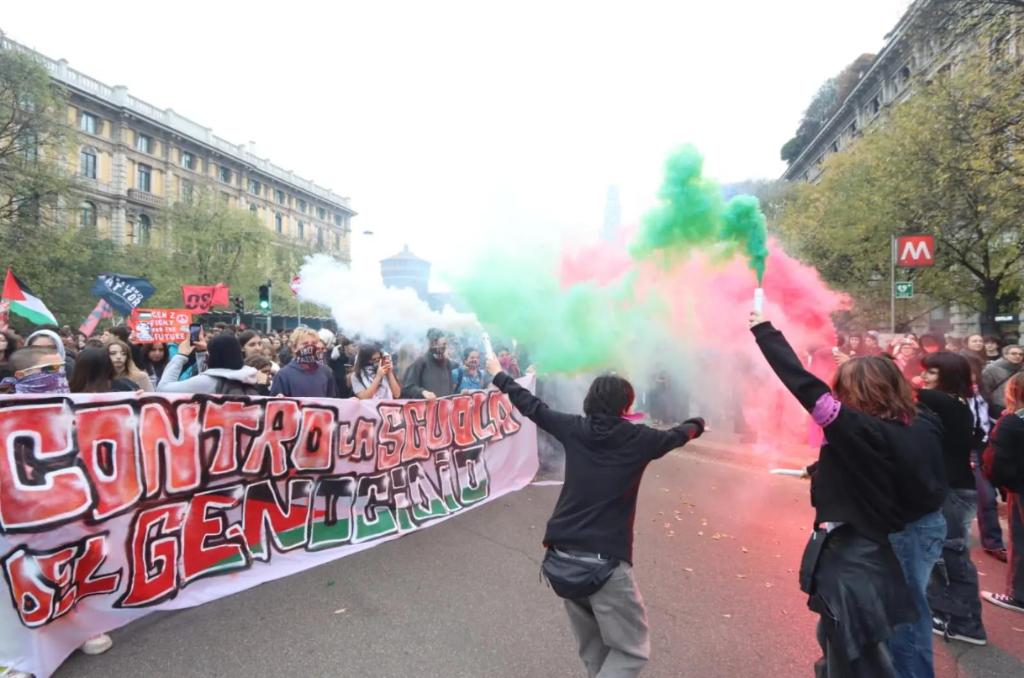
On October 16th, thousands of students marched in Milan, Rome, and Turin, demanding increased funding for public education and opposing a controversial decree that would limit the number of foreign-born students in certain classes. The protests exposed deeper social tensions, including rising energy costs and public spending cuts. While most demonstrations were orderly, some incidents involved projectiles and fireworks, forcing authorities to balance crowd control with addressing legitimate concerns.
Albania’s unrest: corruption and unemployment fuel the fire
On October 14th, students in Tirana intensified their demonstrations, protesting high tuition fees, scarce financial aid, and bleak job prospects. The anger was intensified by corruption allegations against public officials. Some protests turned destructive, with buildings and banks set ablaze. Police responded with water cannons and tear gas, while authorities condemned the violence and made arrests.
Greece and Belgium: housing, debt, and the cost of learning
In Greece, students, teachers, and public sector workers took to the streets on October 21st, demanding better-funded schools, affordable student housing, and free textbooks. In francophone Belgium, high school students protested austerity measures and education reforms, emphasizing that their struggles—from overcrowded classrooms to budget cuts—deserve their own spotlight, separate from France’s movement. Both nations grapple with rising living costs that make higher education feel out of reach for many families.
Africa’s universities at a breaking point
The African continent saw some of the most urgent education crises in 2026, where financial instability, unpaid bursaries, and university closures threatened the future of an entire generation.
Senegal’s bursary crisis claims lives
At Cheikh Anta Diop University in Dakar, delayed bursary payments led to a crisis that peaked in early 2026. After the death of student Abdoulaye Ba, the university shut down and authorities launched an investigation. For many students, bursaries aren’t just financial aid—they’re the difference between continuing their education and facing hunger or homelessness.
Kenya’s academic standstill
In Nairobi, public university students protested in October after a teachers’ strike disrupted classes and delayed exams. Though students weren’t part of the salary dispute between unions and the government, they bore the academic consequences. The message was clear: when education systems fail, young people pay the price.
South Africa’s debt dilemma
At Rhodes University, students protested a policy requiring them to settle university debts before re-enrolling in 2027. Thirteen arrests followed a demonstration, though local reports later dropped the charges. The protest highlighted how financial barriers can threaten access to higher education.
Beyond borders: the fight for public education funding
In Argentina and Indonesia, students and educators took their grievances beyond campus walls, linking education funding to broader economic and political concerns.
Argentina’s federal march for universities
On October 15th, the federal university march united students, teachers, and administrative staff, demanding increased public funding, fairer wages, and the implementation of the long-promised university financing law. The protest pitted the academic community against the government’s budgetary priorities.
Indonesia’s economic and political awakening
On June 12th, Indonesian students marched against soaring living costs, fuel price hikes, and rising food prices—all while questioning the government’s spending priorities and the role of the military in civilian life. Their protest showed how education issues intersect with broader economic frustrations.
Governments respond: repression, dialogue, or denial?
As protests spread, governments reacted in different ways—some with force, others with promises, and many with a mix of both. But restoring order won’t be enough if the root causes remain unaddressed.
The risks of a heavy-handed approach
Police crackdowns, arrests, and school closures sent a clear message: governments are prioritizing control over solutions. But when protests turn violent, it’s often a symptom of deeper failures. Arrests and water cannons may suppress unrest in the short term, but they risk deepening distrust between youth and the state.
Minors and young adults, in particular, deserve responses that respect their rights. While vandalism and arson cannot be justified, neither can the neglect that pushed them to the streets in the first place.
When dialogue replaces confrontation
Some governments attempted to address the protests with policy changes, budget reallocations, and negotiations. But for these efforts to succeed, they must be more than temporary fixes. Students aren’t asking for quick wins—they’re demanding structural change, from consistent bursary payments to teacher recruitment and school renovations.
The future at stake: can trust in education be restored?
The 2026 protests weren’t just about education—they were about the future. A generation that feels abandoned by its leaders, its schools, and its job market is pushing back. And their message is clear: they won’t accept an education system that fails them.
Governments now face a choice. They can double down on security measures, hoping the unrest will fade. Or they can listen to the demands, invest in schools, and prove that education—not repression—is the path to stability. The cost of ignoring these voices won’t just be measured in broken windows or canceled classes. It will be measured in lost trust, broken opportunities, and a future that slips further out of reach.
The real test for 2026 isn’t how quickly protests end. It’s whether leaders are willing to act before the next crisis erupts.