
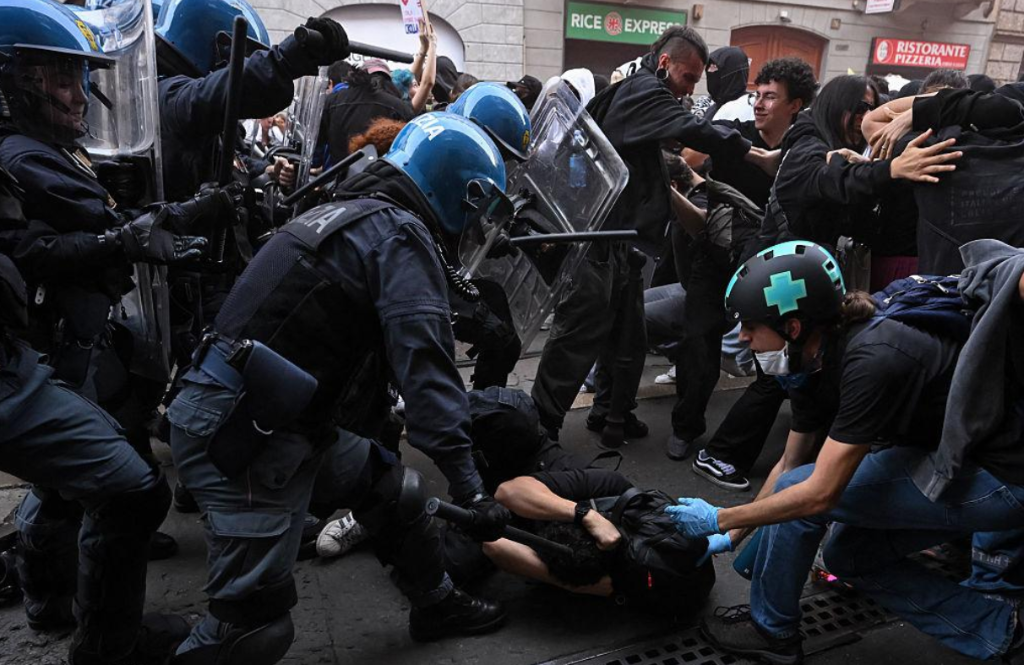
The Italian government’s latest security crackdown has ignited a fierce national debate: how far can a democracy go to restore order without eroding fundamental rights?
Why Rome’s hardline approach to urban violence is raising alarms
Violent clashes in Milan and other northern cities have forced the Italian government to take decisive action. On October 20, 2026, the Council of Ministers approved a sweeping decree that significantly toughens penalties for participation in violent protests, expands parental liability, and introduces stricter measures against minors involved in unrest. But the new law’s boldest provisions—including up to five years in prison for group violence and financial penalties for parents of juvenile offenders—have sparked criticism over whether these measures strike the right balance between security and civil liberties.
Prime Minister Giorgia Meloni has framed the crackdown as a necessary response to unacceptable violence, distinguishing between peaceful assembly and organized destruction. “Public order must be restored,” she stated, arguing that the recent wave of riots—featuring looting, vandalism, and attacks on police—justifies swift and comprehensive action.
Harsher penalties, broader accountability: what the new law changes
The decree establishes stricter penalties for collective violence, targeting individuals in groups of five or more who endanger public safety. Convictions under this provision could result in up to five years in prison and fines of up to €20,000. Penalties escalate further when participants conceal their identities or when injuries occur during the disturbances.
Organizers of violent gatherings now face even stiffer consequences. According to Justice Minister Carlo Nordio, those who plan, incite, or coordinate attacks—including through digital means—could be sentenced to between four and twelve years in prison. The goal: dismantle not just the rioters on the ground but the networks fueling chaos.
For minors, the reforms lower the age threshold for prosecution to 14, and expand pre-trial detention for those aged 14 to 17 deemed a public safety risk. Additionally, parents may now be held financially liable for damages caused by their children under 18—part of an effort to deter repeat offenses by making families more accountable.
Milan emerges as the testing ground for tougher security
Milan, the epicenter of recent unrest, is becoming a real-time laboratory for Italy’s new security strategy. As part of “Operation Strade Sicure” (Safe Streets), the government has deployed 500 additional military personnel to patrol high-risk areas and support police forces through the end of the year. The move reflects growing concerns about escalating violence in commercial districts and public spaces.
Yet the unrest in Milan and surrounding cities wasn’t driven solely by vandalism. Many demonstrations reflected deep frustration over rising living costs, energy prices, housing shortages, and crumbling public services. Critics argue that a purely punitive approach fails to address the underlying social grievances fueling discontent.
Can Italy enforce order without sacrificing justice?
The new decree marks the latest in a series of security-focused laws adopted since Meloni took office in 2022. While supporters praise the government’s proactive stance against urban violence, human rights advocates and police unions warn of potential overreach. Key concerns include:
- Preventive powers: Expanded authority to detain individuals before crimes are committed
- Juvenile justice: Lower prosecution age and broader use of pretrial detention for minors
- Parental accountability: Risk of unfair financial penalties when minors act alone
- Proportionality: Fear that penalties may exceed the severity of the offense
The government scaled back one proposed measure—granting military officers expanded policing powers in Milan—after constitutional objections. Still, the decree took immediate effect and must now be ratified by Parliament within 60 days, prompting intense scrutiny over whether these reforms will stabilize communities or deepen social divides.
What’s next: measuring impact beyond the headlines
The true test of these measures will come in the coming months. Will harsher penalties deter future violence? Can the justice system handle the surge in cases without compromising due process? Most critically, can Italy restore public calm without silencing the very voices that first took to the streets—not to destroy, but to be heard?
As the nation grapples with this security dilemma, one thing is clear: the balance between order and liberty has never been more precarious.