
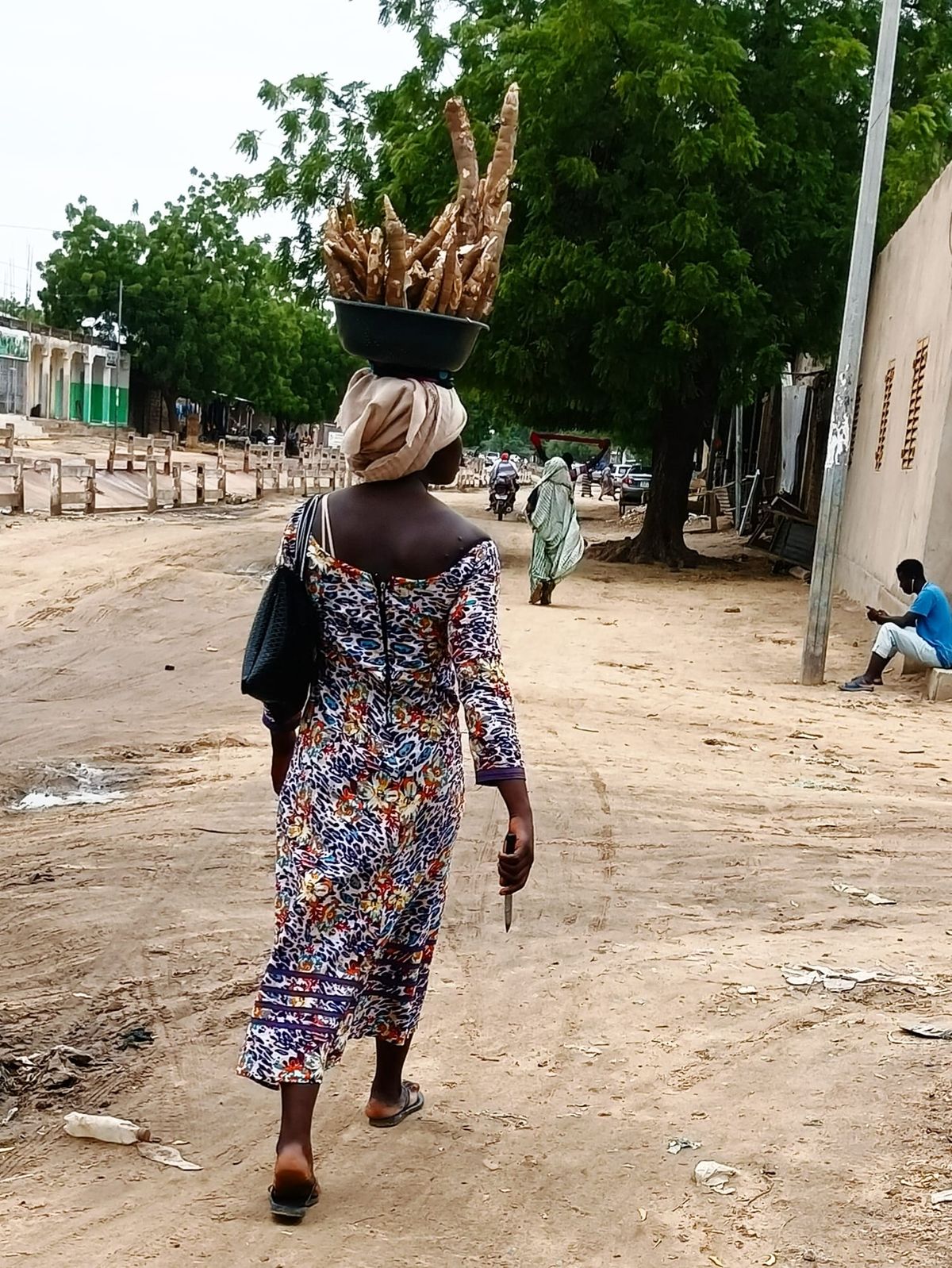
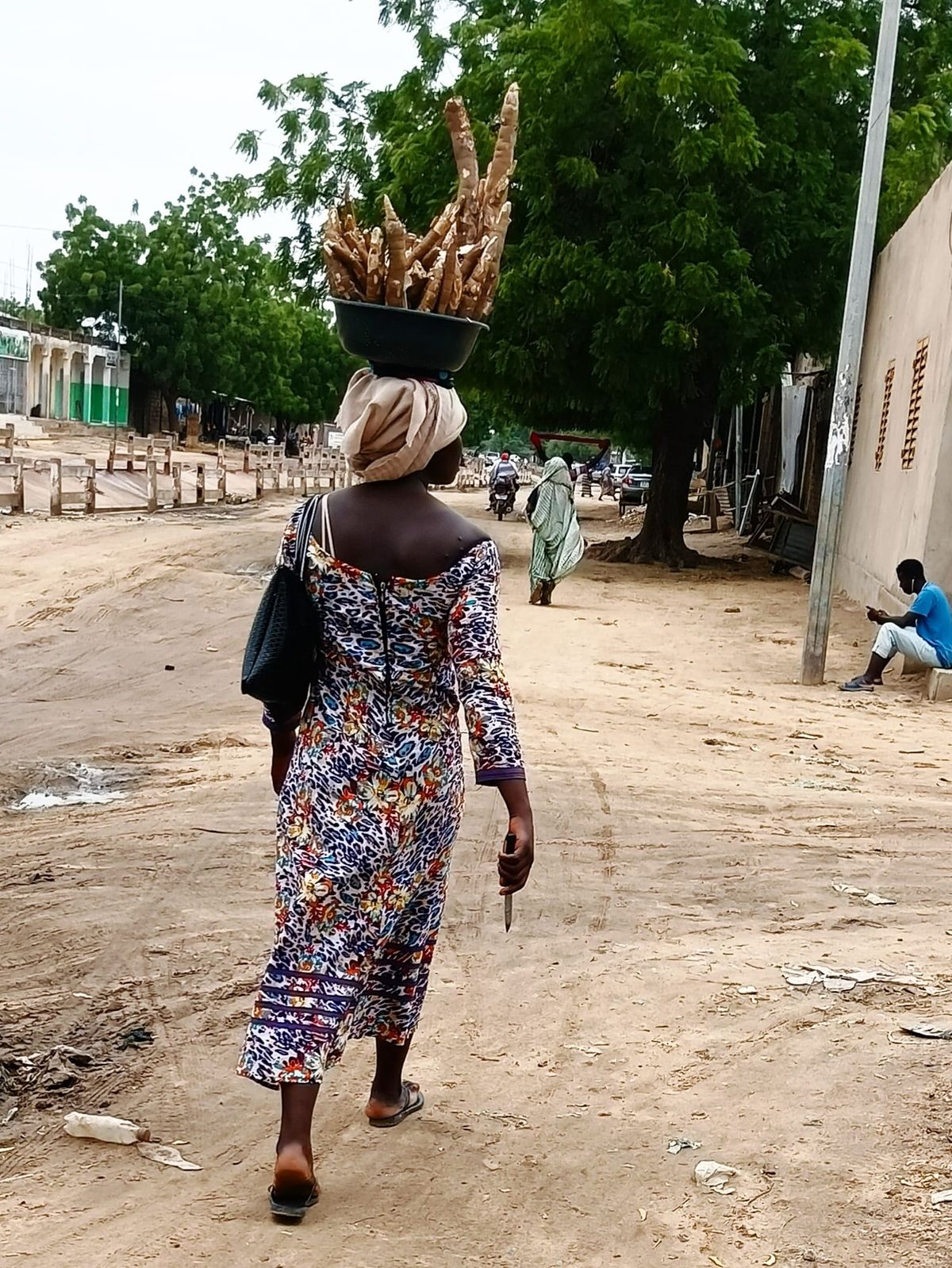
In the bustling streets of N’Djamena, the school holidays offer little respite for many young people. Instead of leisure, students like Léa use this time to master the art of survival and financial independence. A tenth-grade student living in the Kilwiti district, Léa has dedicated her break to selling cassava, balancing a heavy basin on her head as she traverses the capital in search of buyers.
“I live with my mother in Kilwiti,” Léa explains. “I am using my vacation time to sell cassava so I can save enough to cover my expenses for the upcoming school year.”
The daily struggle of young street vendors
Léa sells her portions for anywhere between 50 FCFA and 500 FCFA. She is not alone; a growing number of young girls have turned to this trade to support their families or their own futures. However, the business is fraught with obstacles. The rising cost of raw cassava has squeezed profit margins, making it difficult to satisfy price-conscious customers.
“Cassava has become quite expensive,” she notes. “When we offer portions for 100 or 200 FCFA, some buyers think we are overcharging. They don’t realize how much we have to pay for the stock ourselves. We cannot afford to sell at a loss.” Despite the friction, she finds encouragement from sympathetic customers who recognize her hard work.
Economic realities in Chad
This individual effort occurs against a backdrop of significant economic hardship. Data from the World Bank indicates that 44.8% of the population in Chad lives below the national poverty line. Furthermore, extreme poverty affects approximately 36.5% of the people, who survive on less than $2.15 per day. With one of the lowest human capital indices globally, the country presents limited development paths for its youth.
A shift toward self-reliance
Beyond the immediate financial gain, Léa’s initiative reflects a broader cultural shift among the youth in N’Djamena. In an environment where the job market is unpredictable and traditional schooling does not always guarantee a career, these students are taking matters into their own hands. By balancing their education with small-scale commerce, they are gaining practical business experience and a sense of discipline that will serve them long after the holidays end.